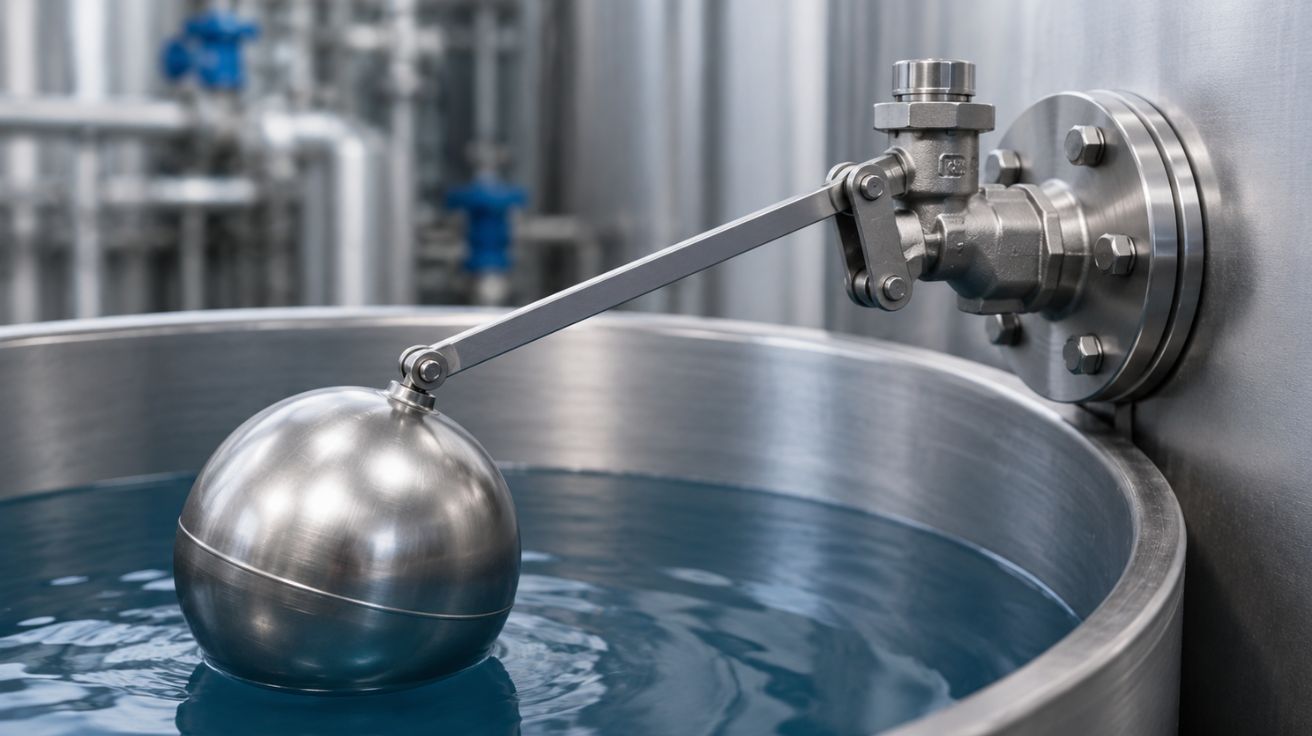

Float valve systems are often treated as minor components in larger industrial assemblies, but they carry significant responsibility. In high-pressure environments — whether in chemical processing, water treatment, steam systems, or hydraulic circuits — the float element is what the entire system depends on for level control and shutoff accuracy. When a float fails, the consequences extend well beyond a single component replacement. Downtime accumulates, process integrity is compromised, and in some cases, safety becomes a concern.
The challenge for engineers and procurement professionals is not simply finding a float ball that fits a given valve — it is finding one that will continue to perform reliably over time under the specific thermal, chemical, and mechanical conditions of the application. This requires understanding what drives performance differences in float ball construction, material behavior, and design geometry before any purchasing decision is made.
Understanding What a Stainless Steel Hollow Ball Actually Does in a Float Valve System
A stainless steel hollow ball functions as the buoyant sensing element in a float-actuated valve. As fluid levels rise or fall within a tank, vessel, or pipeline, the ball rises or descends accordingly, transmitting mechanical force through a lever arm to open or close the valve seat. The buoyancy of the ball is what drives this action, and its ability to maintain structural integrity under pressure determines whether the system continues to respond accurately over its service life.
What distinguishes stainless steel from other float materials in high-pressure systems is its capacity to resist deformation under both internal and external stress. Hollow floats made from lower-grade materials or thinner-walled plastics are prone to collapse under elevated pressure or thermal cycling. Once a float begins to take on fluid — through a seam failure, pinhole corrosion, or mechanical fatigue — it loses buoyancy gradually, and the valve behavior becomes inconsistent. The system may still appear to operate, but the accuracy of level control degrades quietly before a visible failure occurs.
For applications where pressure, temperature, or chemical exposure is a factor, a properly specified stainless steel hollow ball provides a durable sensing element that maintains consistent buoyancy and dimensional stability across a wide range of service conditions.
Why Buoyancy Consistency Matters More Than Size Alone
It is common for buyers to focus primarily on the diameter of a replacement float ball when specifying a component. While dimensional fit with the valve assembly is necessary, it does not capture the full picture of what makes a float ball suitable for a given system. A ball that fits the valve but is constructed from material that is too thin for the operating pressure will deform over time, changing its effective buoyancy and therefore altering the behavior of the valve it controls.
In practice, a float ball that loses structural integrity under pressure will cause the valve to shut off at a different fluid level than intended. In tank filling systems, this can lead to overfill conditions. In process control systems where fluid ratios matter, it can introduce variance into what should be a stable, repeatable process. The original specification becomes meaningless once the float’s physical properties have shifted from their designed state.
Material Grade and Its Role in Long-Term Reliability
Stainless steel is not a single material — it is a family of alloys, and the differences between grades have real consequences in industrial float valve applications. The two most commonly specified grades for hollow float balls are austenitic alloys, which offer good general corrosion resistance, and higher-alloyed variants that provide improved performance in chloride-containing environments or under elevated thermal conditions. Selecting the wrong grade for the operating environment will result in surface pitting, crevice corrosion at seams, or stress corrosion cracking over time.
Corrosion in a hollow float ball is particularly problematic because it tends to develop on internal seam joints or at welded connections before it becomes externally visible. By the time a facility maintenance team identifies degradation, the float may already be compromised in its structural performance. This is why material selection should be based on a thorough understanding of the fluid being handled, its temperature range, and any chemical agents present — not simply on what was used in a previous installation or what is most readily available.
Seam Construction and Weld Integrity
A hollow float ball is manufactured by forming two hemispherical shells and joining them, typically through welding or mechanical pressing. The quality of this joint is one of the most important factors in the ball’s long-term performance. A poorly formed seam — whether from inconsistent welding, inadequate weld penetration, or insufficient post-weld treatment — creates a point of weakness that is directly exposed to the process fluid and operating pressure.
In high-pressure systems, cyclic loading from pressure fluctuations causes mechanical fatigue to concentrate at stress points. Weld seams that have not been properly finished or that contain inclusions will crack before the surrounding material reaches its service limit. When evaluating float balls for critical applications, it is worth understanding the manufacturing process well enough to ask whether the seam is continuous-welded, how post-weld finishing is handled, and whether the ball has been pressure-tested before leaving the production facility. These are not excessive demands — they reflect the difference between a component that will last and one that will create an unplanned maintenance event.
Pressure Rating and Wall Thickness Considerations
High-pressure float valve systems impose demands on float balls that do not exist in low-pressure or atmospheric applications. The ball must resist external hydrostatic pressure from the surrounding fluid, any internal vacuum that may develop during temperature changes, and the mechanical load transferred through the lever arm during valve actuation. All of these forces act on the ball simultaneously, and the wall thickness of the ball is what determines its ability to absorb them without yielding.
The relationship between wall thickness and pressure resistance is not linear in hollow spheres. As defined in established pressure vessel mechanics, the geometry of a sphere distributes stress more evenly than a cylinder under internal or external loading, which is one reason hollow spherical floats perform better under pressure than other float geometries. However, this advantage only holds if the wall thickness is adequate for the applied load. A ball that is well-suited for atmospheric storage tank applications may not provide adequate safety margin in a pressurized vessel or pump system operating at elevated conditions. For reference, the mechanical principles underlying pressure vessel behavior are documented by standards organizations such as ASME, which provides widely adopted guidelines for pressure boundary design in industrial systems.
Matching Float Ball Specifications to System Operating Conditions
When specifying a float ball for a high-pressure application, the starting point should always be the actual operating conditions of the system, not the catalogue listing of the valve manufacturer. Valve assemblies are often designed to accommodate a range of float configurations, and the original equipment float may not represent the best available option for the specific fluid, pressure, and temperature involved in a given installation.
Operating conditions that should inform float ball selection include:
- The maximum working pressure of the system.
- Any pressure spikes or surges that occur during startup, shutdown, or valve actuation.
- The temperature range across a full operating cycle.
- The chemical composition of the fluid.
Each of these variables affects both material selection and wall thickness requirements. Taking time to compile this information before specifying a component reduces the risk of early failure and the downstream costs that come with it.
Surface Finish and Its Practical Implications
The external surface condition of a stainless steel hollow ball is not a purely aesthetic consideration. In applications where the float operates in fluids that carry particulate matter, dissolved minerals, or microbial content, surface roughness affects both the rate of scale buildup and the initiation of corrosion. A smoother surface finish offers fewer sites where deposits can accumulate and reduces the likelihood of pitting corrosion taking hold under a layer of scale or fouling.
In sanitary or food-grade applications, surface finish also affects cleanability and compliance with hygienic design standards. Even in strictly industrial environments, a float ball with a rough or mill-finished surface in a hard water system will accumulate scale faster than a polished equivalent, increasing its effective weight over time and gradually altering its buoyancy characteristics. This is a slow-moving failure mode but one that is entirely preventable through appropriate surface specification at the point of selection.
Evaluating Supplier Capability Before Committing to a Source
The final step in choosing the right stainless steel hollow ball is ensuring that the supplier can consistently deliver what they represent. This is particularly important when sourcing for applications where component failure carries operational or safety consequences. A supplier’s ability to provide traceability documentation, material certifications, and consistent dimensional tolerances across production runs matters as much as the specification of the ball itself.
Inconsistency in manufacturing quality — even when average quality is acceptable — creates risk in critical applications. If float balls from the same order vary in wall thickness or weld quality, the system behavior may be reliable in some installations and problematic in others, making root cause analysis during troubleshooting unnecessarily difficult.
Before placing an order for high-pressure service components, it is reasonable to:
- Ask for material test reports.
- Review whether the supplier maintains quality control records.
- Confirm that the product has been manufactured to a documented standard rather than informal production norms.
Conclusion
Choosing a float ball for a high-pressure system is a more considered process than it may initially appear. The component is small, but its performance has direct consequences for system reliability, process accuracy, and maintenance frequency. Getting the specification right requires understanding the operating environment in full, selecting an appropriate material grade, verifying weld and seam quality, confirming that wall thickness is adequate for the applied pressure, and working with a supplier who can demonstrate consistent manufacturing capability.
None of these steps are complicated, but they require deliberate attention at the time of specification rather than after a failure has already occurred. For engineers and procurement professionals working in high-pressure environments, investing that attention upfront is consistently the more practical approach. A well-chosen float ball will operate quietly and reliably for years. A poorly chosen one will make itself known at the worst possible time.
Read More: The 10-Point Checklist Every Business Owner Should Use Before Hiring a Vehicle Graphics Installer


Leave a Comment