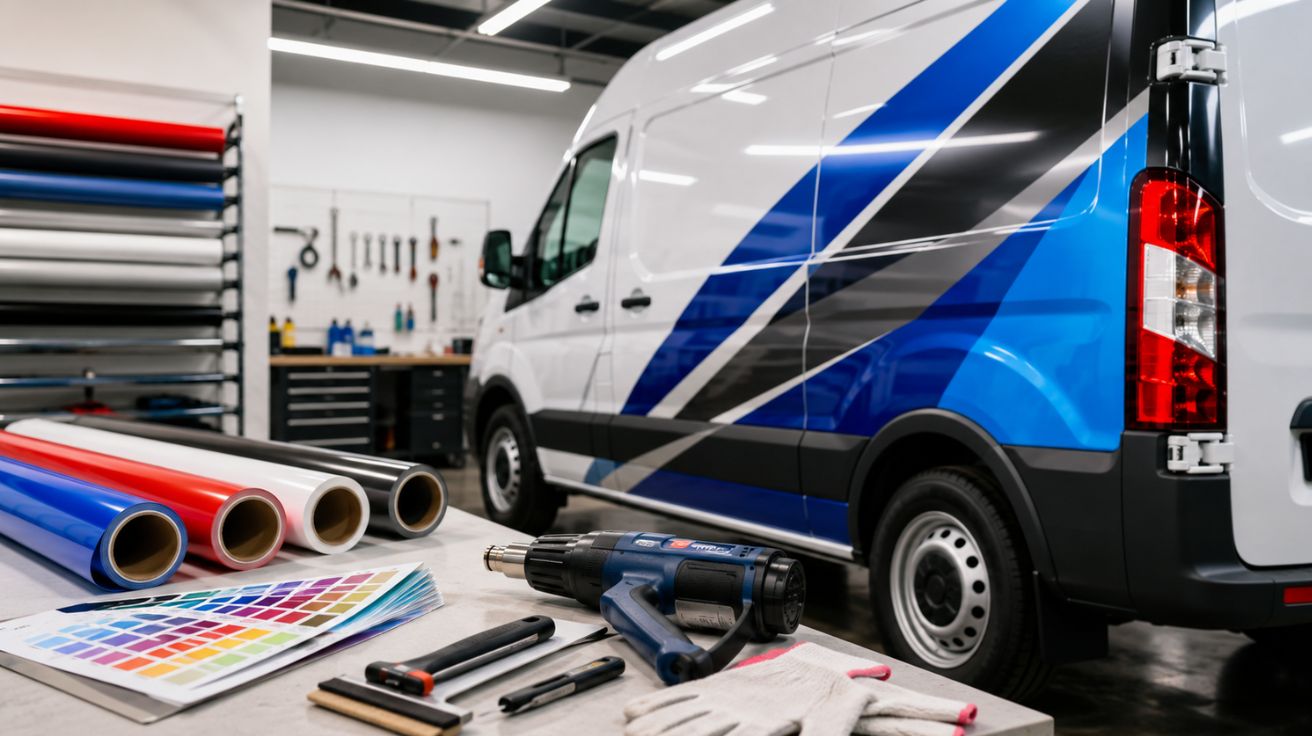

When a business invests in wrapping or branding its fleet, the decision carries more operational weight than most owners initially expect. Vehicle graphics are not simply decorative — they serve as mobile representations of a company’s identity, active across every mile those vehicles travel. A poorly executed installation can result in peeling edges, misaligned panels, bubbling surfaces, or color inconsistencies that undermine the professional appearance the investment was meant to create.
The challenge is that the vehicle graphics industry includes a wide range of providers, from large commercial print and wrap shops to solo operators with minimal equipment. Quality, process discipline, and professional standards vary considerably. Business owners without a clear framework for evaluating installers often make decisions based on price alone — and pay for it later in rework, downtime, and replacement costs.
This checklist is designed to give business owners a structured way to assess any installer before committing. It covers the practical, operational, and quality-related factors that genuinely affect outcomes.
Understand What a Professional Installation Actually Involves
Before evaluating any specific provider, it helps to understand what a professional vehicle graphics installation requires. The process involves:
- Surface preparation
- Material selection
- Precision cutting or printing
- Panel alignment across complex vehicle contours
- Heat application
- Edge finishing
Each stage depends on the one before it. Errors introduced early in the process — such as inadequate surface cleaning or incorrect material choice — cannot be corrected at the end without redoing the work entirely.
A well-structured Vehicle Graphics Installer guide will typically outline the standard steps and material requirements involved in a professional installation, which gives business owners a baseline for asking the right questions when speaking with any provider.
Understanding the process also helps owners identify when a quote is suspiciously low. Cutting time on surface preparation or using lower-grade materials reduces cost but significantly reduces durability. Knowing what should be included helps avoid accepting an incomplete service without realizing it.
Verify Experience With Commercial Vehicles Specifically
Experience with personal vehicles or small passenger cars does not automatically translate to commercial fleet work. Vans, box trucks, service vehicles, and trailers present different challenges — larger surface areas, more panel seams, variable curvature, and mounting hardware that requires graphic cutouts. An installer without commercial experience may underestimate these complexities and deliver inconsistent results across a multi-vehicle fleet.
Ask for Fleet-Specific References
Requesting references from other commercial clients — particularly those with fleets of three or more vehicles — provides practical verification. A competent commercial installer should be able to point to businesses in comparable industries that can speak to consistency, turnaround time, and how the graphics have held up over time. If references are unavailable or limited to residential clients, that gap is worth noting.
Review Their Portfolio With a Critical Eye
A portfolio shows finished results but also reveals process quality when examined carefully. Look for:
- Consistent color alignment at seam points
- Clean edges around door handles and mirrors
- Uniform wrap coverage across panels
Visible bubbles, stretched graphics, or uneven application in portfolio photos indicate process or skill gaps that are unlikely to disappear on your project.
Evaluate Work Across Multiple Vehicle Types
If your fleet includes different makes or configurations, confirm the installer has worked with comparable vehicles. The techniques and material behavior differ between a flat cargo van side panel and a curved pickup cab. Seeing relevant examples reduces the risk of discovering limitations mid-project.
Confirm Material Brands and Grades Being Used
The vinyl and graphic materials used in vehicle installations vary significantly in durability, color stability, and adhesive quality. Professional-grade materials from established manufacturers are rated for years of outdoor exposure and are designed to release cleanly during removal without damaging the vehicle’s paint. Lower-cost materials may fade faster, shrink in cold temperatures, or leave adhesive residue when removed.
Asking an installer which brands and material grades they use — and why — is a reasonable question. According to the International Organization for Standardization, materials used in commercial signage and graphics applications are expected to meet defined performance benchmarks. A professional installer should be familiar with the relevant performance tiers for their materials and be willing to explain the difference in plain terms.
Assess Their Facility and Equipment
The environment in which a wrap is installed matters. Temperature, humidity, and dust all affect adhesion and finish quality. Professional installers work in climate-controlled, clean shop environments rather than open garages or outdoor settings. Their equipment — including:
- Wide-format printers
- Laminators
- Plotters
- Heat guns
should be maintained and appropriate for commercial-scale work.
Shop Visits Are Reasonable and Informative
Visiting a prospective installer’s facility before signing an agreement is entirely appropriate. A shop that is organized, clean, and equipped for the work they’re describing gives a reasonable level of confidence. A disorganized space with limited equipment is often a sign that capacity and quality control are limited as well. Most professional installers will not object to a pre-project visit from a serious commercial client.
Clarify Turnaround Time and Fleet Scheduling
For businesses that depend on their vehicles daily, installation timing has a direct impact on operations. Some installers quote realistic timelines but lack the staff or equipment to deliver them consistently. Others may take on more projects than they can manage, causing delays that leave vehicles off the road longer than planned.
When managing a fleet, ask how the installer handles multi-vehicle projects, including:
- Whether vehicles are done sequentially or in parallel
- What their current project load looks like
Firms with a single installer and no support staff may not be the right fit for a five- or ten-vehicle project that needs to be completed within a defined window.
Review the Warranty and What It Actually Covers
A warranty on vehicle graphics work should be specific about what is covered. General language like “satisfaction guaranteed” is not the same as a defined warranty that specifies coverage for:
- Delamination
- Color fade
- Edge lifting
- Adhesive failure under normal operating conditions
The materials themselves often carry manufacturer warranties, but the installation workmanship should be separately warranted by the installer.
Understand the Conditions That Void Coverage
Many warranties include conditions around vehicle washing methods, exposure to certain chemicals, or storage. Understanding these conditions upfront prevents disputes later. An installer who cannot explain their warranty terms clearly, or who provides only verbal assurances, introduces risk into what should be a documented business transaction.
Confirm They Handle Design or Work With Your Existing Files
Some vehicle graphics installers offer in-house design services; others work only with print-ready files provided by the client. Knowing which model applies affects how you need to prepare for the project. If you already have brand assets, confirm that the installer can accept and work with the file formats your designer provides. If design is needed, ask who prepares the vehicle templates and how proofing is handled before anything goes to print.
A missed proofing step — where a graphic is printed without final approval — is one of the more common sources of rework in commercial installations. Confirming the proofing process before the project begins avoids that outcome.
Evaluate Their Communication and Project Management
The quality of communication during the sales and quoting phase often reflects how a provider operates once the project is underway. Installers who respond promptly, provide clear written quotes, and ask specific questions about your vehicles and requirements before submitting a price tend to manage projects more consistently than those who rely on verbal agreements or broad estimates.
For fleet projects, ask:
- Who the primary point of contact will be
- How updates will be communicated during the installation period
Clear project management reduces scheduling confusion and gives you visibility into progress without requiring constant follow-up.
Compare Total Value, Not Just Price
Price comparison is necessary, but quoting price in isolation misrepresents the decision. A lower quote that uses inferior materials, skips surface preparation steps, or provides no warranty documentation may cost more in the long run when graphics fail prematurely or vehicles require repainting due to adhesive damage. A higher quote that includes premium materials, documented warranty coverage, a structured installation process, and experienced staff may represent considerably better value over a three- to five-year use period.
Build a Simple Evaluation Matrix
Comparing two or three installers across the same criteria makes the decision more structured and less dependent on gut feel. Consider evaluating:
- Experience
- Materials
- Warranty
- Turnaround
- Communication quality
When criteria are weighted against one another, the right choice often becomes clearer even when the price difference is significant.
Closing Thoughts
Hiring a vehicle graphics installer is a practical business decision with long-term consequences for both brand presentation and vehicle maintenance. The businesses that approach this decision methodically — verifying credentials, confirming materials, reviewing processes, and comparing value rather than price — tend to see better outcomes and fewer complications once vehicles are on the road.
This checklist is not exhaustive, but it covers the questions that most directly affect quality, durability, and operational impact. Taking the time to work through these points before committing to a provider is a straightforward way to reduce risk and set realistic expectations for the project ahead. The more clearly defined the scope and standards are before work begins, the more likely the finished result will serve your business the way it was intended to.
Read More: Company Formation in Dubai: How It Helps Global Trade


Leave a Comment