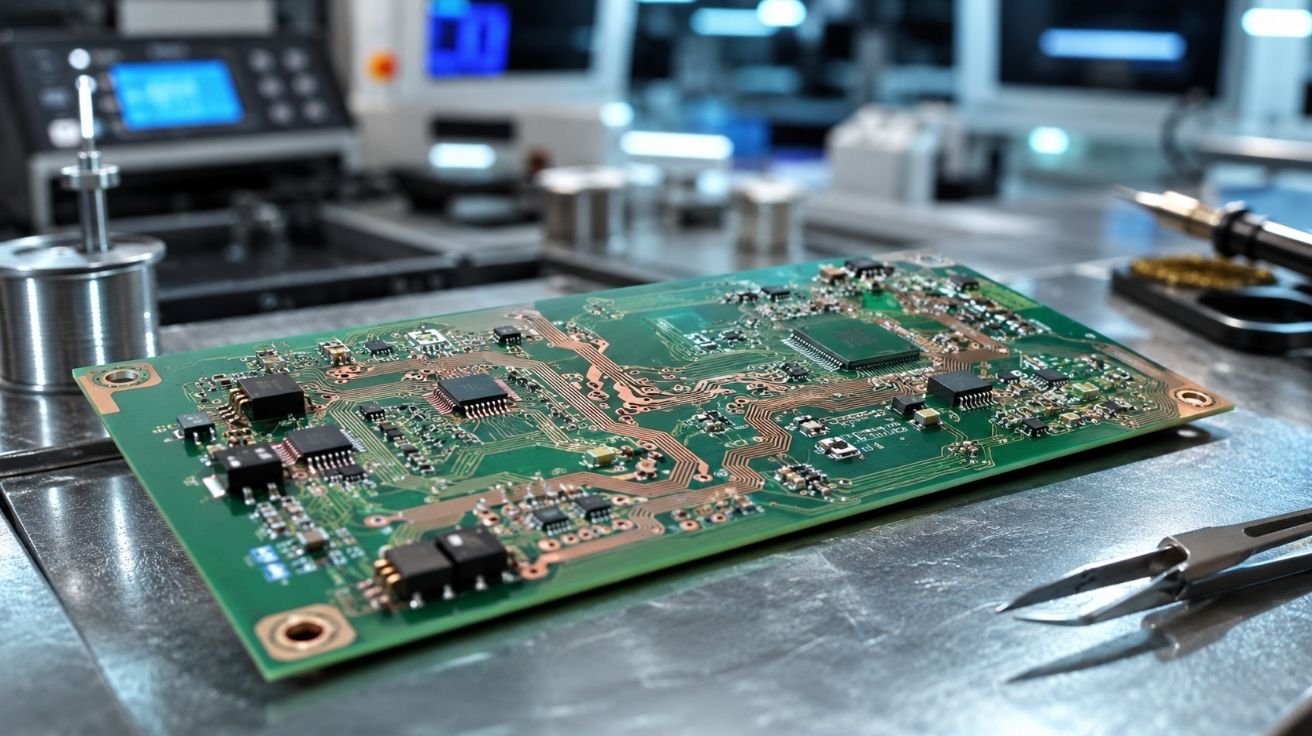

Printed circuit boards are the backbone of modern electronics, enabling efficient connections between components in a wide range of devices. Among the different types of circuit boards available, single sided PCBs remain one of the most commonly used due to their simplicity, affordability, and ease of manufacturing. Even as advanced multilayer boards become more popular, single sided PCBs continue to play a crucial role in many everyday electronic applications.
Understanding how these boards are structured, manufactured, and used can help engineers and businesses choose the right PCB type for their projects.
What Are Single Sided PCBs?
Single sided PCBs are printed circuit boards that have only one conductive copper layer on one side of the substrate. All electronic components are mounted on one side of the board, while the copper traces that connect these components are located on the opposite side.
This simple configuration makes them easy to design and manufacture. Unlike double sided or multilayer boards, there is no need for complex interconnections between layers, which reduces production time and cost.
Single sided PCBs are ideal for circuits that do not require high density or complex routing, making them suitable for basic electronic devices.
Structure of Single Sided PCBs
The structure of single sided PCBs is straightforward but carefully designed to ensure proper functionality. The base layer is the substrate, typically made from materials such as FR4 fiberglass or phenolic resin. This layer provides mechanical strength and electrical insulation.
On top of the substrate, a thin copper layer is laminated. This copper layer is etched to create the circuit pathways that connect electronic components.
A solder mask is applied over the copper traces to protect them from oxidation and environmental damage. It also helps prevent solder bridging during assembly.
A silkscreen layer is added to provide labels, component markings, and assembly instructions. This layer helps technicians identify components and ensures proper placement during assembly.
Despite its simplicity, the structure of single sided PCBs is designed to deliver reliable performance for a variety of applications.
Manufacturing Process of Single Sided PCBs
The manufacturing process of single sided PCBs is relatively simple compared to more complex PCB types. It begins with selecting the appropriate substrate material based on the application requirements.
A copper foil is laminated onto one side of the substrate. A photoresist layer is then applied to the copper surface, and the circuit design is transferred using a photomask and ultraviolet light.
The board undergoes chemical etching to remove unwanted copper, leaving behind the desired circuit pattern. This step forms the conductive pathways.
Drilling may be performed to create holes for through-hole components. After drilling, a solder mask is applied to protect the copper traces.
The silkscreen layer is then printed to mark component positions and identification details. Finally, the board is inspected and tested to ensure it meets quality standards before assembly.
This streamlined manufacturing process contributes to the cost-effectiveness and efficiency of single sided PCBs.
Advantages of Single Sided PCBs
One of the main advantages of single sided PCBs is their low cost. The simple design and minimal material usage make them one of the most affordable PCB options available.
Another benefit is ease of manufacturing. With only one conductive layer, the production process is straightforward and requires less time and fewer resources.
Single sided PCBs are also easy to design, making them suitable for beginners and simple electronic projects. Engineers can quickly develop circuit layouts without dealing with complex routing challenges.
Maintenance and repair are also easier. Since all components and traces are accessible from one side, technicians can easily identify and fix issues.
Additionally, these boards offer reliable performance for low-complexity circuits, making them suitable for a wide range of applications.
Applications of Single Sided PCBs
The simplicity and affordability of single sided PCBs make them widely used across various industries. In consumer electronics, they are commonly found in devices such as radios, calculators, and remote controls.
Household appliances such as fans, televisions, and washing machines often use single sided PCBs for basic control functions.
Power supplies and battery chargers also rely on these boards due to their straightforward circuit requirements.
In the automotive industry, single sided PCBs are used in simple lighting systems and control modules.
Industrial equipment, including sensors and monitoring devices, also uses single sided PCBs for low-complexity electronic functions.
Their versatility ensures that they remain an essential component in many everyday devices.
Design Considerations for Single Sided PCBs
Designing single sided PCBs requires careful planning to ensure efficient circuit layout. Since all routing must be done on a single layer, engineers must avoid crossing traces and ensure proper spacing.
Component placement is critical. Proper arrangement can simplify routing and improve signal flow. Designers often group related components together to optimize layout.
Trace width and spacing must be selected based on current requirements and electrical characteristics. Adequate spacing helps prevent short circuits and interference.
Thermal management should also be considered, especially for circuits that handle higher power levels. Proper design can help dissipate heat and maintain stable operation.
By addressing these factors, designers can create efficient and reliable single sided PCB designs.
Limitations of Single Sided PCBs
While single sided PCBs offer many advantages, they also have some limitations. One of the main drawbacks is limited circuit complexity. With only one conductive layer, it is difficult to design circuits with many components or complex routing requirements.
These boards also have lower component density compared to multilayer PCBs, making them unsuitable for compact, high-performance devices.
Signal interference and longer trace paths can also be challenges in certain designs.
Despite these limitations, single sided PCBs remain an excellent choice for simple and cost-sensitive applications.
Conclusion
Single sided PCBs continue to be a fundamental part of the electronics industry due to their simplicity, affordability, and reliability. Their straightforward design and easy manufacturing process make them ideal for low-complexity circuits used in consumer electronics, household appliances, and industrial applications.
As the demand for cost-effective electronic solutions continues to grow, single sided PCBs will remain widely used across various industries. Businesses seeking reliable and high-quality circuit boards often collaborate with an experienced single sided PCBs manufacturer to ensure consistent performance, efficient production, and long-term reliability in their electronic products.
Do Read: Create AI-Generated Farm-to-Table Story Videos for Agriculture and Organic Food Brands


Leave a Comment