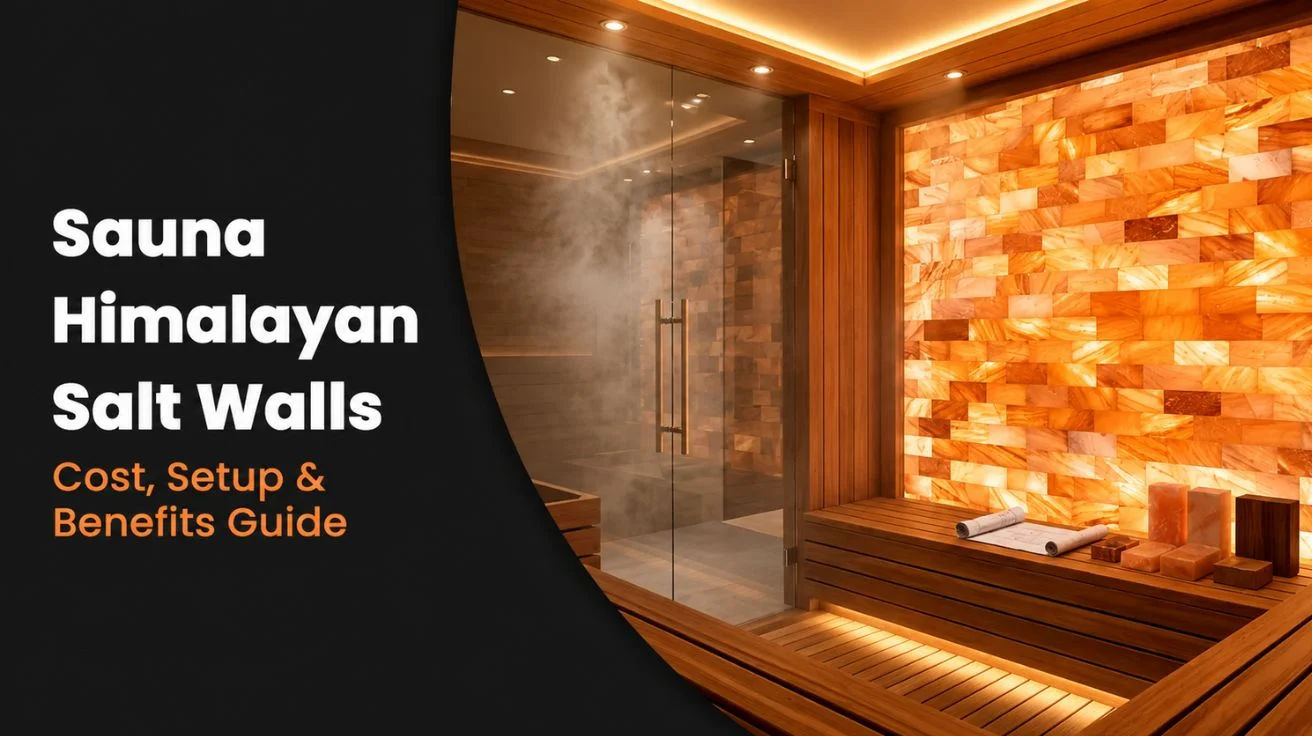

Meta Description: Explore sauna Himalayan salt wall costs, installation requirements, ventilation needs, and key benefits for creating durable, long-lasting wellness spaces.
Himalayan salt walls can work beautifully inside saunas when they are installed with proper ventilation, structural support, and specialized salt wall adhesive systems.
While many homeowners are drawn to the warm amber glow and luxury spa appearance, long-term performance depends on factors such as humidity management, airflow, lighting integration, and installation quality.
This guide explains sauna salt wall costs, setup requirements, durability considerations, and the role of professional salt bricks glue systems in creating a stable, long-lasting installation.
Many people first notice the appearance.
They see:
- the warm amber glow
- the luxury spa atmosphere
- the natural salt texture
- the relaxing visual effect
What they often don’t see is everything happening behind the wall.
A sauna environment constantly exposes materials to:
- heat
- temperature fluctuations
- humidity changes
- long operating hours
That is why proper construction matters just as much as design.
A quality salt wall glue helps support the structure over time, while professional salt bricks glue systems help keep the installation stable despite the challenging sauna environment.
Most long-term salt wall problems can often be traced back to installation decisions made during the initial construction phase.
Why Are Sauna Himalayan Salt Walls Becoming More Popular?
The simple answer is atmosphere.
Modern homeowners and wellness businesses want more than a functional sauna.
They want a space that feels:
- relaxing
- luxurious
- memorable
- wellness-focused
A Himalayan salt wall helps create exactly that environment.
Unlike standard wall finishes, salt walls introduce:
- natural texture
- warm lighting effects
- visual depth
- spa-inspired aesthetics
This is one reason salt walls are increasingly appearing in:
- home saunas
- luxury spas
- wellness centers
- boutique hotels
- recovery rooms
How Much Does a Sauna Salt Wall Cost?
The cost depends on much more than the salt bricks themselves.
Many first-time buyers assume the bricks represent most of the budget.
In reality, a complete installation usually includes:
- salt bricks
- framing systems
- backing materials
- lighting
- electrical work
- installation labour
- salt wall adhesive
The final investment depends heavily on the size and complexity of the project.
Typical Sauna Salt Wall Cost Factors
| Component | Impact on Cost |
|---|---|
| Himalayan Salt Bricks | Size, thickness, and quantity |
| Framing Structure | Wall support requirements |
| Lighting System | Backlighting design complexity |
| Installation Labor | DIY or professional installation |
| Adhesive Materials | Specialized bonding products |
| Ventilation Features | Airflow and moisture management |
Many homeowners discover that structural preparation often costs more than expected, especially for larger feature walls. Costs can vary significantly depending on wall size, lighting requirements, installation complexity, and regional labor rates. Small decorative installations generally cost less than large backlit feature walls built for commercial wellness spaces.
Why Salt Wall Adhesive Is Critical in Sauna Installations
Heat changes how materials behave.
A salt wall inside a bedroom experiences different conditions than a salt wall inside a sauna.
Saunas regularly expose materials to:
- elevated temperatures
- humidity cycles
- thermal expansion
- thermal contraction
Because of this, installers usually avoid treating salt walls like ordinary decorative projects.
A reliable salt wall adhesive helps support long-term stability under these changing conditions.
Similarly, professional-grade bonding material helps create stronger bonding between salt surfaces and supporting structures.
Without proper adhesive systems, walls may eventually experience:
- shifting bricks
- visible gaps
- alignment issues
- weakened bonding
These issues rarely happen immediately.
More often, they develop slowly over time.
Choosing the correct bonding material is one of the most important factors in long-term wall performance. Understanding how specialized salt wall adhesive differs from standard construction products can help prevent many common installation failures and maintenance issues.
Why Do Sauna Salt Walls Fail?
Most sauna salt wall failures are not caused by the salt bricks themselves. Common causes include poor ventilation, weak structural support, improper lighting placement, and using standard construction adhesives that are not designed for heat and humidity.
In many cases, these problems develop gradually as repeated heat and moisture cycles place stress on both the wall structure and the bonding materials behind the installation.
Sauna Salt Wall Installation: Materials and Setup Guide
Most successful installations combine multiple components working together.
A professional setup often includes:
- Himalayan salt bricks
- reinforced framing
- moisture-resistant backing
- LED lighting systems
- ventilation space
- installation adhesive
- specialized bonding materials
Interestingly, the parts people never see often determine how long the wall lasts.
The visible beauty comes from the bricks.
The durability comes from everything behind them.
What Are the Main Benefits of a Sauna Salt Wall?
The biggest benefit is usually visual rather than technical.
Most owners immediately notice:
- a warmer atmosphere
- softer lighting
- a premium appearance
- improved spa aesthetics
Many wellness facilities also appreciate how salt walls help create a memorable guest experience.
Additional benefits include:
- architectural focal points
- enhanced luxury perception
- a more distinctive architectural finish
- a more customized wellness environment
The result is often a space that feels more intentional and relaxing.
Why Is Ventilation So Important?
Ventilation is one of the most overlooked parts of salt wall construction.
Without proper airflow, problems can develop behind the wall.
These may include:
- trapped moisture
- heat buildup
- condensation
- adhesive stress
According to the U.S. Environmental Protection Agency (EPA) Indoor Air Quality Resources, controlling moisture and maintaining appropriate ventilation are essential for protecting indoor building materials and reducing the risk of structural deterioration.
This becomes especially important in wellness settings where humidity fluctuates regularly.
Good ventilation helps protect:
- structural materials
- lighting systems
- adhesive performance
- long-term wall durability
Why Ventilation Gaps Matter Behind Salt Walls
Professional salt wall installations usually include ventilation spacing behind the salt surface to help reduce trapped moisture buildup. Proper airflow behind the wall can improve long-term durability and help protect lighting systems from excess humidity exposure.
Common Mistakes People Make During Installation
Many installation mistakes look harmless at first.
Months later, they become much more noticeable.
Common issues include:
- weak framing
- poor airflow planning
- incorrect lighting placement
- rushed installation
- using standard glue instead of specialized products
One contractor described it perfectly:
Most salt walls don’t fail because of one major mistake.
They fail because several small shortcuts eventually add up.
That is why experienced installers spend considerable time selecting the right salt wall adhesive and salt bricks glue before construction even begins.
Salt Wall vs Painted Wall
Paint remains one of the cheapest wall-finishing options.
Paint offers:
- lower upfront cost
- easy color changes
- minimal installation requirements
A salt wall offers:
- natural texture
- illuminated beauty
- luxury appeal
- visual depth
Paint changes appearance. A salt wall changes the atmosphere.
That distinction is often what attracts homeowners to Himalayan salt features.
Salt Wall Vs Wallpaper Accent Wall
Wallpaper can create visual interest.
It provides:
- patterns
- colors
- decorative effects
A salt wall provides:
- natural materials
- dimensional depth
- lighting interaction
- architectural presence
Wallpaper functions primarily as decoration.
A salt wall becomes part of the room itself.
Salt Wall Vs Wood Feature Wall
Wood remains the traditional choice for sauna interiors.
People appreciate wood because it feels:
- warm
- timeless
- natural
Himalayan salt walls complement wood extremely well.
Together they create:
- visual contrast
- layered textures
- luxury aesthetics
- spa-inspired design
Many premium sauna projects combine both materials rather than choosing one over the other.
How Long Can a Sauna Salt Wall Last?
A properly installed salt wall can remain stable for many years.
Long-lasting installations typically include:
- strong framing
- quality lighting
- proper ventilation
- professional installation
- dependable salt wall adhesive
Walls that receive periodic inspections also tend to perform better over time.
Small issues are easier to correct before they become larger structural problems.
Is Professional Installation Worth It?
For larger projects, many people believe it is.
Professional installers understand:
- structural support requirements
- ventilation planning
- lighting integration
- adhesive selection
- long-term maintenance considerations
DIY projects can absolutely work.
However, larger sauna installations often benefit from professional expertise because the environment is more demanding than standard residential spaces.
Conclusion
Sauna Himalayan salt walls have become popular because they combine design, atmosphere, and wellness-inspired aesthetics in a way few other materials can.
The combination of lighting, texture, and natural materials often gives sauna spaces a more refined and intentionally designed atmosphere.
However, long-term success depends on much more than appearance.
The most durable installations typically include:
- reinforced support systems
- proper airflow
- quality lighting
- high-quality installation adhesive
- reliable salt bricks glue
In many cases, the salt walls that continue to perform well for years are those where installation quality received the same attention as the design itself.
FAQs
How much does a sauna Himalayan salt wall cost?
Sauna Himalayan salt wall costs typically depend on wall size, lighting integration, framing requirements, installation complexity, and the type of adhesive materials used during construction.
Can Himalayan salt walls handle sauna temperatures?
Yes. Properly installed Himalayan salt walls can perform well in sauna environments when ventilation, structural support, and adhesive selection are handled correctly.
Why is salt wall adhesive important?
A specialized salt wall adhesive helps support structural stability in environments exposed to heat and humidity fluctuations.
What is salt brick glue used for?
Salt brick glue is used to help bond Himalayan salt bricks securely during installation and support long-term durability.
How long do sauna salt walls last?
A properly installed salt wall can last many years when supported by strong framing, proper ventilation, and high-quality salt adhesive systems.
Read More: The Day Our Builder Told Us to Hire an Architect for the Extension Ourselves


Leave a Comment