
Introduction and Market Relevance
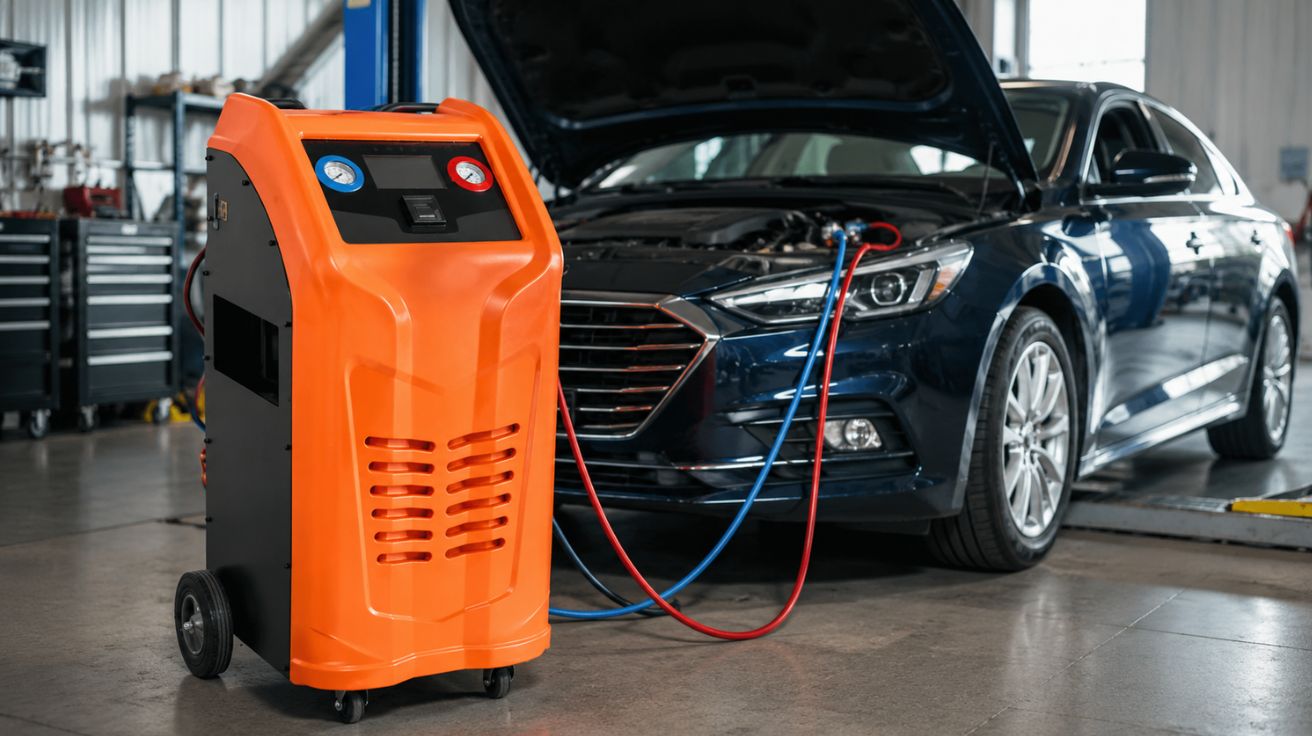
Across American automotive repair shops, air conditioning service is a routine job. Environmental regulations prohibit releasing refrigerants into the atmosphere. A fully automatic refrigerant recovery machine recovers, recycles, and recharges air conditioning systems without manual intervention. American mechanics, auto shop owners, and fleet maintenance managers use these machines to comply with Environmental Protection Agency regulations while improving service efficiency.
Common Applications and Operating Method
Refrigerant recovery machines are commonly used for:
- Automotive air conditioning system service
- Refrigerant recovery before component replacement
- Leak testing and system recharging
- Fleet vehicle air conditioning maintenance
- Hybrid and electric vehicle air conditioning service
The machine automates the entire process. The operator connects the hoses to the vehicle, selects the vehicle model from the built-in database, and starts the cycle. The machine recovers existing refrigerant, vacuums the system, checks for leaks, and recharges the correct amount of refrigerant automatically. The 7 inch color display guides the technician through each step.
Environmental Compliance and Refrigerant Management
Releasing refrigerants into the atmosphere damages the ozone layer and contributes to global warming. Federal regulations prohibit venting refrigerants and require certified recovery equipment. This machine meets those requirements by containing refrigerant throughout the service process.
The machine filters and dries recovered refrigerant, removing moisture, particles, and acids. This purification allows the same refrigerant to be reused in the same vehicle or another. Clean refrigerant extends the life of air conditioning compressors and prevents system contamination.
Precision Charging and Vehicle Compatibility
Each vehicle requires a specific refrigerant amount for proper air conditioning performance. Too little refrigerant reduces cooling capacity. Too much refrigerant increases compressor strain and can damage the system. The built-in vehicle database automatically sets the correct charge amount for the selected vehicle model.
The dual-cylinder compressor and vacuum pump provide faster service than single-cylinder units. The integrated electronic scale measures refrigerant weight precisely, ensuring the exact charge amount enters the system. Real-time pressure gauges allow the technician to monitor the process.
Safety Features and Operational Guidelines
Safe refrigerant handling requires several key features:
- Automatic shutdown when pressure exceeds 261 pounds per square inch
- Automatic shutdown when pressure drops below 7.5 pounds per square inch
- Self-cleaning pipes prevent cross-contamination between refrigerants
- Built-in filters and dryers remove contaminants
- Compatibility with R134a and R1234yf refrigerants
Proper use requires connecting the correct hoses for the refrigerant type. R1234yf systems use different fittings than R134a systems. The machine includes conversion heads and quick connectors for both types.
Advantages and Limitations
Advantages of a fully automatic refrigerant recovery machine include:
- Fully automatic operation from recovery to recharge
- Built-in vehicle database for precise charging
- Dual-cylinder compressor for faster service
- Integrated electronic scale for accurate measurement
- Self-cleaning pipes maintain refrigerant purity
- Automatic pressure monitoring for safety
- Compatible with both R134a and R1234yf
Limitations to consider:
- Higher initial cost than manual recovery units
- Requires periodic filter and dryer replacement
- Calibration needed for scale accuracy
- Database requires updates for new vehicle models
- Not for residential or commercial refrigeration
Real-World Application Example
An American auto repair shop in Texas serviced 15 vehicles daily. Technicians used a manual recovery machine, which required constant monitoring and manual charging calculations. The shop owner purchased a fully automatic recovery machine. A technician connected the hoses and selected the vehicle model from the database. The machine recovered, vacuumed, and recharged while the technician worked on another car. Air conditioning service time dropped by 50 percent, and the shop serviced more vehicles daily.
Conclusion and Future Outlook
TMG Industrial Fully automatic refrigerant recovery machines enable American auto shops to service air conditioning systems efficiently while complying with environmental regulations. The combination of automatic operation, built-in vehicle database, and safety features makes these machines essential for professional shops. As vehicles transition to new refrigerants and electric platforms, recovery machine technology will continue evolving. Future designs may include wireless database updates and remote diagnostics.
Auto shop owners should evaluate fully automatic recovery machines for any facility performing regular air conditioning service. The dual-cylinder compressor and automatic operation make this machine suitable for diverse American automotive repair applications.
Read More: How to Save Money When Hiring an Auto Transport Company


Leave a Comment