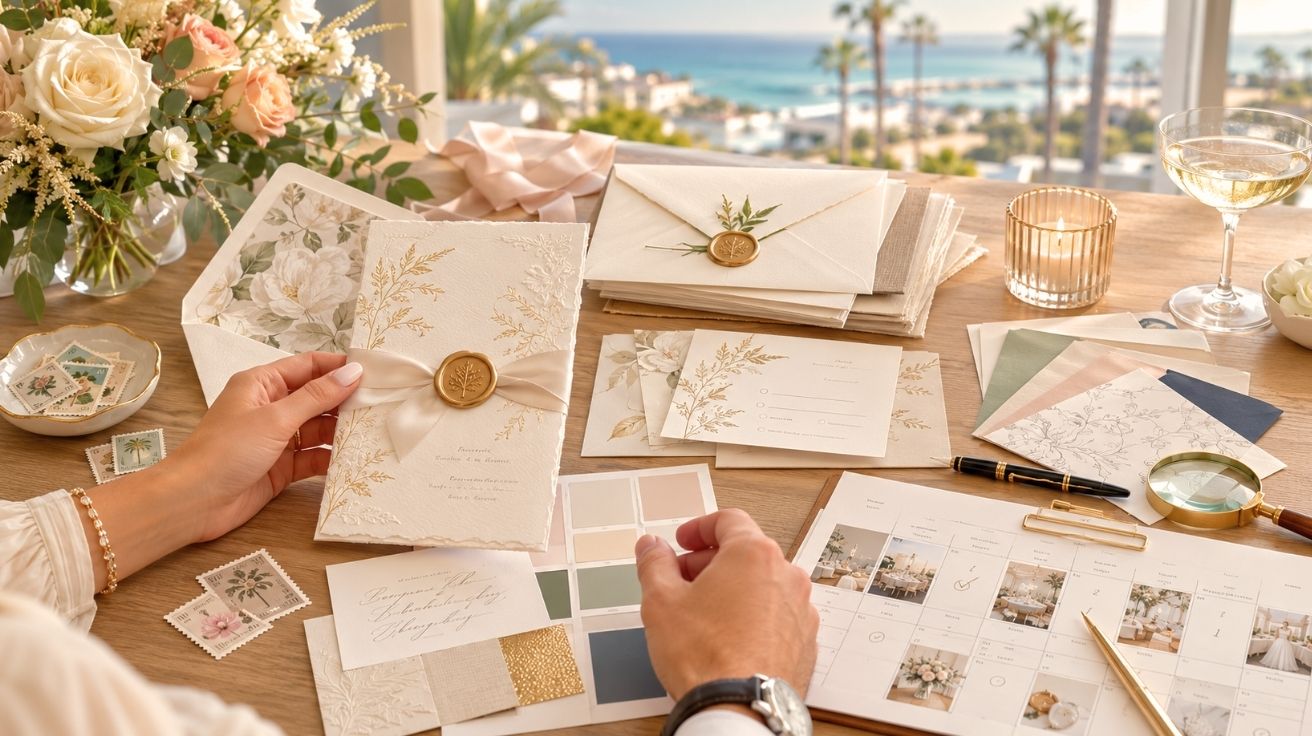

Planning a wedding involves dozens of decisions that compound on each other. Venue, catering, florals, photography — each one carries its own timeline, its own vendors, and its own potential for delay. Among all of these, the invitation is often treated as a straightforward errand. Couples assume it can be handled quickly, adjusted freely, and completed without much planning depth. That assumption causes more problems than almost any other in the process.
Invitations are not just paper. They set guest expectations, communicate logistical information, and serve as the first physical representation of the wedding’s tone. Getting them wrong — or getting them late — creates a cascade of problems that are difficult to reverse once the process is underway. This article covers what couples in San Diego consistently discover too late about ordering custom invitations, and why those lessons matter before you place a single order.
1. Production Timelines Are Longer Than Most Couples Expect
When couples begin researching custom wedding invitations san diego, one of the first surprises is how far in advance reputable print providers book out. Custom work is not pulled from a shelf. It involves proofing cycles, material sourcing, printing, finishing, and quality inspection before anything ships or is ready for pickup. Each of those stages has its own lead time, and they run sequentially, not in parallel.
Most print professionals recommend that couples begin the invitation process at minimum three to four months before the mailing date — and that the mailing date itself should occur six to eight weeks before the wedding. That math means some couples need to begin the process nearly six months before their wedding day. Couples who delay because they are still finalizing venue or date details often find themselves scrambling with shortened timelines that limit their design options or push them toward standard templates rather than fully custom work.
Why Rushed Orders Rarely Deliver the Same Result
Rush printing exists, but it introduces trade-offs that are easy to overlook when the pressure is high. Expedited timelines often reduce the number of proofing rounds available, which increases the chance that errors go undetected until after production is complete. Some specialty finishes — foil stamping, letterpress, embossing — are simply not available on rush schedules because the equipment and setup time cannot be compressed. A couple who waits too long may end up with a result that is functional but not what they originally envisioned.
2. The Guest List and the Invitation Count Are Two Different Numbers
A common error in the ordering process is equating the guest list headcount with the number of invitations needed. Households receive one invitation, not one per guest. A family of four receives a single suite. Two guests who share an address receive one envelope. This means the actual invitation count is typically somewhere between half and two-thirds of the total guest count, depending on how many guests live with others or share households.
Accounting for Extras Before You Order
Beyond the household calculation, it is worth ordering extras at the time of the original print run. Printing additional invitations after the fact is disproportionately expensive because the setup costs are the same regardless of quantity. Printing twenty extra during the original run costs a fraction of what a second setup and print run would cost for the same twenty. Couples should account for invitation display keepsakes, vendor copies, family members who want extras, and the inevitable few that are lost, damaged, or addressed incorrectly.
3. Custom Design Requires More Back-and-Forth Than Expected
Custom invitation design is a collaborative process. It rarely results in a finished product after a single proof. A couple may have a clear vision, but translating that vision into print involves technical decisions about typography, spacing, color matching, and print method that require feedback and adjustment. Most professional print providers go through at least two or three rounds of digital proofing before anything goes to press.
The Cost of Skipping Proofing Rounds
Proofing is not a formality — it is the stage where errors are caught and design refinements are made. Couples who rush through proofing to save time, or who approve a proof without reviewing every detail carefully, are taking on a real risk. Spelling errors, incorrect dates, missing RSVP information, and formatting inconsistencies are all common proof-stage discoveries. Once a job is printed, correcting those errors requires reprinting, which adds cost and delays the entire mailing timeline.
4. Paper Choice Has a Meaningful Impact on the Final Product
The paper or card stock used for an invitation affects not just how it looks, but how it handles, mails, and holds up over time. Heavier stock feels more substantial in the hand and photographs differently than thin paper. Certain finishes interact with ink and printing methods in ways that change the final color output. Textured papers can limit the legibility of fine-detail printing. These are not aesthetic preferences alone — they are functional decisions that affect the outcome of the finished product.
How Paper Weight Affects Postage
Paper weight also has a direct relationship with mailing cost. Heavier invitation suites — particularly those that include multiple inserts, lined envelopes, or wax seals — may exceed standard letter weight thresholds and require additional postage. In some cases, the shape or rigidity of the envelope may also require hand-canceling at the post office. Couples who do not account for postage in their budget sometimes find that the final mailing cost is meaningfully higher than anticipated. The United States Postal Service provides clear guidelines on what constitutes a non-machinable piece, which is worth reviewing before finalizing any invitation format.
5. Wording Requires More Thought Than Most Couples Allocate to It
Invitation wording carries meaning beyond the literal information it communicates. The phrasing, formality level, and structure of the text signal the nature of the event — its formality, its tone, and the expectations being placed on guests. Traditional wording conventions exist for a reason: they provide a shared language that guests recognize and interpret correctly. Couples who deviate from convention without understanding why those conventions exist can inadvertently send mixed signals to their guests.
The Details That Are Frequently Omitted
Beyond the primary ceremony details, invitation suites often need to communicate additional information that couples forget to plan for: reception timing and location if different from the ceremony, dress code guidance, RSVP deadlines, meal selection if required, and information about accommodations or transportation. Each of these additions requires either space on the main invitation or a separate insert card. Both options need to be planned during the design phase, not added as an afterthought after production has begun.
6. Digital Mockups Do Not Fully Represent the Printed Result
Digital proofs are a necessary step in the approval process, but they have limitations. Screen color calibration varies by device, which means the colors a couple sees on a laptop may look different from what prints on paper. Textures, embossing depth, and foil reflectivity cannot be meaningfully conveyed in a digital file. Couples who make final decisions based solely on a screen preview sometimes experience a gap between expectation and the physical result.
When to Request a Physical Sample
For high-investment invitation suites, requesting a printed sample before committing to a full production run is a reasonable step. It adds time and sometimes a small cost, but it eliminates the risk of a full print run that does not match expectations. Couples ordering specialty finishes, unusual paper stock, or complex multi-layer designs benefit most from this step. It also gives the couple and the print provider an opportunity to align on standards before the full run begins.
7. Envelope Addressing Has Its Own Workflow
Addressed envelopes — whether handwritten, printed, or calligraphed — require a clean, organized guest list well before the invitations are mailed. Calligraphers, in particular, often have their own lead times and work from formatted spreadsheets rather than handwritten lists. Couples who deliver incomplete or inconsistently formatted guest data to an envelope addressing professional extend their timeline and risk errors in the final product.
8. Assembly Takes Longer Than Anticipated
A custom invitation suite with multiple inserts, tissue paper, wax seals, or ribbon requires time to assemble — sometimes several hours for a moderately sized guest list. Couples who have not factored this into their timeline often find themselves assembling invitations the night before their mailing deadline. Planning for assembly time, and recruiting help in advance, is part of managing the invitation process realistically.
9. Local Expertise Matters More Than Price Alone
San Diego’s geography, climate, and event culture all influence what works well for a local wedding. A print provider familiar with the region understands common venue styles, seasonal considerations, and local supplier relationships. Ordering from a national online platform may offer lower base pricing, but it removes the opportunity for direct consultation, physical samples before production, and the kind of responsive communication that resolves problems quickly when they arise.
10. Budget Planning Should Include Every Component, Not Just Printing
The cost of custom invitations extends beyond the printing quote. Postage, envelope addressing, assembly supplies, insert cards, and packaging materials are all part of the total investment. Couples who budget only for printing often encounter sticker shock when the full picture comes into view. Working with a print provider who outlines all associated costs upfront allows for more accurate planning and fewer surprises as the project progresses.
Closing Thoughts
Ordering custom wedding invitations is a process with more moving parts than it first appears. Timeline, paper, wording, proofing, addressing, assembly, and postage all require deliberate planning and adequate lead time. Couples who approach the process with a clear understanding of what is involved — and who begin early enough to work through each stage without pressure — consistently report a better experience and a better result.
The couples who experience frustration are almost always those who underestimated how long the process takes, or who treated invitations as a low-priority item until other planning decisions were resolved. Starting early, asking detailed questions, and maintaining clear communication with a print provider eliminates most of the problems that couples describe after the fact. The invitation is the first thing guests receive from you. It is worth the effort to get it right.
Read More: Skully Brandon Real Name, Net Worth, Age, Career, and Lifestyle


Leave a Comment