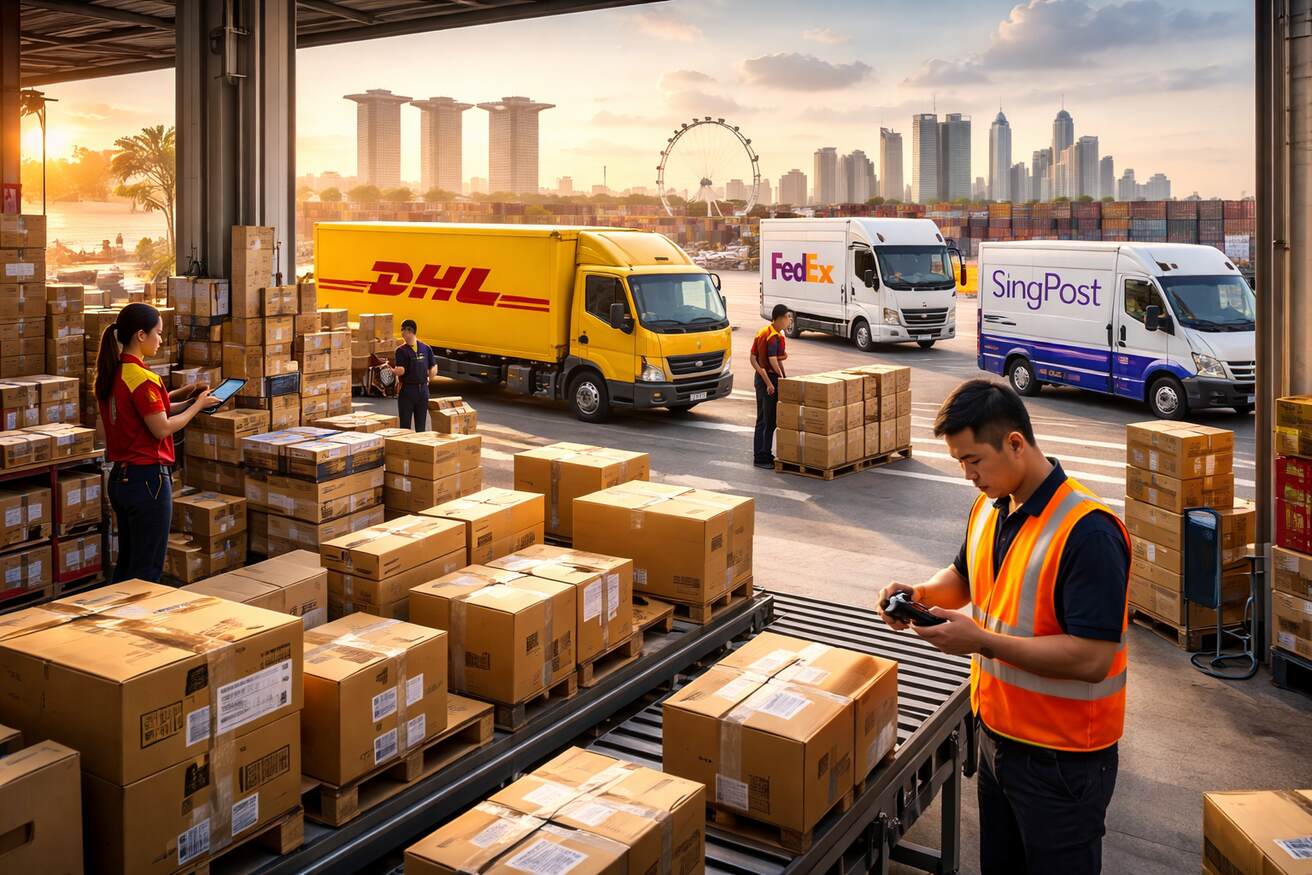

Why Your Logistics Choice Could Make or Break Your Singapore Ecommerce Business
Here’s something most founders don’t realise until it’s too late: your logistics partner shapes your customer experience more than your product photography or marketing copy ever will.
You’ve spent months perfecting your product. You’ve navigated the complexities of Singapore company formation. You’ve even sorted out your ACRA business profile. But then a shipment goes missing, delivery takes three weeks instead of three days, or customs clearance becomes a nightmare.
Suddenly, your 5-star reviews turn into angry emails.
The logistics partner you choose isn’t just about moving boxes from point A to point B. It’s about reliability, cost structure, scalability, and whether you’ll spend your evenings tracking down lost parcels or building your business.
This guide breaks down the three major logistics options for Singapore ecommerce companies: DHL, FedEx, and SingPost. We’ll look at what actually matters—not just the marketing promises, but the real-world performance that impacts your bottom line and your sanity.
Understanding The Singapore Ecommerce Logistics Landscape
Singapore’s position as a global trade hub creates both opportunities and complications for ecommerce sellers.
Look, you’re operating in one of the world’s most connected markets. Changi Airport handles massive cargo volumes daily. The port infrastructure is world-class. But here’s the thing: just because the infrastructure exists doesn’t mean every logistics provider uses it equally well.
The ecommerce logistics game in Singapore revolves around three main factors.
- First, there’s regional coverage—can your provider reliably reach Southeast Asian markets where your growth likely lives?
- Second, customs expertise matters more than most founders expect, especially if you’re shipping cross-border.
- Third, integration capabilities with your ecommerce platform can save you hours of manual data entry every week.
Different providers excel at different things. Some dominate international express shipping but struggle with regional deliveries. Others offer rock-bottom prices for domestic shipping but fall apart when you scale. Understanding these trade-offs before you commit saves you from expensive pivots later.
Piloto Asia works with hundreds of ecommerce companies setting up in Singapore, and we’ve seen how logistics choices impact everything from cash flow to customer retention. The patterns are clear once you know what to look for.
DHL: The Premium International Powerhouse
DHL built its reputation on speed and reliability for international shipments. For Singapore ecommerce businesses targeting global markets, that reputation often translates into real advantages.
Their express service consistently delivers on promised timelines for major markets. If you’re shipping electronics, fashion, or time-sensitive products to Europe, North America, or Australia, DHL’s network genuinely performs. Customs clearance is generally smooth because they’ve invested heavily in documentation systems and customs relationships.
But here’s what matters for your decision: DHL’s strength is premium international shipping, not budget-friendly regional distribution.
The pricing structure reflects this positioning. For lightweight parcels under 2kg going to distant markets, you’ll pay significantly more than alternatives. Volume discounts exist, but you typically need substantial shipping volumes before rates become competitive with regional specialists.
Integration with major ecommerce platforms like Shopify, WooCommerce, and Lazada works well. Their API is robust, and most fulfilment centres in Singapore have experience with DHL’s systems. This reduces friction in your operations, which has real value when you’re running lean.
The customer service experience varies. Large accounts get dedicated representatives who actually solve problems. Smaller shippers often deal with call centres where resolution takes longer. It’s frustrating when you’re trying to track down a shipment worth thousands of dollars, and you’re stuck in a phone queue.
DHL makes sense when international reputation matters to your brand, when shipping speed justifies premium pricing, or when you’re targeting markets where their network dominates. For budget-conscious regional plays, you’ll likely burn through capital unnecessarily.
FedEx: The Reliable Middle Ground
FedEx occupies interesting territory in Singapore’s ecommerce logistics ecosystem. They’re not the cheapest option, but they’re not the most expensive either. They’re not the fastest for every route, but they’re consistently reliable.
Here’s what FedEx does well: North American and European routes receive excellent service. If your primary markets are the US, Canada, or Western Europe, FedEx often matches or beats DHL on both speed and price. Their tracking systems are detailed and accurate, which reduces customer service headaches on your end.
The regional network throughout Southeast Asia has improved dramatically over recent years. Malaysia, Thailand, Indonesia, and the Philippines receive better service than they did five years ago. It’s not always faster than local specialists, but it’s reliable enough for most business models.
Price positioning sits between premium (DHL) and budget (SingPost for certain routes). For mid-weight parcels in the 2-5kg range shipping to developed markets, FedEx often provides the best value proposition. Volume discounts kick in at reasonable thresholds, making them accessible for growing businesses.
Integration capabilities are solid. Most ecommerce platforms and warehouse management systems support FedEx without custom development. The API documentation is clear, and implementation typically takes days, not weeks.
The weaknesses? FedEx struggles more with remote or emerging markets compared to DHL. If you’re shipping to tier-2 cities in India or remote areas in South America, expect delays and complications. Their customer service, while generally responsive, sometimes lacks the urgency that time-sensitive ecommerce situations demand.
FedEx works well for businesses with balanced international distribution, moderate shipping volumes, and customers who value reliability over absolute speed. They’re the safe choice that rarely disappoints but rarely amazes either.
SingPost: The Local Champion With Regional Ambitions
SingPost operates differently from the international logistics giants. As Singapore’s national postal service, they combine government-backed infrastructure with commercial ambition.
The domestic delivery network is unmatched. For Singapore-to-Singapore shipments, SingPost offers the most competitive pricing and reliable service. If your business model involves local delivery—think meal kits, local fashion brands, or Singapore-focused products—SingPost provides excellent value.
Regional expansion through partnerships and acquisitions has created a complex but increasingly capable network. Their eCommerce logistics division specifically targets online sellers with services designed around ecommerce workflows rather than traditional postal services.
Pricing for regional deliveries to Malaysia, Indonesia, and Thailand can be significantly lower than DHL or FedEx, especially for lighter items. This matters enormously if you’re operating on thin margins or testing new markets where shipping costs impact purchase decisions.
But here’s where SingPost shows limitations: international service beyond Southeast Asia remains inconsistent. Shipping to Europe, North America, or even Northeast Asia often involves handoffs to partner networks where tracking becomes murky and delivery times stretch.
The technology infrastructure is improving, but still lags behind DHL and FedEx. Integration requires more manual setup in many cases. Smaller ecommerce platforms might not have native SingPost integration, requiring custom development or third-party plugins.
Customer service quality varies wildly. Local issues get resolved quickly. International problems can languish for weeks with limited visibility. This inconsistency makes planning difficult when you’re scaling.
SingPost makes sense for Singapore-focused businesses, regional ecommerce plays targeting Southeast Asia, or companies testing markets where lower shipping costs enable market entry. For premium international brands or businesses where shipping speed is a competitive advantage, the limitations outweigh the cost savings.
Comparing Performance Across Key Ecommerce Metrics
The marketing materials all sound impressive. But what actually matters when you’re shipping products daily?
Here’s a comparison table based on real-world performance factors that impact your operations:
| Factor | DHL | FedEx | SingPost |
|---|---|---|---|
| International Speed (US/EU) | Excellent (2-4 days) | Excellent (3-5 days) | Fair (7-14 days) |
| Regional Speed (SEA) | Good (2-5 days) | Good (3-6 days) | Excellent (2-4 days) |
| Domestic Singapore | Good (1-2 days) | Good (1-2 days) | Excellent (1-2 days) |
| Pricing (International) | Premium (highest) | Moderate (mid-range) | Budget (lowest) |
| Pricing (Regional) | High | Moderate | Competitive |
| Customs Expertise | Excellent | Very Good | Good |
| Tracking Accuracy | Excellent | Excellent | Good |
| Platform Integration | Excellent | Excellent | Moderate |
| Customer Service | Good (volume-dependent) | Good | Fair (inconsistent) |
| Claims Process | Professional | Professional | Slower |
This table tells a story. No single provider dominates every category. Your choice depends on which factors matter most for your specific business model.
Sound familiar? Most ecommerce founders choose logistics partners based on brand recognition or pricing alone, then regret it when operational realities clash with their business needs.
Strategic Considerations Beyond Price Per Shipment
Here’s what gets overlooked in most logistics decisions: the total cost extends far beyond the per-shipment rate.
Think about operational overhead. How many hours per week will your team spend managing shipments, resolving delivery issues, and updating customers? A cheaper provider that requires constant intervention costs more in team time than a premium provider that just works.
Customer experience directly impacts repeat purchase rates. If your logistics partner consistently delivers late or damages products, your carefully cultivated brand reputation suffers. One bad delivery experience can cost you a lifetime customer relationship worth thousands in revenue.
Scalability matters more than you think. The provider that works perfectly at 50 shipments per week might collapse under the strain of 500. Or their volume discounts might kick in at thresholds that dramatically change your unit economics. Understanding these inflection points helps you avoid painful transitions.
Cash flow timing is often ignored. Different providers have different payment terms and billing cycles. Some require prepayment, others invoice monthly. When you’re managing working capital carefully, these details matter.
Piloto Asia helps ecommerce companies think through these strategic considerations during the company setup phase. Getting your logistics framework right from the beginning prevents expensive pivots later when you’re trying to scale.
Making The Right Choice For Your Business Model
Want to know the secret? There’s no universal “best” logistics partner. The right choice depends entirely on your specific situation.
If you’re launching a premium international brand where fast, reliable delivery is part of your value proposition, DHL’s premium pricing makes sense. Your customers expect excellence, and logistics failures undermine your entire positioning. The extra cost per shipment is insurance against brand damage.
If you’re running a lean operation targeting multiple international markets with moderate volumes, FedEx provides the balanced reliability that lets you focus on growth rather than logistics troubleshooting. You get professional service without paying for capabilities you don’t need.
If you’re building a Southeast Asia-focused business or testing regional markets on tight margins, SingPost’s regional network and competitive pricing enable market entry that might otherwise be unprofitable. The limitations in premium markets don’t matter if you’re not shipping there anyway.
Here’s what many successful ecommerce companies do: they use multiple providers strategically.
- DHL for premium international orders, where customers pay for expedited shipping.
- SingPost for regional deliveries where cost matters more than speed.
- FedEx for standard international shipping that balances both considerations.
This multi-provider approach requires more sophisticated operations, but it optimises for different customer segments and margins. As you scale, the complexity becomes manageable, and the cost savings or service improvements justify the operational overhead.
The exception is very early-stage businesses with limited volumes. If you’re shipping fewer than 100 parcels monthly, the complexity of managing multiple providers probably outweighs the benefits. Pick one that covers your primary market well and refine it later.
Implementation And Partnership Considerations
You’ve chosen your provider. Now what?
- Negotiation leverage exists even for smaller businesses. Don’t just accept published rates. Logistics providers in Singapore compete aggressively for ecommerce business. Present your growth projections, compare competitor quotes, and request volume-based discounts that kick in as you scale.
- Integration planning matters more than most founders realise. Before committing, verify that your chosen provider integrates cleanly with your ecommerce platform, inventory management system, and any fulfilment centres you’re using. Request a technical assessment if you’re using less common platforms.
- Insurance and liability deserve attention. Understand exactly what’s covered when shipments are lost or damaged. The default coverage is often inadequate for high-value products. Additional insurance costs money but might be essential depending on your product category.
- Service level agreements should be documented clearly. What constitutes on-time delivery? How are delays compensated? What’s the claims process for lost shipments? Get specifics in writing rather than relying on verbal assurances.
- Account management relationships can make or break your experience, especially with DHL and FedEx. Request a dedicated contact for your account once volumes justify it. Having someone who knows your business and can resolve issues quickly is worth negotiating for.
How Company Structure Impacts Logistics Choices
Here’s something that catches foreign founders off guard: your company structure and registration affect your logistics options and pricing.
Businesses properly incorporated in Singapore with complete documentation have access to better rates and services than informal operations. Logistics providers verify business legitimacy before extending commercial terms. Having your company secretary services, tax registration, and business profile properly established through a service like Piloto Asia streamlines the onboarding process with logistics partners.
GST registration status impacts how customs and duties are handled. If you’re importing inventory for resale, your GST registration affects clearance processes and cost structures. Understanding these tax implications during company formation prevents logistics complications later.
Business bank accounts need to be established for commercial logistics accounts. Providers won’t extend credit terms or volume discounts without proper banking relationships. This interconnection between incorporation, banking, and logistics means planning these elements together rather than sequentially.
Work visas and employment passes matter if you’re hiring operations staff to manage logistics. The ability to bring in experienced operations managers often determines how sophisticated your logistics strategy can become.
Frequently Asked Questions
Which Logistics Provider Offers The Best Rates For Singapore Ecommerce Companies Shipping Regionally?
SingPost typically provides the most competitive rates for regional Southeast Asian deliveries, particularly for lighter parcels under 2kg. However, “best rates” depend on your specific shipping profiles. FedEx often beats SingPost on price for mid-weight parcels (2-5kg) to certain markets like Thailand and Vietnam, especially once you qualify for commercial volume discounts. Request quotes for your actual shipping profile rather than relying on published rates. The difference between providers can be 30-50% depending on your specific routes and volumes.
Can I Use Multiple Logistics Providers Simultaneously, Or Should I Consolidate With One Partner?
Using multiple providers simultaneously is not only possible but also often optimal once you reach sufficient volume. Many successful ecommerce businesses use DHL for premium international shipping, FedEx for standard international orders, and SingPost for regional deliveries. This multi-provider approach requires more sophisticated operations and inventory management but optimises costs and service levels across different customer segments. The complexity is manageable with proper systems and becomes worthwhile typically above 200-300 monthly shipments. Below that threshold, the operational overhead of managing multiple providers often outweighs the benefits.
How Do I Know When I’ve Outgrown My Current Logistics Partner?
Several signs indicate you’ve outgrown your provider. Consistent delivery failures above 5% of shipments suggest capacity or capability issues. If you’re spending more than 10 hours weekly resolving logistics problems, the operational cost exceeds the savings. When customer complaints about shipping become your top support category, your logistics partner is damaging your brand. Financially, if shipping costs exceed 15% of product value on standard orders, you’re likely overpaying relative to market rates. Finally, if your provider can’t support new markets you’re expanding into, they’re limiting your growth. Any combination of these factors justifies reassessing your logistics setup.
What Logistics Considerations Are Unique To Certain Product Categories In Singapore Ecommerce?
Product categories face dramatically different logistics challenges. Electronics and high-value items require robust insurance, secure handling, and clear customs documentation to avoid delays and theft risk—DHL and FedEx generally handle these better than SingPost. Perishables and food products need temperature-controlled logistics and expedited customs clearance that few providers offer reliably for international shipping. Fashion and apparel benefit from providers with flexible return logistics since return rates often exceed 20%. Bulky or heavy items face dimensional weight pricing that makes regional ocean freight more economical than air express for many routes. Understanding your product category’s specific logistics requirements prevents costly mismatches with provider capabilities.
Your Logistics Decision Shapes Your Growth Trajectory
Here’s the thing about logistics: it’s boring until it isn’t.
When everything works smoothly, you never think about it. Products leave your warehouse, travel across borders, clear customs, and arrive on doorsteps exactly when promised. Your customers are happy, your reviews stay positive, and you focus on product development and marketing.
But when logistics fails, it consumes everything. Customer service tickets pile up. Refund requests erode margins. Your reputation suffers. You spend days tracking down lost shipments instead of building your business.
The logistics partner you choose determines which scenario you experience. This decision deserves as much attention as your product sourcing, marketing strategy, or pricing structure. It’s not sexy, but it’s fundamental.
DHL, FedEx, and SingPost each serve different business models effectively. Understanding your priorities—speed versus cost, international versus regional, premium versus budget—points you toward the right choice. And remember, you’re not locked in forever. As your business evolves, your logistics setup should evolve too.
The ecommerce companies that scale successfully in Singapore don’t just stumble into good logistics. They think strategically about how shipping integrates with their overall business model, customer experience, and growth plans.
If you’re setting up an ecommerce operation in Singapore and feeling overwhelmed by the interconnected decisions around company incorporation, banking, tax structure, and logistics, that’s completely normal. These elements do connect in ways that aren’t obvious until you’ve navigated them.
That’s exactly why Piloto Asia takes a comprehensive approach to helping ecommerce businesses establish in Singapore. We don’t just handle your company registration and disappear. We help you think through how your company structure, tax setup, banking relationships, and operational choices like logistics fit together to support your specific business model.
What’s your biggest logistics concern as you plan your Singapore ecommerce operation? The challenges you’re facing probably have solutions you haven’t discovered yet.
Read More: How Do You Create a Strong Operating Agreement for Your LLC?


Leave a Comment