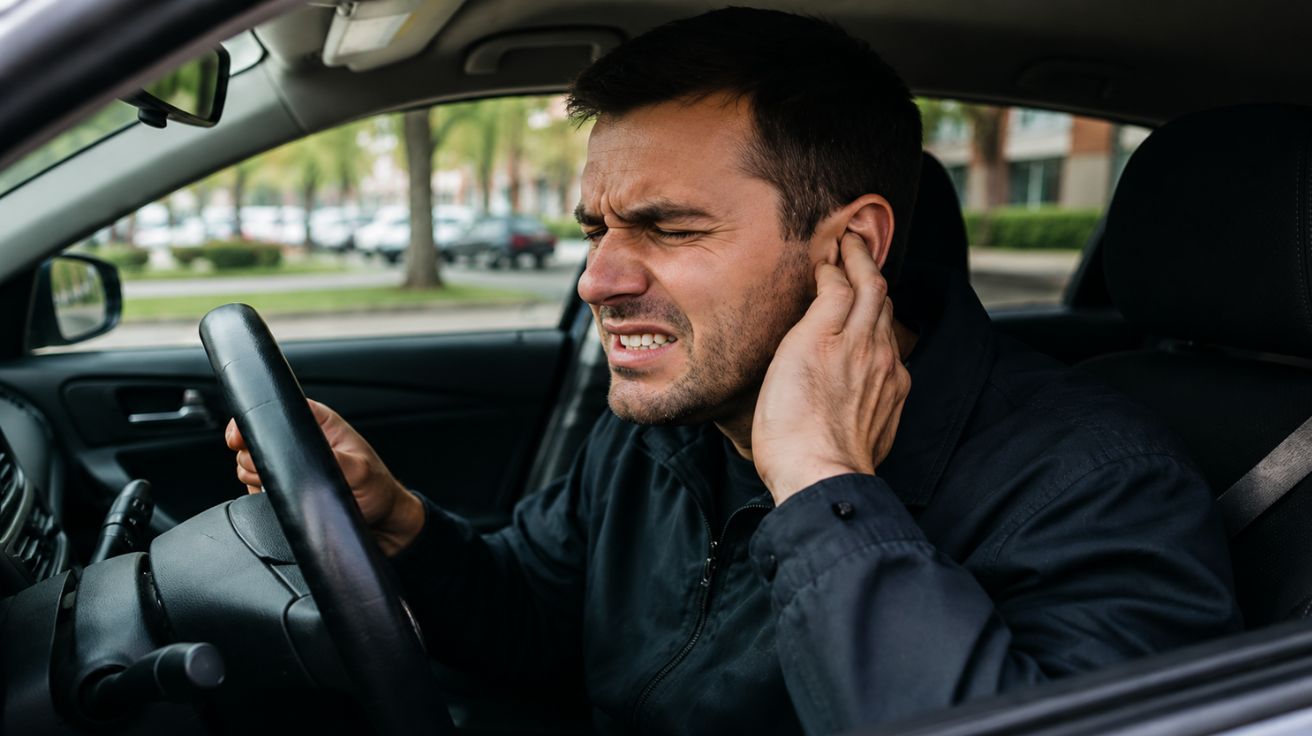

That high-pitched squeal every time you press the brake pedal is hard to ignore, and for good reason. Brakes are one of the most important safety systems on your car, so any change in sound or feel is worth paying attention to. The good news is that squeaking brakes are usually easy to explain, and often easy to fix too.
This guide walks through the most common reasons brakes squeak, how to tell which cause applies to you, and when it is time to get them checked properly.
At TJ Services in Fleet, brake noise is one of the most common reasons drivers book in. Most of the time it is a quick inspection and a straightforward fix. Occasionally, it is the first sign of something that needs attention before it becomes expensive. Here is how to tell the difference.
Is Brake Squeaking Always a Problem?
Not necessarily. A brief squeak first thing in the morning, or after driving through rain, is often completely normal. Moisture and light surface rust build up on the brake discs overnight or during wet weather, and this usually clears after a few gentle stops.
The concern is when the squeaking is constant, gets louder over time, or is joined by other symptoms like grinding, vibration or a spongy pedal. That pattern usually points to something that needs attention rather than something that will simply go away.
Common Causes of Squeaking Brakes
1. Worn Brake Pads
This is by far the most common reason for squeaking brakes. Most brake pads have a small metal wear indicator built in, and once the pad material wears down close to this point, it presses against the disc and creates a high pitched squeal. This is a deliberate design feature, essentially an early warning system telling you the pads are due for replacement.
If your car is squeaking and the pads have not been checked in a while, this is the first thing worth ruling out. Driving with badly worn pads for too long can lead to metal-on-metal contact, which is noisier, more damaging and considerably more expensive to fix.
At TJ Services, we measure pad thickness with a digital gauge, not a visual guess. A pad that looks fine from the outside can be down to 2mm on the inner edge, the part you cannot see without removing the wheel. That is why we check all four wheels, not just the ones that are easy to reach.
2. Dust and Debris Buildup
Brake dust, dirt and small stones can get trapped between the pad and disc, especially if your car has been parked up for a while or driven on gritty roads. This buildup can cause a scraping or squeaking sound that comes and goes depending on driving conditions.
Unlike worn pads, this type of noise often clears itself after a short drive as the debris is dislodged. If the squeaking persists beyond a few miles, it is worth having a closer look.
We see this most often after gritting season on Hampshire roads, or when a car has been parked near a building site in Aldershot or Farnborough. The dust and grit gets between the pad and disc, and the squeak disappears once it works loose. If it persists beyond a few miles, it is worth having it checked.
3. Glazed Brake Pads or Discs
Repeated hard braking, particularly in stop start traffic or on long descents, can cause the surface of the brake pads or discs to overheat and harden. This creates a smooth, glazed surface that does not grip as effectively, often resulting in a squeal along with reduced braking performance.
Glazing tends to develop gradually, so drivers do not always notice until the noise becomes fairly consistent.
The A31 descends towards Farnham, and the long hills around Hartley Wintney are where we see this most. Drivers ride the brakes all the way down, the pads overheat, and by the time they reach the bottom, the surface is glazed. Engine braking, dropping a gear, and using the engine to slow the car prevent this entirely.
4. Moisture and Rust
As mentioned earlier, a light layer of surface rust can form on the discs overnight, particularly in humid or wet conditions. This is extremely common and nothing to worry about in most cases. A few normal brake applications are usually enough to clear it.
However, if your car sits unused for long periods, such as during a holiday, rust can build up more significantly and cause a longer lasting squeak until it wears away. The key difference is duration. Morning moisture squeaks disappear within five to ten minutes of driving. Post-holiday rust can persist for several days and may feel slightly rough through the pedal as the pads scrape the corroded surface clean.
There is also a seasonal factor. In Hampshire, autumn and early winter mornings bring heavy dew and occasional frost. Cars parked outside overnight collect more moisture than those in garages, and drivers in Fleet and Farnborough who street-park often notice louder, longer-lasting morning squeaks between October and March. This is normal but worth monitoring. If the squeak lasts more than a few miles, or if you feel vibration through the pedal, the rust may have pitted the disc surface, and that does not self-heal.
5. Low Quality or Incompatible Brake Pads
Not all brake pads are made equal. Cheaper or poorly matched pads can be noisier by design, particularly if the friction material is not suited to your specific car. This is one of the more overlooked causes, especially if the squeaking started shortly after a brake replacement.
The issue is usually the friction material. Premium pads use ceramic or high-grade semi-metallic compounds engineered for specific vehicle weights, brake disc materials, and operating temperatures. Budget pads often use harder, cheaper compounds that grip differently, generate more dust, and squeal because they vibrate at frequencies the original pads were designed to dampen. The difference is not just noise, it is stopping distance, disc wear, and how the pedal feels under heavy braking.
6. Missing or Worn Anti-Squeal Shims
Many brake pads are fitted with small metal or rubber shims designed specifically to dampen vibration and reduce noise. Over time, these shims can wear out, become damaged, or occasionally get left off during a repair. Without them, even healthy pads can squeak more than expected.
The shim sits between the pad backing plate and the caliper piston. Its job is to absorb the high-frequency vibration that occurs when the pad grips the disc, the same vibration that produces squeal. A worn shim loses its damping ability. A missing shim means metal-to-metal contact between the pad and caliper, which amplifies noise rather than reducing it.
There is also a lubrication factor. Proper brake assembly includes high-temperature grease on the contact points between the pad and caliper, not on the friction surface, but on the edges and back where the pad slides. If this grease is omitted or breaks down, the pad sticks and releases in a rapid cycle rather than sliding smoothly. That stick-slip motion is what generates squeal.We replace shims with every pad change and apply fresh high-temperature grease to all contact points. It takes an extra five minutes and eliminates the most common cause of post-repair squeak.
Squeaking Versus Grinding: What Is the Difference?
It helps to know the difference between these two sounds, as they usually mean different things.
Squeaking is typically a high pitched, intermittent sound, often linked to wear indicators, dust or moisture. Grinding is a deeper, harsher noise that suggests the pad material has worn away completely, leaving metal to grind against metal.
If you are hearing grinding rather than squeaking, this is a more urgent issue and should be checked as soon as possible, as it can damage the brake discs and significantly increase repair costs.
When Should You Get Your Brakes Checked?
As a general guide, book your brakes in for inspection if you notice any of the following.
- The squeaking is constant, not just occasional.
- The noise is joined by grinding, vibration or pulling to one side.
- The brake pedal feels softer or lower than usual.
- It has been more than a year, or several thousand miles, since your brakes were last inspected.
- The squeaking started shortly after new pads or discs were fitted.
Catching a problem early is almost always cheaper and simpler than waiting until the issue becomes more serious.
How Brake Problems Are Diagnosed
A proper brake inspection typically involves a few straightforward checks. A technician will measure the remaining pad thickness, inspect the discs for scoring, rust or uneven wear, and check that the calipers are moving freely. They will also look at the condition of any shims or clips, and confirm that the correct pads have been fitted for your vehicle.
This kind of check is often included as part of routine car servicing, which is one of the simplest ways to catch wear before it turns into a noisy or costly problem.
If your brakes are squeaking and you want a proper inspection, brake repair in Fleet at TJ Services includes pad measurement, disc scoring checks, caliper testing, and a written report, all with no booking fee.
What Happens If You Ignore Squeaking Brakes
Putting off a brake check might seem harmless when the car still stops fine, but the risk builds quietly in the background. Worn pads that are left too long eventually expose the metal backing plate, which then grinds directly against the disc. At that point, you are no longer just replacing pads, you are likely replacing discs too, which is a bigger job.
Beyond the cost, there is a genuine safety angle. Reduced pad material means a longer stopping distance, and a caliper that has been rubbing unevenly can cause the car to pull to one side under braking. Neither of these is something you want to discover for the first time in an emergency stop. Treating an early squeak as useful information, rather than background noise, is the simplest way to avoid that situation altogether.
Can You Prevent Brake Squeaking?
While some causes, like morning moisture, are simply part of everyday driving, there are a few habits that can help reduce unnecessary wear and noise.
Avoid harsh, repeated braking where possible, particularly on long descents, as this contributes to glazing. Try not to leave your car unused for extended periods without a short drive to keep moisture from settling. Choosing quality replacement parts when pads or discs need changing also makes a noticeable difference to both performance and noise.
Conclusion
Squeaking brakes are one of those noises that is easy to dismiss, but it is almost always your car trying to tell you something. Sometimes it is nothing more than morning moisture or a bit of dust, and other times it is a clear sign that your pads are due for replacement.
The safest approach is simple: if the noise is persistent, gets louder, or comes with other warning signs, get it checked rather than waiting it out. For drivers in Fleet, Aldershot, Farnborough, and the surrounding areas, TJ Services offers brake inspections with no booking fee and same-day appointments most days. Find us on Google to check availability, read reviews from local drivers, and book your check online or by phone.
Frequently Asked Questions
Why do my brakes squeak only when it is cold or wet?
This is usually caused by light surface rust or moisture on the brake discs, which typically clears after a few normal brake applications.
Is it safe to drive with squeaking brakes?
If the squeaking is occasional and not joined by grinding or a soft pedal, it is generally safe short term. Persistent squeaking should still be checked promptly.
How long do brake pads usually last?
This varies with driving style and conditions, but many pads last between 20,000 and 40,000 miles, with stop start city driving wearing them faster than motorway driving.
Why did my brakes start squeaking right after I had new pads fitted?
This can happen if the pads need a short bedding in period, but ongoing squeaking may point to incompatible pads or missing anti squeal shims.
Does brake squeaking always mean I need new pads?
Not always. It can also be caused by dust, moisture or glazing, which is why a proper inspection is the best way to confirm the cause.
Read More: The Hidden Reasons Your Car Keeps Failing the MOT Every Year


Leave a Comment