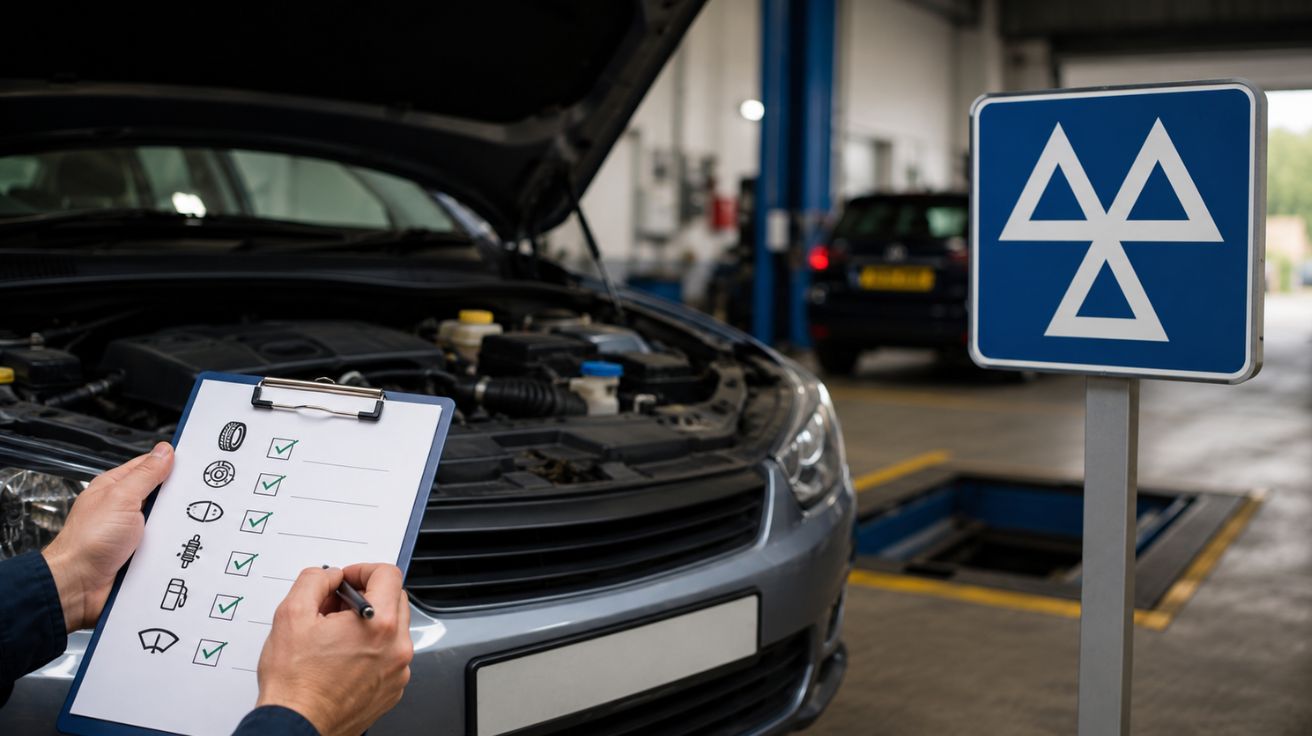

Failing your MOT year after year is not bad luck. Here are the hidden reasons it keeps happening and exactly what to do about it.
That sinking feeling when a tester hands back a red certificate is bad enough the first time. When it happens year after year for the same car, it stops feeling like bad luck and starts feeling like something is genuinely wrong with the way you are approaching your vehicle maintenance.
The frustrating truth is that around one in three cars in the UK fails its MOT at the first attempt every year. Many of those failures happen for the same categories of faults, repeated across the same vehicles. The answer almost never lies with the car itself. It lies with what happens, or more accurately what does not happen, in the twelve months between tests.
This guide goes beyond the obvious checks before an MOT. It explores the patterns behind repeat failures, the overlooked habits that send drivers back to the test centre with another fail, and what you can genuinely do differently. If your car has an MOT in Aldershot coming up and you have been here before, this guide could save you time, money, and frustration.
The MOT Is a Snapshot, Not a Service
This is one of the most important things to understand because it is the root cause of many repeat failures.
According to the official guidance on GOV.UK, the MOT test checks that your car meets the legal minimum safety and environmental standards at the time of the test. It does not inspect the engine, clutch, gearbox, or many other components that affect daily performance. It is simply a snapshot of specific safety-critical systems on one particular day.
Many drivers mistakenly believe that passing the MOT means their car is in excellent condition for another twelve months. It does not. A pass certificate only confirms that the vehicle met the minimum legal standard on the day it was tested.
During the following year, normal driving causes wear to brakes, tyres, suspension, steering, and other essential components. If some of these parts were already close to their limits during the previous test, they can easily become MOT failures by the following year.
Drivers who consistently pass their MOTs are not necessarily those with newer or more expensive cars. They are usually the ones who maintain their vehicles throughout the year rather than relying on the annual test.
The Real Reason You Keep Failing: Ignored Advisories
If your car keeps failing its MOT every year, the most common explanation is simple: previous advisory notices were ignored.
An advisory is added when the tester identifies a component that is worn, deteriorating, or approaching its legal limit but has not yet reached the point of failure. Although it does not stop you from passing the test, it serves as an early warning that repairs will soon be needed.
Many drivers see the word “Pass” and naturally feel relieved. As a result, advisory notes often receive little attention. Months later, the brake pads that were becoming thin have worn below the legal limit, or tyres that were close to the minimum tread depth now fail the inspection.
MOT testing data repeatedly shows that many vehicles fail for tyre-related faults that were already highlighted as advisories during the previous test. The warning was there, but no action was taken.
Think of advisory notices as next year’s failures arriving early. Treat each advisory as a recommended repair rather than an optional suggestion.
The Hidden Culprits That Cause Repeat Failures
Beyond ignored advisories, several recurring problems cause the same drivers to fail year after year. These issues often develop gradually, making them easy to overlook.
Suspension and Steering Wear
Suspension wear is one of the most commonly missed problems before an MOT.
Components such as:
- Shock absorbers
- Coil springs
- Ball joints
- Wishbone bushes
- Track rod ends
all wear slowly over thousands of miles.
Because the changes happen gradually, most drivers rarely notice the vehicle handling differently. There is usually no warning light and often no obvious noise. Instead, the ride slowly becomes softer and body roll increases until the wear becomes significant.
By the time an MOT tester identifies worn suspension parts or excessive steering play, the deterioration has usually been happening for many months.
Another common mistake is repairing only the component that caused the failure while ignoring related worn parts. This often results in another failure in the same area during the following MOT.
Short urban journeys around towns such as Aldershot, Farnborough, and Fleet place additional strain on suspension systems. Constant stop-start traffic, speed bumps, potholes, and rough roads accelerate wear far more than long motorway journeys.
Brake Wear That Goes Unnoticed
Brakes remain one of the biggest causes of MOT failures.
Brake wear is rarely perfectly even. When one front brake pad fails the test, the opposite side is often close to the same condition.
Many drivers replace only the failed side instead of servicing both sides together. As a result, the remaining brake pad reaches the failure point before the next MOT.
Brake discs are another common issue. Pads may be replaced while heavily worn, corroded, or scored discs remain in place, creating another repeat failure later.
The handbrake is also regularly overlooked. Handbrake cables gradually stretch over time, reducing holding power. Drivers often notice no obvious symptoms until the vehicle fails the MOT efficiency test.
Tyre Wear Patterns That Continue Year After Year
Tyres consistently represent the largest category of MOT failures despite being among the easiest problems to prevent.
The legal minimum tread depth in the UK is 1.6mm across the central three-quarters of the tyre. Driving below this limit can result in fines of up to £2,500 and three penalty points per tyre.
One reason drivers repeatedly fail is uneven tyre wear.
A tyre may appear to have sufficient tread across most of its surface while being worn below the legal limit along the inner or outer edge. Unless you inspect every part of the tyre carefully, this wear often goes unnoticed.
Uneven wear usually results from wheel alignment problems caused by:
- Potholes
- Kerb impacts
- Heavy road shocks
Many drivers simply replace the failed tyre without correcting the wheel alignment. The new tyre then develops the same uneven wear pattern, causing another MOT failure the following year.
Lighting Faults That Keep Returning
Lighting defects remain the single largest category of MOT failures every year.
Common problems include:
- Blown bulbs
- Corroded electrical connectors
- Damaged light clusters
Drivers often replace only the failed bulb without checking the remaining lights.
Since bulbs installed at the same time generally have similar lifespans, another bulb often fails shortly afterward.
Headlight lenses can also become cloudy or yellow over time, reducing light output enough to fail beam pattern or brightness checks.
Number plate lights deserve special attention because they are easy to forget yet frequently cause unexpected MOT failures.
Emissions Problems That Never Really Go Away
Older diesel vehicles and high-mileage cars commonly experience emissions failures.
Important components such as:
- Catalytic converters
- Diesel particulate filters (DPFs)
- Emissions sensors
gradually lose efficiency.
Cars driven mainly on short urban journeys often never reach the temperatures needed for proper DPF regeneration.
Some vehicles receive temporary treatments, pass the retest, and then return to the same short-trip driving habits. Since the underlying cause remains unchanged, emissions problems often reappear during the following MOT.
Dashboard Warning Lights Left Unresolved
Dashboard warning lights should never be ignored.
Warning lights that commonly cause MOT failures include:
- ABS warning light
- Engine management light
- Airbag warning light
Many drivers continue using the car because it appears to drive normally.
However, if these lights remain illuminated during the MOT, the tester must record the fault and the vehicle may fail.
The easiest way to avoid this repeat failure is to investigate warning lights as soon as they appear rather than waiting until MOT time.
You can read more about what specific failure codes mean and how they are recorded in the MOT failure codes guide.
What the MOT Does Not Check (And Why It Matters)
Understanding the limits of the MOT explains why some cars fail despite driving well, while others pass even with serious mechanical problems.
The MOT does not inspect:
| What the MOT Checks | What the MOT Does Not Check |
|---|---|
| Lights and signalling | Engine internal condition |
| Brakes and handbrake | Clutch and gearbox |
| Tyres and wheel alignment | Air conditioning |
| Suspension and steering | Starter motor |
| Exhaust emissions | Bodywork cosmetics |
| Windscreen and wipers | Sat nav or entertainment systems |
| Seatbelts and airbag warning light | Oil level or engine oil condition |
| Dashboard warning lights | Tyre pressure (only condition) |
This distinction is important because many drivers assume an MOT and a service cover the same areas.
They do not.
A service focuses on engine health, fluids, filters, and the overall mechanical condition of the vehicle. An MOT checks whether the vehicle meets the minimum legal road safety and environmental standards. Both are essential, but neither replaces the other.
Why Skipping Servicing Leads to MOT Failures
Many drivers overlook the connection between regular servicing and MOT success.
Routine servicing does more than keep the engine healthy. It allows trained technicians to inspect the same components examined during an MOT, including:
- Brakes
- Tyres
- Suspension
- Steering
- Lights
A mechanic can often identify worn brake pads, uneven tyre wear, developing suspension problems, or steering issues months before they become MOT failures.
Drivers who skip servicing often reach their MOT with no professional inspection having taken place for over a year. Problems that could have been fixed during a routine service instead become reasons for failing the test.
The repair itself may cost the same either way, but failing the MOT often means additional inconvenience, possible retest fees, and extra time without your vehicle.
At Ash Road in Aldershot, keeping up with car servicing is one of the most straightforward ways to reduce the risk of an MOT failure. A thorough service in the months before your test gives technicians the chance to identify borderline items and address them before they become a fail.
The Ghost MOT Problem
Another lesser-known issue affecting some drivers is the Ghost MOT.
A Ghost MOT occurs when a certificate is issued without the vehicle being properly inspected. Although recognised as a real problem in the UK, it creates serious risks for unsuspecting drivers.
A fraudulent certificate may leave significant safety faults undiscovered because the vehicle was never genuinely tested.
The consequences can include:
- Invalid insurance
- Undetected safety defects
- Increased legal liability after an accident
- More serious failures during the next legitimate MOT
If you have concerns about a previous MOT, checking your vehicle’s history through the official government service is always worthwhile. You can also read more about how this issue is being addressed in this piece on ghost MOTs and how the DVSA is cracking down.
A Pre-MOT Checklist You Can Complete in Ten Minutes
Before taking your vehicle for its MOT, spend a few minutes checking the most common failure points.
- Walk around the vehicle and check every external light, including dipped beam, main beam, fog lights, indicators, hazard lights, brake lights, reversing lights, and number plate lights.
- Check all four tyres using a 20p coin. If the outer band of the coin remains visible inside the tread, the tyre is close to or below the legal limit. Inspect both the inner and outer edges for uneven wear.
- Examine the windscreen for chips or cracks, particularly within the driver’s direct line of sight.
- Test the windscreen washers and ensure both wiper blades clean the glass properly without smearing.
- Start the engine and confirm that no dashboard warning lights remain illuminated.
- Test the horn to ensure it produces a continuous, clearly audible sound.
- Make sure both number plates are clean, undamaged, and easy to read.
- Test every seatbelt to confirm it locks securely, retracts correctly, and shows no visible damage.
Spending just a few minutes on these checks can prevent many of the simplest and most common MOT failures.
Conclusion
Failing an MOT year after year is rarely because the vehicle is fundamentally unreliable.
More often, repeat failures happen because small problems are ignored until they become serious enough to fail the inspection. Advisory notices are forgotten, servicing is delayed, dashboard warning lights remain unresolved, and normal wear continues unnoticed between annual tests.
The MOT itself is straightforward. It simply confirms whether your car meets the minimum legal safety standards on the day of testing.
The real difference comes from how the vehicle is maintained throughout the year. Paying attention to advisory notices, keeping up with routine servicing, and fixing small issues early can transform the MOT from a stressful annual event into a routine confirmation that your vehicle remains safe and roadworthy.
Frequently Asked Questions
Why does my car keep failing the MOT for the same things?
The most common reason is that advisory notices from previous MOTs were ignored. Components identified as worn usually continue deteriorating over the following year until they eventually become failures. Treating advisories as essential repairs helps break this cycle.
Does passing the MOT mean my car is in good condition?
No. Passing an MOT only confirms that your vehicle met the minimum legal safety and environmental standards on the day of testing. It does not assess engine condition, the clutch, gearbox, or many other mechanical components.
How far in advance can I book an MOT?
You can book your MOT up to one calendar month minus one day before your existing certificate expires. Passing early does not shorten your next MOT period because the new certificate runs from the original expiry date.
Can a dirty number plate really fail an MOT?
Yes. Number plates must be clean, undamaged, and fully legible. The rear number plate light must also work correctly, as both are checked during the inspection.
Does skipping a service affect my chances of passing the MOT?
Yes, indirectly. Routine servicing allows technicians to identify worn brakes, tyres, suspension components, steering parts, and other MOT-tested items before they become failures.
What is the difference between a major defect and a dangerous defect?
A major defect means the vehicle fails the MOT and repairs must be completed before a valid certificate can be issued.
A dangerous defect means the vehicle presents an immediate safety risk and should not be driven until the fault has been repaired. In these situations, arranging vehicle recovery is the safest option.
Read More: 245/45R20 Performance Tires: Complete Tire Guide 2026


Leave a Comment