
The Challenge of Heatwaves for Small Shops
Most of the year, the weather in Britain is mild enough that nobody thinks twice about it. Then a heatwave arrives, and within a day or two the whole country seems to grind to a halt. Trains slow down, offices turn into saunas, and small shops face a problem that bigger chains rarely worry about. While a large supermarket has backup systems and a maintenance team on call, the owner of a corner shop, a cafe, or a small boutique is usually on their own when the temperature climbs and the cooling stops working.
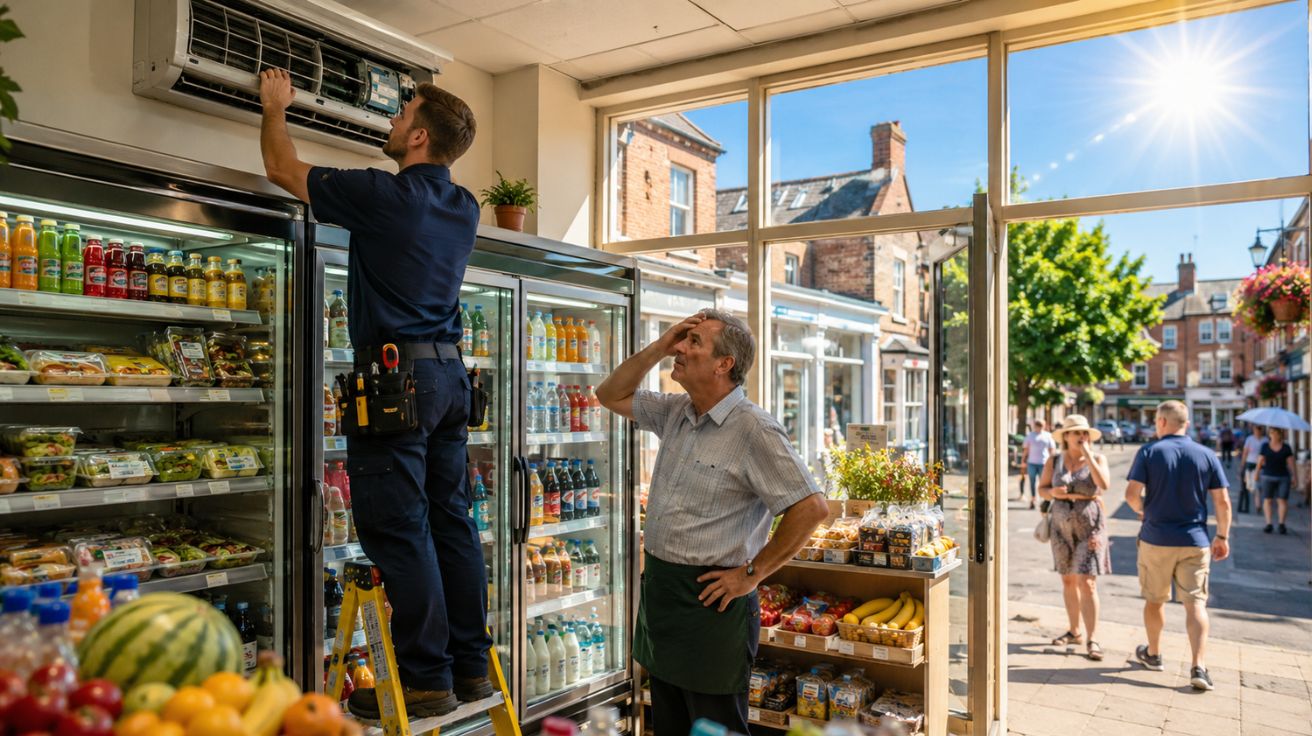
Take the example of a small grocer in a busy town centre. On a normal day, the shop hums along quietly. But during a heatwave, the fridges work overtime, the air inside grows thick and warm, and customers start to drift towards the door rather than linger over the shelves. When the air conditioning finally gives out at the worst possible moment, the owner has to make a quick decision, and a fast Air Conditioning Repair call is often the only thing standing between a profitable afternoon and a wasted one. The longer the wait, the more stock and trade are lost.
Why Cooling Systems Fail
The reason small shops suffer so badly is simple. Their cooling systems are often older, smaller, and pushed harder than they were designed for. A unit installed years ago to handle a mild summer is suddenly asked to fight off record temperatures, and it cannot cope. Filters clog, motors strain, and the gas that keeps everything cold slowly leaks away without anyone noticing until the day it matters most.
The Impact on Staff and Business
There is also the human side of the problem. Staff who are too hot make more mistakes, serve customers more slowly, and tire out faster. In a food business, heat can push fridges past safe limits, which means stock has to be thrown away to stay within health rules. A single afternoon of failure can wipe out the profit from a whole week of careful trading.
Why Preventive Maintenance Matters
The lesson that experienced shop owners learn, often the hard way, is that prevention beats panic. Booking a service before the summer arrives, rather than waiting for a breakdown, makes a huge difference. An engineer can clean the system, check the gas levels, and spot weak parts before they fail. It costs a little money up front, but it removes the gamble of being caught out on the hottest day of the year.
Choosing the Right Repair Company
Choosing the right help also matters. A reliable local company that answers the phone quickly and turns up the same day is worth far more than a cheaper option that leaves you waiting. When the heat is rising and customers are leaving, speed is everything, and a trusted contact saved in your phone is one of the most valuable things a small business can have.
How Air Conditioning Systems Work
It helps to understand a little about how these systems actually work, because it makes the warning signs much easier to spot. An air conditioning unit does not create cold air out of nothing. Instead, it moves heat from inside a room to the outside, using a special gas called refrigerant that flows around the system. When that gas runs low, or when filters and coils get clogged with dust, the whole process becomes far less effective. The unit keeps running and keeps using electricity, but it struggles to actually cool the room, which is why a struggling system often costs more to run while doing less.
Why Timing Matters During a Breakdown
For a small shop, the timing of a breakdown is rarely kind. Heatwaves tend to arrive suddenly and affect a whole region at once, which means every repair company in the area is flooded with calls on the same day. A shop owner who has not built a relationship with a reliable engineer can find themselves at the back of a very long queue, losing trade hour after hour while they wait. Those who have a trusted contact, on the other hand, are far more likely to be seen quickly, because the engineer already knows them and their system.
The Financial Cost of Waiting
There is also a simple financial way to think about all of this. The cost of a routine service or a quick repair is usually small and predictable. The cost of a full breakdown during a heatwave is large and unpredictable, made up of lost sales, spoiled stock, unhappy customers, and sometimes an expensive emergency call-out at short notice. Seen this way, looking after the cooling system is not really an expense at all. It is a form of insurance, protecting the shop against a much bigger loss further down the line.
Recognising the Early Warning Signs
Another point that catches many shop owners out is that a cooling problem rarely announces itself clearly. Unlike a light that stops working or a lock that jams, a failing air conditioning system tends to fade gradually. The shop feels a little warmer than usual, the unit runs for longer, and the electricity bill creeps up, but none of it is dramatic enough to demand attention. Then a single very hot day pushes the struggling system over the edge, and what looked like a minor niggle becomes a full failure. Learning to treat those small signs as early warnings, rather than ignoring them until they become impossible to overlook, is one of the most useful habits a shop owner can develop. It turns an unpredictable emergency into a manageable, planned repair, carried out calmly on a quiet day rather than in a panic during the busiest, hottest afternoon of the year.
Planning Ahead for Future Heatwaves
Heatwaves are becoming more common, not less, and the shops that thrive are the ones that plan ahead. A working cooling system is no longer a luxury or an afterthought. For a small business, it is part of staying open, keeping customers happy, and protecting the stock that pays the bills. The owners who understand this treat their cooling like any other essential tool, looking after it before it lets them down rather than scrambling once it already has.
Read More: Business and Academic Success: How They Connect in a Digital World


Leave a Comment