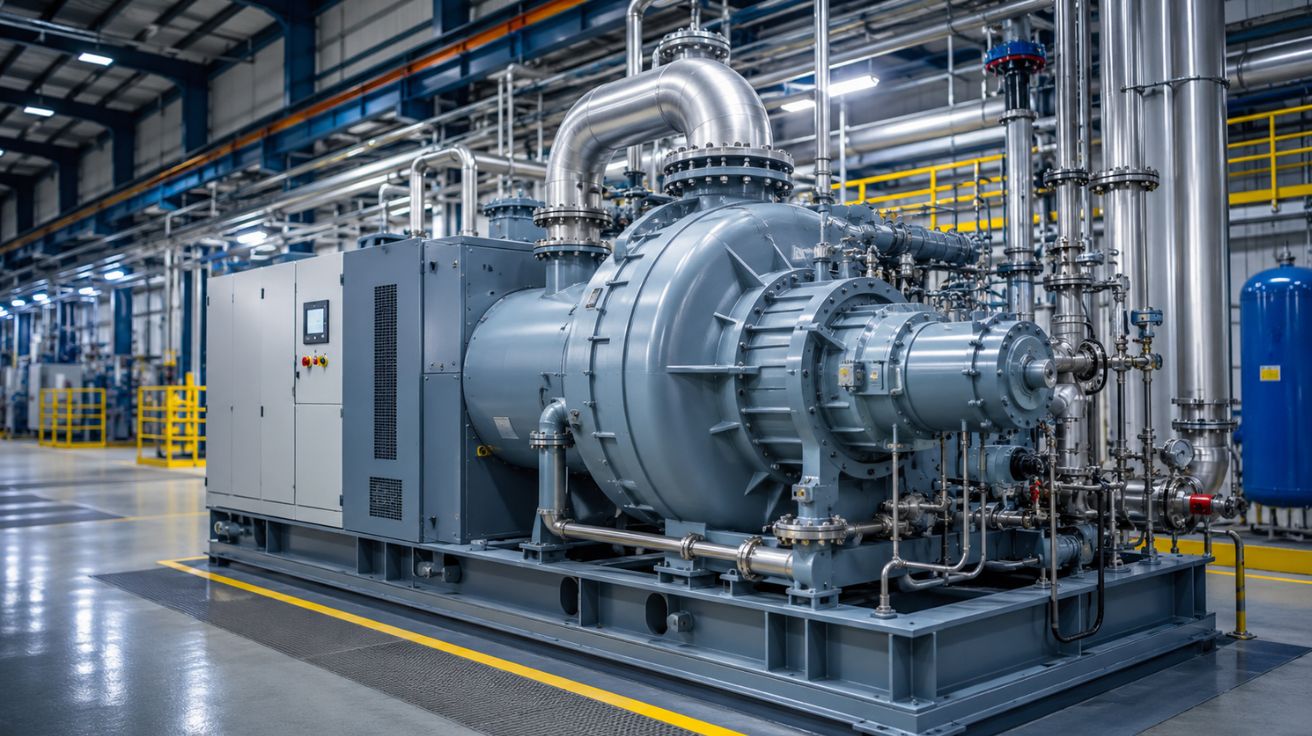

Centrifugal air compressors are often considered when a facility needs steady, high-volume compressed air. They can be a strong fit for large industrial loads, but they require disciplined specification. A buyer who only asks for a flow rate and pressure may miss turndown, inlet conditions, cooling, controls, and long-term service requirements.
Procurement teams can use PanGeng industrial compressor supplier as a starting point for supplier context, then move quickly into duty-specific questions. The more carefully the buyer describes the process, the easier it is to judge whether a centrifugal package is the right fit or whether another compressor technology should be considered.
Confirm the Load Profile
Centrifugal machines usually make the most sense when demand is stable enough to support efficient operation. Buyers should document base load, peak load, pressure range, expected running hours, seasonal variation, and future changes. A compressor that looks efficient at one point may perform poorly if the actual load varies widely.
The load profile should be based on measurements when possible. If measurements are not available, the team should build a conservative estimate from equipment lists and operating schedules. A supplier should explain how the proposed package handles the expected demand curve.
Evaluate Turndown and Controls
Turndown performance matters because many plants do not run at maximum load all day. Controls, inlet guide vanes, blow-off strategy, and system storage can affect both energy use and stability. Procurement should ask how the compressor behaves at partial load and how it interfaces with existing equipment.
A quotation should include more than a rated performance point. It should explain control philosophy and operating limits. That information helps the plant avoid a machine that is technically capable but inefficient under normal conditions.
Check Site Conditions
Ambient temperature, altitude, inlet filtration, cooling water, ventilation, and electrical supply all influence compressor performance. A centrifugal package selected for standard conditions may not deliver the expected result if the actual site differs. Buyers should provide realistic site data before accepting a quote.
Site conditions also affect maintenance. Dusty environments, high heat, or limited cooling capacity can shorten service intervals. The supplier should identify assumptions clearly so the buyer can challenge anything that does not match the plant.
Review Air Treatment Scope
Centrifugal compressor discussions often focus on the main machine, but downstream air treatment is part of the system. Dryers, filters, drains, receivers, and controls must support the required air quality. If the quotation excludes these items, the buyer should know exactly what remains to be supplied by others.
Air treatment scope is especially important for food, pharmaceutical, electronics, and chemical applications. The risk is not just lower efficiency; contaminated or wet air can affect product quality and equipment reliability. The compressor package should be reviewed as one utility system.
Ask About Service Strategy
A centrifugal compressor can become a core utility asset. Procurement should ask about commissioning, operator training, remote support, spare parts, and recommended maintenance intervals. The supplier’s answer can reveal whether the relationship will work after shipment.
Service planning also affects internal approval. A maintenance manager is more likely to support a purchase when the supplier provides manuals, parts lists, and clear support channels. A strong quote reduces the unknowns that often delay projects.
Buying Criteria Summary
The best centrifugal compressor purchase is based on load profile, controls, site conditions, air treatment, and service planning. Price matters, but it should be compared against energy exposure and operating risk. A structured review makes the final shortlist more defensible.
For buyers who need product-level context, centrifugal air compressor product details provides a relevant centrifugal compressor reference. The final technical selection should be confirmed through supplier engineering discussion and site-specific data.
Base Load Confirmation
Centrifugal compressor selection depends heavily on the load profile. The buyer should confirm whether the plant has a stable base load large enough to justify the technology. A facility with steady process air may be a good fit, while a small site with sharp demand swings may need a different control strategy or another compressor type. This check should happen before price negotiation.
Base load should be supported by data whenever possible. If no measurement exists, the buyer should build a conservative estimate from equipment lists, schedules, and production plans. The supplier should explain how the proposed machine behaves when demand falls below the preferred range. That answer is central to energy performance and operating stability.
Control Range Review
A rated performance point is not enough for a centrifugal purchase. The plant needs to understand inlet guide vane behavior, blow-off strategy, surge margin, and how the compressor responds to demand changes. These details affect both power use and reliability. A proposal that avoids control discussion leaves too much risk with the buyer.
The control range review should be written in plant language. What happens on a weekend shift? What happens when one production line stops? What happens in hot weather? By asking these questions, procurement turns abstract compressor terminology into operating evidence. A supplier that can answer clearly is more useful than one that only repeats catalogue values.
Cooling and Inlet Conditions
Centrifugal packages are sensitive to site conditions. Inlet temperature, altitude, filtration, ventilation, and cooling water availability can change performance. The supplier should not be allowed to assume ideal conditions if the plant has a hot compressor room, dusty air, or limited cooling capacity. Site data belongs in the technical record.
The buyer should ask which assumptions are used in the quoted performance. If the site condition changes, the supplier should identify the effect on capacity, efficiency, or reliability. This protects the plant from discovering after installation that the machine performs differently from the approval document. The quote should match the room where the compressor will actually run.
Treatment Equipment Boundaries
Centrifugal compressor quotations can focus on the main machine while leaving dryers, filters, receivers, drains, and controls vague. The buyer should mark exactly which treatment equipment is included and which will be purchased separately. Air quality and pressure stability depend on the system, not just the impeller.
Boundary clarity also helps cost comparison. One supplier may look more expensive because it includes a broader package. Another may look cheaper because essential components are outside the scope. The buyer should normalize the offers before judging price. This is especially important for food, chemical, electronics, or pharmaceutical facilities where air quality matters.
Centrifugal Approval Test
The final approval test is simple: does the selected centrifugal package fit the ordinary duty, not only the maximum duty? If the answer is uncertain, the buyer should request more data before committing. A compressor that operates inefficiently most of the time can become a costly utility asset even if it meets the peak rating.
The approval note should capture the load profile, control explanation, site conditions, treatment scope, and service plan. Those items give the maintenance and operations teams a practical record. They also give management confidence that the centrifugal choice was made for operating reasons rather than because the technology sounded impressive.
Pre-Order Risk Check for Centrifugal Compressor Technical Review
Before the order is released, the buyer should run a short risk check focused on base-load stability and turndown behavior. This is the point where optimistic assumptions often enter the file. The team should ask whether the data came from measurements, supplier estimates, or internal guesswork. If the answer is unclear, the assumption should be marked for confirmation instead of being treated as a fact.
The second part of the check is inlet conditions, cooling method, and control philosophy. This item matters because it usually affects the project after the purchase order, when changes are harder to negotiate. A supplier that responds clearly to this question reduces uncertainty for procurement, engineering, and operations. A supplier that avoids it may still be usable, but the open risk should remain visible in the decision record.
First-Year Measurement Plan for Specific Power At The Expected Operating Point
The plant should decide how it will measure specific power at the expected operating point during the first year. A purchase assumption that is never measured becomes a story rather than a management tool. Useful records can include running hours, pressure trends, maintenance events, energy readings, alarm history, and production interruptions tied to compressed air. The exact list depends on the plant, but the discipline should be agreed before startup.
First-year measurement also helps the buyer judge supplier quality after delivery. If the compressor performs as expected, the plant gains evidence for future purchases. If the results drift, the team can separate equipment issues from changed demand, site conditions, or operating practice. This prevents blame from replacing diagnosis.
Supplier Follow-Up Question for Centrifugal Compressor Buying Criteria
A final follow-up question should be written into the buying notes: which operating data the supplier needs after the first month The wording may be adjusted for the exact project, but the intent should stay the same. The buyer needs to know how support will work when the compressor is no longer a sales opportunity and has become part of production.
This question is especially important where the known risk is selecting a centrifugal package from a single duty point while ignoring partial-load operation. By asking it before the order, the buyer gives the supplier a chance to show maturity. The final guardrail is simple: reject any proposal that cannot explain controls and assumptions in plain operating terms. If that guardrail is not satisfied, the team should pause long enough to clarify scope before submitting the purchase.
Closeout Note for Process Engineering Lead
The process engineering lead should keep one closeout note after supplier selection. The note should state the selected duty, the open assumptions, the support contact, and the one signal that deserves early monitoring: blow-off or inefficient control during normal demand swings. This makes the purchase useful for the people who operate the system after the buyer moves on to the next project.
That closeout note is also useful if the plant buys another compressor later. It preserves the reasoning behind this choice, including the expected role of a centrifugal duty sheet and the practical boundary created by specific power at the expected operating point. Future teams can then improve the next purchase instead of rebuilding the same knowledge from memory.
A final supplier review should combine commercial discipline with operating evidence. Ask for duty assumptions, installation data, drawings, spare-parts guidance, and support contacts before the purchase order is released. A compressor is not just a machine in a utility room; it is part of the plant’s ability to produce consistently, protect product quality, and control operating cost over time.
Read More: Online Industrial Equipment Quotes: What Buyers Should Ask Before Comparing Prices


Leave a Comment