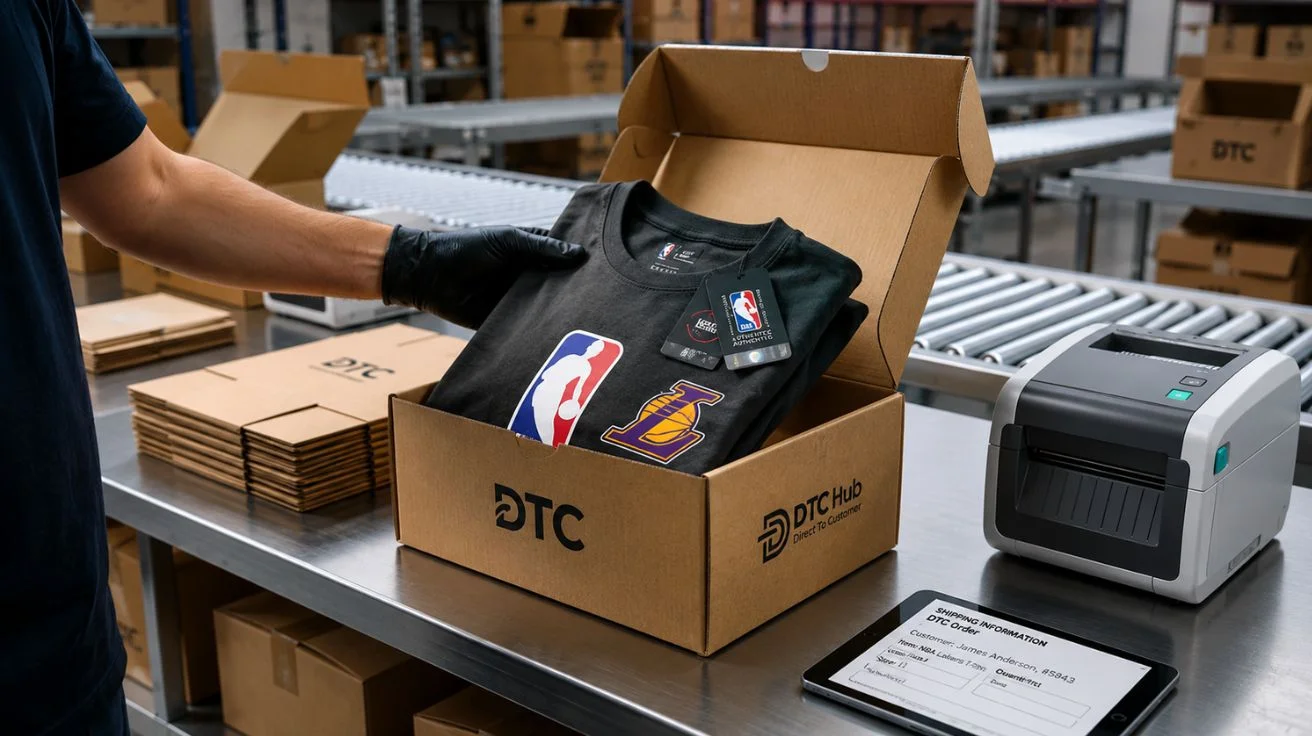

In 1984 a young, 18-year-old basketball star named Michael Jordan, signed to a two million and a half dollar, five-year endorsement contract with a small Oregon firm called Nike. In just a year, the Air Jordan brand had come up with $126 million in sales. Many of the profits were from apparel t-shirts rather than shoes; the revenue consisted of licensed apparel t-shirts with a logo not seen the year before.
The moment began a change never before for the fashion industry. One competitor, one brand, one type of sportswear, and – one phenomenon – and this was a retail merchandising revolution. After 40 years, the t-shirt is America’s top product, Americans spend more on licensed products than ever before – and the t-shirt business model Jordan helped create is more significant than ever.
The Scale of the Global T-Shirt Market
The statistics of the t-shirt industry truly are astounding. In 2023, industry research firm Statista valued its estimate of the worldwide size of the t-shirt industry at around USD 45 billion. It’s expected to grow at more than a CAGR of 36%, surpassing most mainstream retail groups, to hit $57 billion by 2029.
Some 2 billion t-shirts are produced around the world each year. From $3 worth of basic clothes made in Bangladesh to the thousands of dollars simplybhoredoops that drop from the street and sell out within hours on e-commerce platforms. There isn’t a single garment type that spans the same price range, number of-manufactured items, or amount of consumers buying them.
All of this adds up to more than 33 billion dollars in sales in the licensed sports apparel alone, which includes NBA jerseys, training items and fan goods. In that same segment t-shirt has been the topmost seller and top most item sold in all major professional leagues in the world.
How Sports Leagues Turned the T-Shirt Into a Licensing Empire
One of the most evolved retail business stories has been the evolution of the t-shirt as also a licensing rights item. Decades ago, professional sports leagues concluded that fans are a strong business influence and that a fan’s most readily-obtainable means of identifying with the team is to wear apparel that he can wear all day, every day.
The NBA is one of the world’s most successful and successful licensed merchandise programs. In the case of an NBA t-shirt with the name and number of a living NBA player it is an intricate licensing agreement between the retail store, the players association and the manufacturer and the NBA. The percentage is precisely agreed to with each party and is directed to the party as the proceeds are generated from the sale. All licensing fees go directly into the league’s revenue sharing pool, benefiting all the teams no matter how large or small.
This form of business creates the possibility of having merchandise revenue for the thirty teams, based on one popular player. The immediate impact of LeBron James’ arrival in Los Angeles in 2018 was an immediate trend: all of his sales and apparel for the Lakers topped the league. Then there is the revenue that flowed through Los Angeles, but went everywhere else in the NBA; it was spread through the NBA’s license system.
The Streetwear Revolution and Premium Pricing Power
Without a doubt, the biggest business growth in the t-shirt industry in the last two decades is the streetwear rising to a luxury brand. The once underground culture of Los Angeles & New York has that evolved into an international multi-billion dollar market segment, and has almost completely changed the fashion economy.
Since being founded in New York in 1994, Supreme has grown to an 855m value tag primarily driven by the sale of a single type of product: limited-edition drops t-shirts. Their business model is a textbook case of artificial scarcity; a few extremely simple designed cotton garment at a time that is sparse to create a demand that ends up always being outstripped by supply. In the end, it creates a secondary market where t-shirts are bought at retail prices (48 dollars) and sold for a few hundred dollars on the day of their release.
This model was grasped by luxury fashion houses and responded to them. Balenciaga, Givenchy and Saint Laurent all dabbled in the trend of the high-end basic t-shirts for a price between 300 and 800 dollars. The mind behind these purchases is the same as that which propels streetwear; that is, not for its real use, but rather for its identity and status signaling use. Here’s an amazingly profitable change in consumer motivation for brands able to authentically fill that hole.
E-Commerce and the Direct to Consumer Transformation
The E-Commerce revolution has transformed what is fundamentally one of the most basic businesses in the world to a much more complicated form than anything else since the t-shirt got the commercial treatment in the 1960s via screen printing. The traditional retail model in which manufacturers used to have to interact with wholesalers and retailers, and then the latter with consumers, has been reduced to a direct link between brand and buyer that bypasses the multiple intermediaries who take a cut from margins.
Shopify found that apparel always toppers the board as the business’ biggest category globally. Of those, the number one most commonly listed/repurchased item is T-shirts. The barrier to entry to setting up a t-shirt brand has jumped to almost nothing, a couple of hours and 1 designer with a laptop, a print-on-demand supplier and a social media account is good enough to make a working t-shirt company in a single afternoon.
Both tremendous opportunity and great competition, attributable to the democratization. These brands that are doing well in the environment aren’t just being in competition with the product type. They are racing one another in terms of how strong the sense of identity they create in their consumers by buying a t-shirt becomes, aside from it being a purchase, and how well they’ll fit into a community.They’re running against one another in the sense that they build a sense of identity in a consumer when they buy a particular t-shirt from them, not just a purchase, and how well that t-shirt fits into a community.
Sustainability as a Business Imperative
The environmental price for this global business of 2 billion t-shirts per year no longer can be overlooked. An average cotton t-shirt used for just one time takes about 2,700 liters of water to be produced – enough water to fill two and a half years of an individual’s water consumption. Water pollution for the graphic tees is a major concern in areas where tees are being produced due to the chemical dye processing.
The business awareness’s changed from a corporate social responsibility message to a real business strategy. It’s made Patagonia into a brand concerned about environmental responsibility, and it generates more than a billion dollars of revenue every year for the company. Sustainability credentials are tangible and well-defined instead of aspirational or vague and therefore foster willingness to pay more on their t-shirt segment.
In some key market segments, the differentiating attributes to organic cotton certification have migrated from product components to the baseline level of consumer expectations, as well as recycled polyester blends and transparent supply chain reporting. Those brands which don’t have a true environmental statement are having to work harder to stay relevant in premium market access.
Final Thoughts
The origin of the t-shirt goes back to 1913, when the United States Navy issued a t-shirt, a type of military undergarment, to sailors at five cents apiece. Now it’s the basis of a 45 billion dollar industry that bridges the worlds fashion, sport, technology, culture and environmental science.
The complexity of it is not what makes the t-shirt an extraordinary product commercially, it’s the simplicity. Short sleeves, a cotton body and a crew neck worn pretty much unchanged for more than 100 years. Value to business is not in the fabric, its in the garment. It embodies the sense of identity, loyalty, aspiration and belonging for the person wearing it.
All brands, leagues, and retailers of this are selling the same product. The ones that have been the most successful recognize it, and make any business decision with it as their top priority.
Read More: Transform Your Online Presence With Website Design Gloucestershire


Leave a Comment