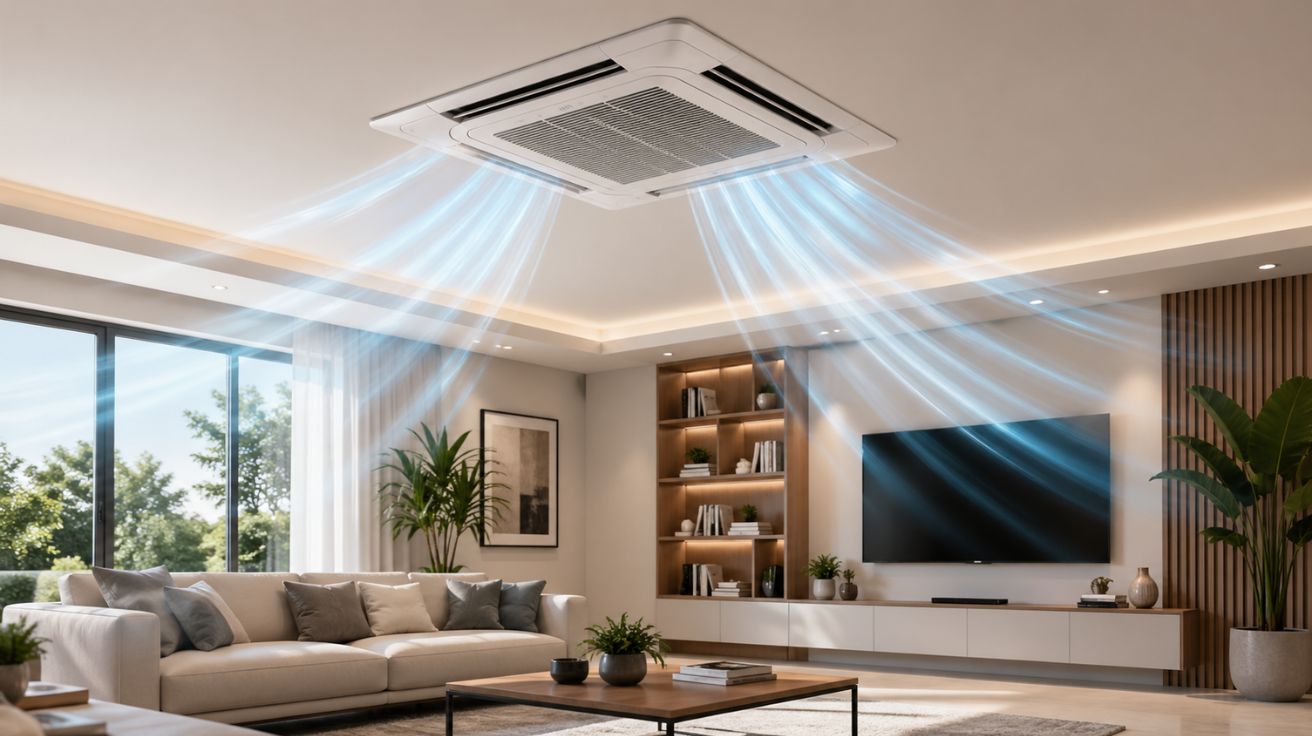

Keeping cooling costs under control has become increasingly important as electricity prices continue to rise. Air conditioning is essential in many regions, but it can also be one of the largest contributors to monthly energy bills. This is especially true when systems run for long periods or operate inefficiently.
A ceiling cassette mini split offers an alternative approach by delivering cooling directly into the space without relying on ductwork. Its design allows for more consistent airflow and better control over how energy is used. When properly installed and used, it can help reduce unnecessary energy consumption while maintaining indoor comfort.
Why Energy Costs Are Rising in Modern Cooling Systems
Energy costs are rising largely because of how traditional cooling systems operate. Central air systems depend on ductwork to distribute air, and this process is not always efficient. According to the U.S. Department of Energy, duct losses can account for up to 30 percent of energy use in some homes, particularly when ducts pass through unconditioned spaces like attics.
At the same time, cooling demand itself has increased. Larger homes, open floor plans, and extended usage during hotter seasons all contribute to higher energy consumption. When systems cycle on and off frequently or run at full capacity regardless of actual demand, they use more electricity than necessary. This combination of higher demand and built-in inefficiencies leads directly to rising energy costs.
How a Ceiling Cassette Mini Split Improves Energy Efficiency
A ceiling cassette mini split improves efficiency by removing several of the limitations found in traditional systems. As a type of ductless mini split AC unit, it avoids the energy losses associated with air distribution through ducts. Cooling is delivered directly into the room, which reduces waste and improves overall system performance.
Most systems also use inverter-driven compressors. Instead of turning on and off repeatedly, the compressor adjusts its speed based on the cooling requirement. This allows the system to maintain a stable temperature while using only the energy that is actually needed. As a result, energy consumption is reduced without sacrificing comfort.
Key Features That Help Reduce Energy Consumption
Several built-in features contribute to the efficiency of a ceiling cassette mini split. One of the most important is zoning capability. Each unit can serve a specific area, which means cooling can be limited to occupied spaces instead of the entire building. This targeted approach prevents unnecessary energy use.
Another key feature is the airflow design. Many ceiling cassette units distribute air in multiple directions, which helps maintain an even temperature across the room. When cooling is evenly distributed, the system does not need to overcompensate by running longer or at higher output. In addition, high efficiency ratings such as SEER indicate better performance relative to energy consumption.
Best Practices to Maximize Energy Savings with a Ceiling Cassette Mini Split
Proper usage plays a significant role in achieving energy savings. Setting a moderate and consistent thermostat temperature can prevent excessive energy use. Extremely low settings may cool a space faster at first, but they often lead to longer run times and higher overall consumption.
Regular maintenance is equally important. Cleaning filters and ensuring unobstructed airflow helps the system operate efficiently. Dust buildup can reduce performance and force the unit to work harder than necessary. Using programmable controls or smart thermostats can also improve efficiency by adjusting operation based on occupancy and daily routines.
Long-Term Cost Benefits of Using a Ceiling Cassette Mini Split
Over time, reduced energy consumption leads to noticeable cost savings. Lower monthly utility bills are the most immediate benefit, but long-term advantages go beyond that. Efficient systems tend to experience less wear because they operate more smoothly and avoid frequent on and off cycles. This can help reduce maintenance and repair costs.
For spaces that require consistent cooling across multiple areas, the ability to control each zone independently adds further value. Energy is used where it is needed and avoided where it is not. Taken together, these factors make a ceiling cassette mini split a practical option for those looking to manage cooling costs more effectively without compromising comfort.
Read More: How 0800 Homefix Helps Landlords Handle Urgent Repairs Fast


Leave a Comment