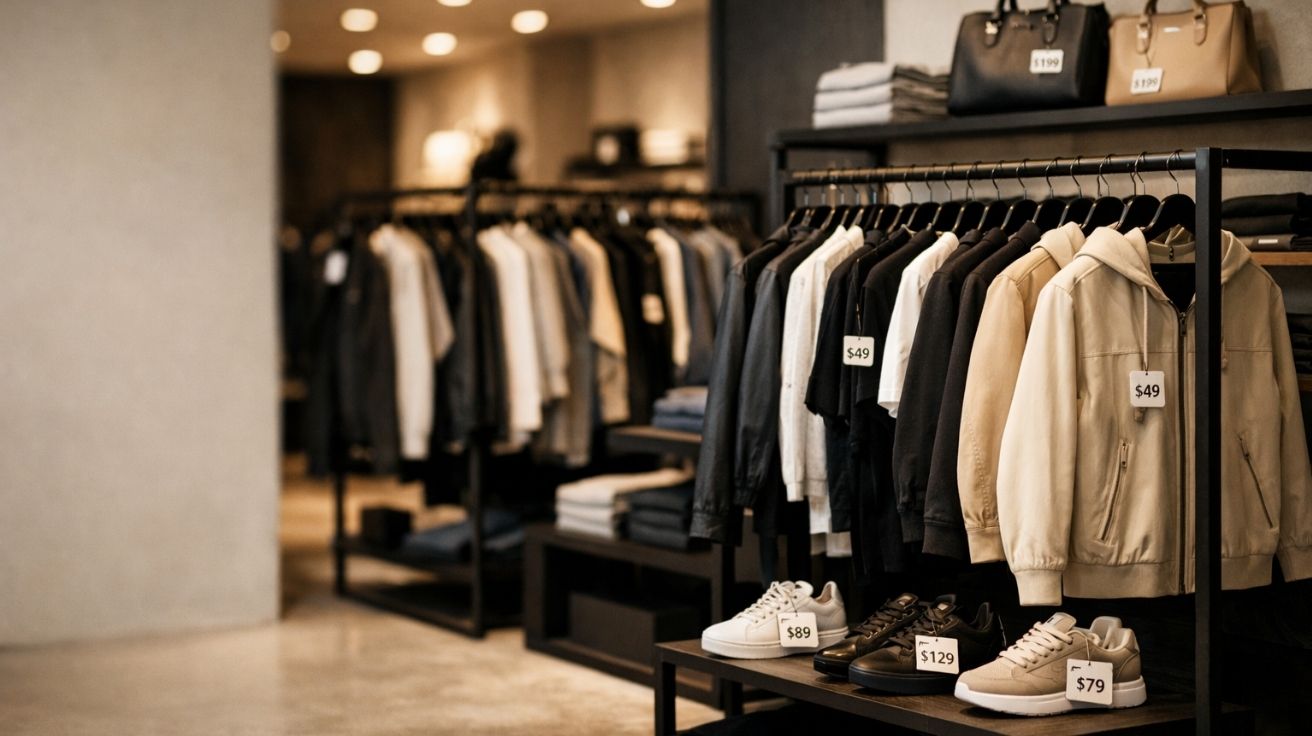

The narrative in European fashion retail for most of the past decade has positioned independent boutiques as a category in structural decline. Big chains have scale, supply chain leverage, marketing budgets, and increasingly powerful e-commerce operations. How is an independent boutique supposed to compete?
The answer, increasingly, is that many of them aren’t competing in the traditional sense – they’re winning on different terms entirely. And one of the most powerful tools enabling them to do so is systematized access to off-price branded fashion inventory that large chains, paradoxically, have more difficulty accessing at the same prices.
The Scale Paradox in Off-Price Sourcing
The intuition that large retail chains should have a structural advantage in sourcing costs is correct for standard wholesale: volume buying power translates to better negotiated rates with distributors. But off-price sourcing from private B2B platforms inverts this relationship in important ways.
Private B2B wholesale platforms – the category of curated, verified marketplaces connecting brand surplus with trade buyers – are specifically designed to serve a verified network of legitimate B2B buyers, regardless of size. An independent boutique buying €2,000 of surplus athletic wear from a private platform accesses the same inventory and the same pricing as a larger multi-store operator buying €20,000.
What’s more, large fashion chains are often excluded from the most interesting surplus opportunities by the very brands producing that surplus. When a major sportswear brand needs to move overproduction discreetly – without the sale appearing on affiliate retail trackers or triggering a competitor’s price-matching algorithm – selling to a carefully selected network of small boutiques across different markets is structurally preferable to offering it to a major chain whose buying team will attempt to aggregate and leverage the position.
Independent boutiques, in this context, are the preferred buyer type for the most interesting off-price inventory.
What Off-Price Strategy Actually Looks Like in Practice
Independent retailers who have built competitive businesses on strategic off-price sourcing don’t typically advertise the strategy. From the customer’s perspective, they see a well-curated boutique carrying premium brands at prices that feel compelling without being obviously discounted.
Behind that presentation is a buying process built around private B2B fashion sourcing platforms that offer verified, authenticated surplus from a wide range of brands. The retailer monitors new inventory regularly, buys decisively on stock that aligns with known customer preferences, and prices to capture a satisfying customer margin while retaining the economic benefit of the sourcing advantage.
The result, in terms of the customer experience, is nearly indistinguishable from a retailer buying all inventory through official channels. The difference is that the off-price operation is running 15-20 percentage points more gross margin on every item sold – a structural advantage that accumulates over a full year into a materially more profitable business.
Why Large Chains Can’t Easily Replicate This
The off-price sourcing advantage available to independent boutiques through private B2B platforms comes with characteristics that make it difficult for large chains to capture at scale.
Verified buyer requirements. Private platforms that work best for independent boutiques require individual business verification. Some filters restrict access to single-location retailers or buyers below a certain turnover threshold. This is by design: suppliers want their surplus reaching boutiques, not aggregating into the supply of a competing multi-store operation.
Purchase quantity constraints. Many surplus listings are limited in volume – full size runs of a specific style at a specific price. A boutique buying three units per size captures the opportunity. A chain needing 300 units to justify the logistics cannot.
Speed and flexibility requirements. Off-price platforms reward buyers who can act in hours, not those with multi-stakeholder buying committee processes. Independent operators with ownership-level decision-making move faster than corporate buying teams.
Geographic distribution preferences. Suppliers on private platforms often use geo-blocking to limit which markets can see their listings. A brand moving surplus in Central and Eastern Europe may specifically exclude markets where its large retail chain partners operate. Independent boutiques in those markets get preferential access.
The Competitive Positioning Opportunity
For independent boutiques still framing their competitive position as “we compete on service and curation against big chains on product,” off-price sourcing offers an additional competitive dimension: the ability to offer brands the customer wants at prices the large chain cannot profitably match.
This is a more durable competitive position than service differentiation alone, because it is rooted in a structural cost advantage that the competitor cannot easily close. A chain cannot match an independent boutique’s pricing on off-price sourced inventory without either sacrificing margin at scale or changing its own sourcing model in ways the operational infrastructure doesn’t support.
The rise of private B2B wholesale platforms has created a genuine structural opportunity for independent fashion boutiques to compete on both brand quality and price – leveraging a sourcing advantage that large chains are structurally less able to access.
Do Read: Why Influencers and Celebrities Promote Buying TikTok Likes in the UK


Leave a Comment