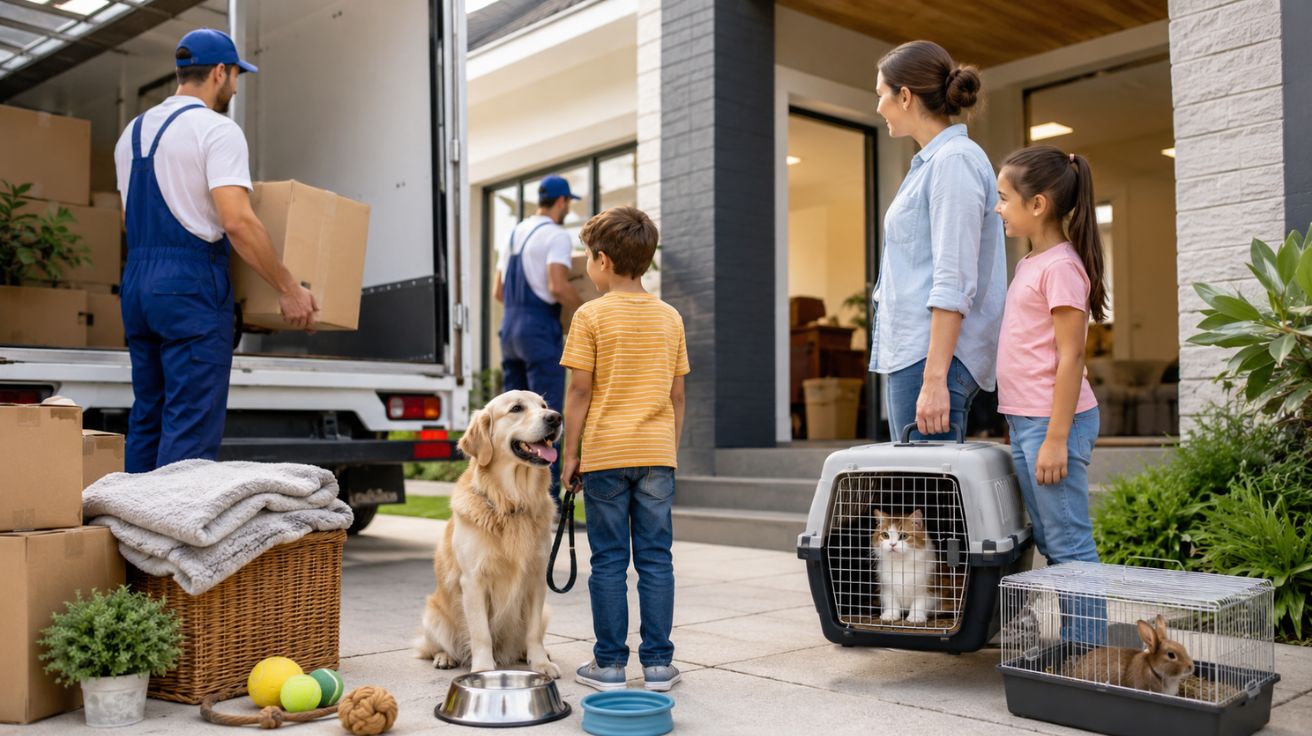

Moving house can feel a bit like trying to pack up a circus while answering the phone and keeping everyone fed. Add pets into the mix, and the whole thing can turn from mildly chaotic to full-blown comedy. Cats vanish into cupboards, dogs get clingy at the worst moment, and even the quiet ones, like rabbits or birds, seem to sense something is up. They usually do.
For households across Australia, moving with pets needs a steady hand and a fair bit of planning. The weather alone can change the mood of the day. A Queensland summer move is a very different beast from a chilly morning in Melbourne or a windy afternoon in Hobart. Pets feel all of it. The noise, the unfamiliar people, the boxes, the open doors. It is a lot. A calm move is possible, though, and it usually starts with thinking about the animal first, not the furniture.
Why Pets Find Moving So Unsettling
Animals are creatures of routine. They know where their bowl sits, when the morning walk happens, and which chair gets the best sun patch. Then suddenly there are boxes everywhere, doors left open, odd smells drifting through the house, and people carrying lamps with that “please do not let this fall” look on their face.
That shift can trigger stress in pets pretty quickly. Dogs may bark more, pace, or follow you like a furry shadow. Cats may hide for hours. Smaller animals can stop eating or become jumpy. None of this means something is badly wrong. It usually means they have noticed the world has gone a bit sideways.
A move goes more smoothly when the pet’s routine is protected as much as possible. Even small things help. Feeding them at the same time, keeping bedding familiar, and keeping noise under control can make a huge difference.
Start the Prep Well Before Moving Day
The earlier you think about your pet’s move, the easier life gets. A week of scrambling is better than nothing, but two or three weeks of preparation is far nicer. That gives you room to arrange transport, update records, and get the pet used to the idea that strange things are happening.
Visit the Vet Before the Move
A quick vet check is worth its weight in gold. Make sure vaccinations are current, flea and worm treatments are up to date, and microchip details are correct. If the pet is anxious, the vet may suggest ways to ease the stress. For some animals, that can mean calming aids. For others, it may simply mean preparing a quieter moving plan.
Pack a Pet Essentials Bag
Keep a separate bag for your pet’s must-haves. Think food, bowls, leads, litter tray, litter, bedding, medication, toys, waste bags, and any comfort items. A favourite blanket can smell like home and work wonders when everything else feels unfamiliar. It may look like a glorified laundry bundle, but pets often treat it like a treasured heirloom.
Keep Things Familiar
Try not to wash every toy and blanket right before the move. Familiar scents matter. If a dog loves a grubby old cushion, there is a reason for that. If a cat sleeps on a particular jumper, that jumper may become a very useful bit of moving-day kit.
Making the Actual Move Less Stressful
On moving day, the goal is simple: keep pets safe, calm, and out of the way of the heavy lifting. That sounds obvious, but in the middle of a house move, obvious things can slip through the cracks. Doors get left ajar. A frightened cat bolts. A dog gets underfoot exactly when someone is carrying the microwave. Not ideal.
One sensible option is to keep pets in a closed room with their essentials until the main loading is finished. A sign on the door helps too, especially if there are several people moving through the house. If the pet is particularly anxious, it may be better for them to spend the day with a trusted friend, family member, or pet sitter.
If transport is involved, make sure the carrier or crate is secure and the pet is comfortable inside it before the trip starts. Never leave animals in a hot car, even for a short while. Australian heat is no joke. A car can turn into an oven fast enough to make anyone wince.
Dogs
Dogs often cope best when they have a clear routine and a bit of physical activity before the move starts. A decent walk in the morning can take the edge off their nerves. Just keep them on a lead and avoid letting excitement spiral. A tired dog is usually a more manageable dog.
If they travel by car, use a proper restraint or crate. Loose dogs in a moving vehicle are a safety hazard, and nobody wants an unexpected leap into the front seat while traffic is building on the M1.
Cats
Cats are masters of escape and silent judgement. They may seem relaxed right up until the final moment, then vanish with theatrical precision. Keep them indoors well before moving day so they do not disappear into the neighbour’s hedge or decide the guttering looks like a good hiding spot.
Use a secure carrier lined with something familiar. A soft towel with a bit of home scent can make the journey feel less alarming. If the cat is prone to stress, keep the room quiet and the handling gentle.
Small Pets and Birds
Rabbits, guinea pigs, birds, and similar pets need a careful setup. Their cages or enclosures should be stable, shaded, and protected from drafts. Birds are especially sensitive to noise and movement, so a quiet corner of the car can help. Food and water should be arranged before departure, not left to chance.
Settling In at the New Place
The move is only half the story. A new home can feel strange to pets for days or even weeks. Some settle in quickly, others need a little more time. The trick is not to rush them. Let them explore gradually and keep their routine as close to normal as possible.
Set up a pet zone before anything else if you can. Their bed, water, food, litter, or crate should be ready and waiting. That gives them a safe base while the rest of the house still looks like a pile of boxes and good intentions. It also helps them learn where “home” is in the new place.
For dogs, short walks around the new neighbourhood can help them get used to the smells and sounds. For cats, keep them indoors for a while until they seem settled and the doors and windows are properly secure. In a new area, a startled cat can go missing faster than a sock in a laundromat.
If the move is across suburbs or states, the new surroundings may feel very different. A coastal property in Perth, a townhouse in Adelaide, or a farmhouse outside Toowoomba each brings its own set of noises and smells. That kind of change can be fascinating for people and deeply suspicious for pets. Give them time.
When Extra Help Makes Sense
Some moves are simple enough. Others are a bit more involved, especially when there are children, long travel distances, or several pets to organise. That is when it can help to have professionals managing the heavy lifting so you can focus on keeping the animals settled. Using experienced removalists can take a fair bit of pressure off the day, which is no small thing when a dog has already hidden the lead and the cat is staring from atop the wardrobe like a tiny supervisor.
Having the physical move handled properly gives you more room to think about the parts that matter for your pet’s comfort. Less noise in the house, fewer people juggling boxes at random, and a cleaner moving timetable all help the day feel less frantic.
Small Habits That Make a Big Difference
- Keep feeding times consistent.
- Pack one comfort item that smells like home.
- Close off unsafe rooms early.
- Use carriers, leads, and restraints properly.
- Check microchip and address details before leaving.
- Give pets a quiet space at both homes if possible.
These are small things, but they stack up nicely. Pets do not need a flawless relocation. They need a predictable one. A bit of structure, a bit of patience, and a lot of common sense usually do the job.
Keeping Your Own Nerves Steady Too
Pets often pick up on human stress long before anyone says a word. If the household is frantic, they often become tense as well. That can create a lovely little loop of worry, where everyone is reacting to everyone else. A calm voice, a simple routine, and fewer frantic dashes around the house can help break that cycle.
It is perfectly normal for moving day to feel messy. Something will probably not go to plan. A box will be labelled badly. Someone will misplace tape. The pet might hide under a bed at exactly the wrong time. That is all part of the fun, or at least the modern version of it. What matters is keeping the pace steady and the environment safe.
With a bit of prep, a sensible setup, and attention to the animal’s comfort, moving with pets becomes much easier to manage. The new home may take a little getting used to, but pets tend to settle when they know their people are calm and their routine is still there, tucked in among the boxes.
Read More: Can Professional Movers Move Items That Are Already in Storage?


Leave a Comment