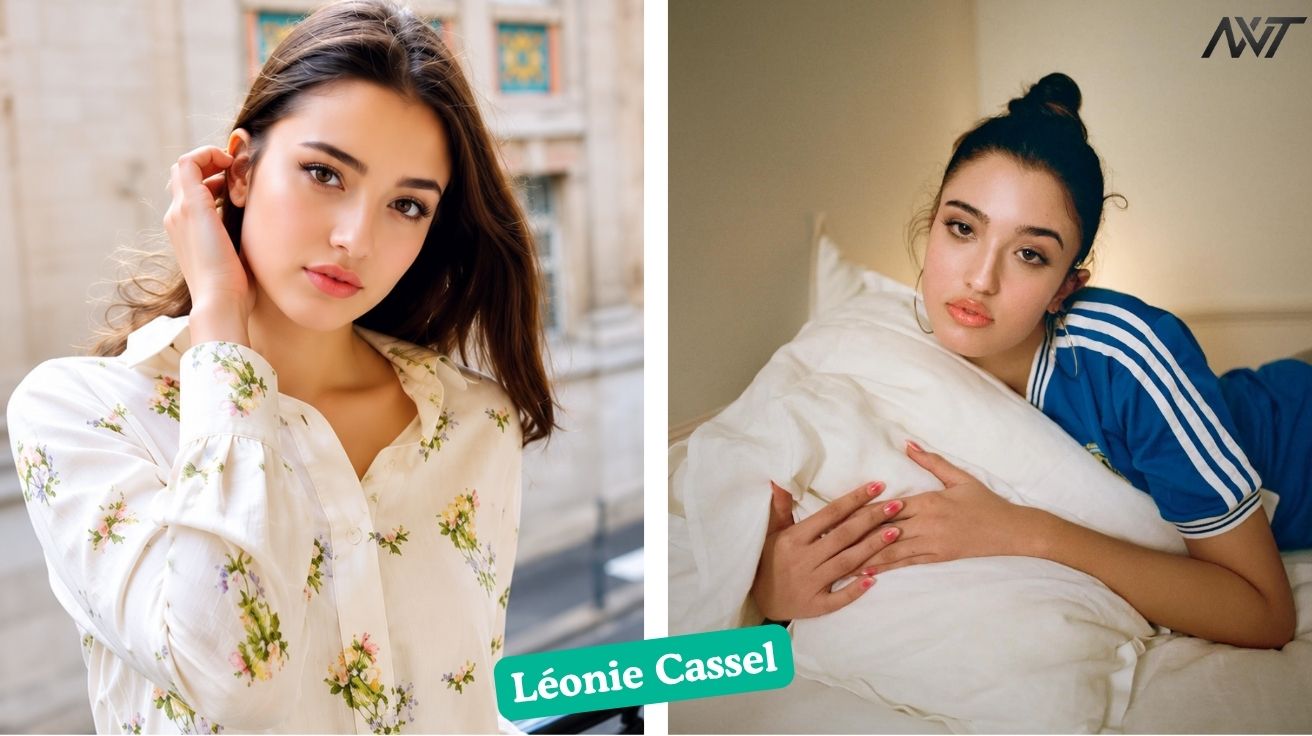

When Léonie Cassel appeared beside her mother, Monica Bellucci, on the April 2026 cover of Vogue Italia, the photographs carried more meaning than a conventional celebrity-family portrait. They introduced the younger Cassel as a distinct personality: a Paris high-school student interested in music, cinema, travel and fashion, but still deciding which creative path she may eventually pursue.
The introduction quickly became a two-part fashion story. Three months after the cover, Léonie opened the Dolce & Gabbana Alta Moda show near Taormina, making her runway debut at 16. The prominent assignment connected her with a fashion house closely associated with her mother and sister while placing her abilities under immediate public scrutiny.
| Field | Details |
|---|---|
| Full name | Léonie Cassel |
| Date of birth | May 21, 2010 |
| Age | 16, as of July 2026 |
| Birthplace | Rome, Italy |
| Parents | Monica Bellucci and Vincent Cassel |
| Older sibling | Deva Cassel |
| Current base | Paris, France |
| Education | High-school student interested in humanities |
| Languages | French, Italian, English, Spanish and Portuguese |
| Creative interests | Singing, songwriting, theatre, piano and dance |
| First magazine cover | Vogue Italia, April 2026 |
| Runway debut | Dolce & Gabbana Alta Moda, July 2026 |
| Cover photographer | Sebastián Faena |
Inside Léonie Cassel’s Vogue Italia Cover
Léonie’s first major magazine cover arrived shortly before her sixteenth birthday. Rather than presenting her through a conventional solo fashion portrait, the editorial placed her beside Monica Bellucci, allowing the images to explore identity, independence and the changing relationship between a mother and her teenage daughter.
The feature balanced the importance of Léonie’s family background with details that belonged specifically to her. Her interest in music, philosophy, cinema, friendship and creative expression helped prevent the story from becoming only another chapter in Monica Bellucci’s public life.
The Cover That Changed Her Public Profile
Léonie was still 15 when the interview and photographs were produced. The timing gave the story an unmistakable coming-of-age quality, with the teenager discussing emotion and personal freedom before stepping into the more formal environment of international fashion.
“Nothing happens without love.”
The statement captured the emotional character of the feature. Léonie described herself as sensitive and closely connected to music, relationships and artistic expression. Instead of presenting a polished career plan, she spoke as a young person beginning to understand which passions feel most meaningful.
Inside the Paris Apartment Editorial
Photographer Sebastián Faena created the cover story inside a Paris apartment, where Léonie and Monica were photographed talking, dressing, cooking and preparing together. The domestic surroundings softened the luxury clothing and made the feature feel closer to a family portrait than a distant studio campaign.
The creative team included John Nollet on hair and Letizia Carnevale on makeup. Monica and Léonie also participated in choosing the clothes, blending designer pieces with Léonie’s own T-shirts, jeans, sneakers and jewelry. That mixture preserved her teenage identity within the high-fashion setting.
The shoot drew visual inspiration from mother-daughter films, including Bellissima and Mermaids. These references supported the editorial’s central idea: fashion could become a shared ritual between two generations without erasing the differences between them.
Monica Bellucci, Vincent Cassel and the Family Legacy

Léonie is the younger daughter of Monica Bellucci, the Italian actress and model, and Vincent Cassel, the French actor known for working across European and international cinema. Born in Rome, Léonie grew up within a family shaped by film sets, fashion campaigns, performance and frequent travel.
Monica’s involvement in the cover provided emotional continuity, but she did not speak for her daughter throughout the interview. At certain moments, she stepped away so Léonie could answer independently. The gesture reflected the feature’s wider theme of allowing a teenager to develop her own public voice.
Vincent’s influence can be seen in Léonie’s interest in cinema, music and Brazilian culture. Monica has offered a close example of how to handle fashion and public attention, while both parents exposed their daughters to creative environments without making childhood entirely public.
Deva Cassel as Sister, Role Model and Comparison Point

Léonie’s older sister, Deva Cassel, began modeling and acting before her. Léonie has described Deva as her idol and best friend, emphasizing a relationship shaped by ordinary family experiences as well as professional admiration.
“My only idol is my sister, Deva.”
Deva helped choose Léonie’s name only days before she was born. The sisters also share memories of singing, cooking, borrowing clothes and preparing for events together. Their bond gives Léonie access to someone who understands both family visibility and the pressure of entering fashion at a young age.
Comparisons between the sisters remain unavoidable, but their career introductions were different. Deva started working with Dolce & Gabbana through a fragrance campaign at 14, while Léonie’s first runway appearance came at 16 after her Vogue Italia cover. Léonie was immediately given the responsibility of opening an Alta Moda presentation.
Early Life, Education and Creative Identity
Although fashion introduced Léonie to a wider audience, her public profile is not based entirely on modeling. She continues to attend school in Paris and has developed interests across music, theatre, dance, cinema and writing.
Her background reflects several cultures and languages, giving her an international outlook before she has committed to one professional direction. These interests also explain why her debut story feels broader than a standard young-model profile.
School, Languages and Creative Training
Léonie is a high-school student in Paris who has expressed a preference for humanities and philosophy. Those subjects connect naturally with her interest in storytelling, human behavior and emotional expression.
She speaks French, Italian, English, Spanish and Portuguese. Her multilingual upbringing reflects the French and Italian sides of her family, along with travel and her father’s close relationship with Brazil.
Her creative education includes theatre, piano, dance and singing lessons. She also writes and produces private songs using a guitar or computer, showing that music has been an active creative practice rather than simply a list of favorite performers.
Music, Cinema and Everyday Lifestyle
Léonie’s musical tastes include Daniel Caesar, Ariana Grande, Frank Ocean and Jamiroquai. She enjoys concerts and festivals because of the shared emotion created by live performance, while private songwriting offers a more personal way to process her thoughts.
Her enthusiasm for Daniel Caesar became especially visible when she cried with happiness after learning that he would perform in Paris. The moment reflects the emotional sensitivity she discussed in her magazine interview and helps explain why singing remains important to her.
Her film interests include the work of Sofia Coppola, Tim Burton and Ari Aster, along with classic movies recommended by her father. Outside fashion, her routine still revolves around school, friends, music, family meals and travel.
Personal Style Beyond Monica Bellucci’s Glamour
Monica Bellucci is closely associated with classic Mediterranean glamour, while Deva frequently appears in controlled, high-fashion silhouettes. Léonie’s wardrobe feels younger and more experimental, combining relaxed streetwear with feminine and luxury details.
She wears oversized hoodies, technical sports jerseys, jeans, graphic T-shirts and hoop earrings, but also enjoys ruffled skirts, bright nails, soft fabrics and carefully chosen accessories. Even during her Vogue Italia shoot, she incorporated personal clothing rather than relying completely on a stylist-created identity.
| Style Element | Monica Bellucci | Deva Cassel | Léonie Cassel |
|---|---|---|---|
| Public aesthetic | Classic Italian glamour | Contemporary high-fashion polish | Gen Z eclectic style |
| Typical silhouette | Tailored and figure-defining | Sleek and editorial | Relaxed with feminine contrasts |
| Common fashion cues | Black dresses, corsetry and heels | Structured gowns and refined separates | Hoodies, jerseys, skirts and sneakers |
| Overall impression | Timeless and cinematic | Modern and controlled | Youthful and experimental |
The differences matter because Léonie has not presented herself as a miniature version of her mother or sister. Her clothing choices suggest that she views fashion as a flexible form of self-expression rather than a fixed image she must maintain.
The Dolce & Gabbana Alta Moda Runway Debut
In July 2026, Léonie made her runway debut by opening the Dolce & Gabbana Alta Moda presentation at Radicepura, a horticultural park in the hills near Taormina, Sicily. The show brought together elaborate clothing, mythological references and a garden filled with flowers.
Opening a major presentation carries more responsibility than appearing midway through a lineup. The first model establishes the collection’s visual mood and rhythm. Léonie also participated prominently in the finale, making the appearance more substantial than a brief celebrity cameo.
The Floral Black Gown and Its Sicilian Meaning
Léonie entered the garden in a voluminous black tulle ball gown decorated with multicolored, three-dimensional flowers. She carried a fresh bouquet, while small blue flowers were placed through her softly arranged hair.
A large cross necklace and black ballerina flats completed the look. The accessories connected the gown with recurring Dolce & Gabbana images of Sicilian devotion, ceremony and family tradition, while the flat shoes kept the styling youthful.
The contrast between the black base and bright floral decorations gave the gown its impact. Black recalled Sicilian mourning clothing and the fashion house’s long-standing visual codes, while the flowers represented beauty, fertility and the living garden surrounding the runway.
Why Taormina Was More Than a Backdrop
Sicily is central to Dolce & Gabbana’s identity because Domenico Dolce was born on the island and its visual traditions have influenced the brand for decades. Taormina also hosted the first Alta Moda presentation in 2012, making the 2026 return an intentional link with the project’s origins.
The Radicepura location strengthened the collection’s theme of goddesses and mortals. Roses, hydrangeas, petunias and other flowers surrounded the models, while floral ideas appeared throughout the clothing as paintings, embroidery, jewelry and sculptural decoration.
Léonie’s flower-covered opening gown therefore functioned as an introduction to the entire collection. Her appearance was not separated from the show’s narrative; it established the themes that continued through approximately 100 looks.
The Bellucci-Cassel Heritage at Dolce & Gabbana
Monica Bellucci’s relationship with Dolce & Gabbana extends across decades of advertising, runway appearances, red-carpet dressing and cinematic Italian imagery. Her association with the house helped shape the public image that made her one of its most recognizable muses.
Deva later became connected to the brand through fragrance campaigns and runway work. Léonie’s Alta Moda debut continued that relationship, creating a visible line across three members of the same family.
However, their careers should not be treated as identical. Monica entered modeling before developing an acting career, while Deva has pursued both fashion and screen work. Léonie currently presents a wider collection of interests that includes music, theatre, cinema and songwriting alongside modeling.
Industry Perception and Career Direction
Léonie’s rapid entrance into fashion produced admiration, curiosity and criticism. Her supporters focused on her composure, the theatrical gown and her ability to open a demanding show, while others questioned whether a new model should receive such prominent opportunities so early.
The divided response reflects a wider conversation about second-generation celebrities in fashion. It also means Léonie’s future work will be judged not only on its own terms but against the established careers of her parents and sister.
Opportunity, Pressure and the Nepotism Debate
Léonie received access that most first-time models would never experience. Her first cover placed her beside a globally recognized mother, and her first runway assignment allowed her to open an Alta Moda presentation connected to her family’s history with the brand.
Recognizing that advantage does not require dismissing her ability. Family connections can create opportunities, but they also produce immediate comparisons and unusually high expectations. Léonie entered fashion without the quieter development period available to less recognizable beginners.
The most balanced assessment separates access from performance. Her surname helped place her in the room, but she still had to complete the editorial, walk in a difficult gown and lead the show’s opening before an international audience.
What Her Early Career Actually Shows
Two major appearances are not enough to define a complete career, but they reveal several qualities. Léonie appeared comfortable in an intimate editorial, contributed to the styling and discussed her interests without presenting a manufactured professional identity.
She then handled the pressure of opening a theatrical runway show while wearing one of its largest and most important garments. The assignment required posture, timing and concentration, particularly within an outdoor setting filled with elaborate scenery.
Her future could include modeling, acting, music or a combination of these fields. The most concrete signs of preparation are her theatre classes, singing lessons, musical practice and early exposure to film production, rather than predictions based only on her surname.
Léonie Cassel on Social Media
Léonie maintains a public presence on Instagram and TikTok, with her Instagram using the handle @leoniecassel. Her online identity is closely connected to music, fashion, friends and ordinary teenage experiences rather than a constant schedule of commercial promotions.
A TikTok video posted on her account (@leonie.csl) in 2024 later approached four million views, demonstrating the level of attention surrounding her before her official fashion debut. Her familiar combination of hoodies, hoop earrings and relaxed styling also helped establish the Gen Z image later discussed in her magazine profile.
She has acknowledged enjoying social platforms while avoiding the impression that they control her daily routine. This selective approach allows her online visibility to support her editorial and runway appearances without turning her profile into a conventional influencer brand.
Five Lesser-Known Facts About Léonie Cassel
- Deva helped choose Léonie’s name only a few days before she was born.
- At around three years old, she sang Anitta’s “Show das Poderosas” in Portuguese with Deva.
- She cried with happiness after learning that Daniel Caesar would perform in Paris.
- As a young child, she sometimes hid under a table when she became tired of attention.
- She brought her own T-shirts, jeans and sneakers to the Vogue Italia cover shoot.
FAQs
How old was Léonie Cassel on her Vogue Italia cover?
Léonie was 15 during the cover interview and turned 16 in May 2026, shortly before making her runway debut in Sicily.
Was Dolce & Gabbana Léonie Cassel’s first runway show?
Yes. Her July 2026 Alta Moda appearance was her runway debut, and she received the prominent role of opening the presentation.
How did Léonie Cassel’s debut differ from Deva Cassel’s?
Deva began with a Dolce & Gabbana fragrance campaign at 14, while Léonie made her runway debut at 16 by opening an Alta Moda show.
Is Léonie Cassel planning to become an actress?
She has studied theatre and other performing arts while also exploring music and fashion rather than committing publicly to one profession.
Why was Léonie Cassel’s runway debut debated online?
Discussion focused on her family connections and limited experience, alongside praise for her composure, gown and the show’s visual presentation.
Conclusion
Léonie Cassel’s introduction to fashion was unusually concentrated. Her April 2026 Vogue Italia cover established her personality through an intimate mother-daughter story, while her July 2026 Alta Moda debut placed her at the center of a large and technically demanding fashion production.
Her surname explains part of the access and attention surrounding those milestones, but it does not determine what follows. At 16, Léonie remains a student developing skills in music, theatre and performance. Her future work will show whether this first fashion season becomes the foundation of a lasting creative career.
For more interesting topics visit NV Times


Leave a Comment