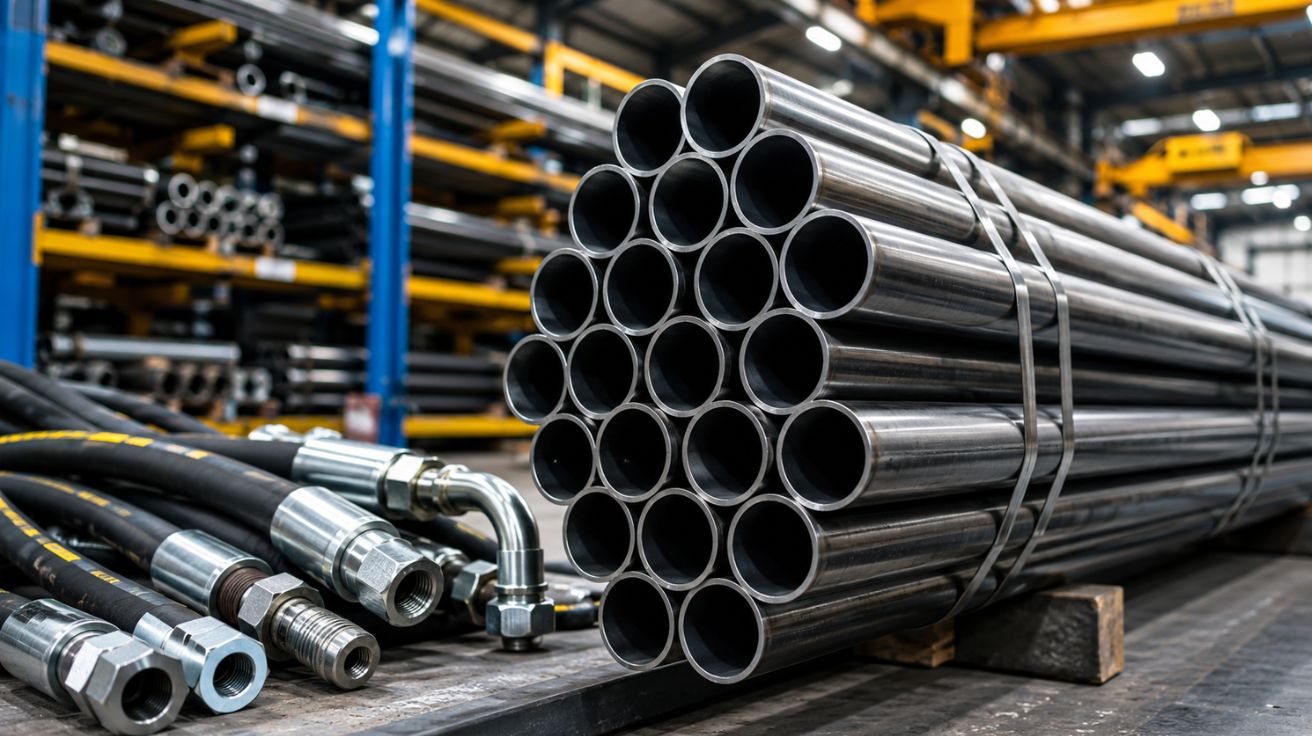

Sourcing hydraulic pipe sounds easy enough, until the wrong batch turns up. Suddenly a project grinds to a halt over something as basic as the wrong wall thickness, or a certificate that doesn’t quite match what you were promised. Picking the right one out of all the hydraulic pipe suppliers out there, rather than just going with whoever quotes fastest, makes a real difference to how smoothly a job runs from start to finish.
This article looks at what actually separates a strong supplier from a so-so one, the technical bits worth checking before you place an order, and a few honest questions that show whether a supplier really knows hydraulics or is just shifting generic pipe.
Why the Right Supplier Matters More Than the Price Tag
A cheap quote can look tempting but hydraulic systems run under real pressure and pipe that fails under load costs far more than anything you saved on the original order. Leaking fittings, burst sections or rust setting in too early often trace back to pipes that never quite matched what the job actually needed.
Good hydraulic pipe suppliers get this risk and build their whole process around getting the spec right first, rather than pushing whatever’s sitting on the shelf. That means asking the right questions upfront about pressure, the fluid being used, and the working environment before recommending a particular pipe grade or wall thickness.
What a Reliable Hydraulic Pipe Supplier Should Offer
Genuinely good hydraulic pipe suppliers do more than just cut pipe to length and stick it in a box. They should understand how different pressure ratings, materials, and finishes affect performance in different jobs, and be able to explain that clearly rather than just reading off a spec sheet.
Knowing what to expect from a decent supplier makes it much easier to spot whether a new quote is coming from a business that actually understands hydraulics, or one that’s just reselling generic stock pipe without much know how behind it.
Material Grade and Certification
Hydraulic pipe needs to meet proper standards for the pressure and job it’s being used for, and a decent supplier hands over certification proving exactly that. Without it, there’s no real proof the pipe will hold up once it’s under load in a working system.
Asking for mill certificates or test reports before anything ships gives you real confidence rather than just taking a supplier’s word for it, especially on jobs where a failure could cause a genuine safety problem.
Range of Wall Thickness and Diameter
Hydraulic systems vary a lot in pressure and flow needs, so a good supplier stocks a proper range of wall thickness and diameter options rather than a narrow selection that forces you to compromise. A limited range often means settling for pipe that’s either overengineered and pricey, or under specified and risky.
Suppliers offering both standard and non-standard sizing give engineers much more room to work with, especially on bespoke jobs where an off the shelf size just doesn’t fit what’s being built.
Surface Finish and Coating Options
Beyond the basic dimensions, surface finish affects both performance and how long the pipe lasts. Some jobs need a smooth, carefully honed internal bore so seals can move against it cleanly, while others need outer coatings to fight off rust in harsh outdoor or marine conditions.
A supplier who can talk you through the right finish for your specific setting, rather than just offering one generic option, tends to sell pipe that lasts a lot longer once it’s actually doing its job.
Lead Times and Stock Availability
Project delays often come down to pipe simply not being there when it is needed, so checking realistic lead times matters just as much as checking the technical specs. Reliable suppliers hold decent stock of the sizes people order most, cutting down wait times considerably for standard orders.
For anything non-standard or bespoke, a good supplier should give you an honest lead time upfront rather than an overly rosy promise made purely to win the order, which only causes headaches later.
Industries That Depend on Reliable Hydraulic Pipe
Hydraulic pipe sits at the heart of loads of machines across construction, farming, and manufacturing, carrying pressurised fluid to the cylinders, motors, and valves that actually do the physical work. Excavators, cranes, and tractors all rely on pipes that can cope with constant pressure changes without leaking or wearing out, since a failure mid job can halt everything and put safety at risk.
Manufacturing plants and material handling gear lean on dependable hydraulic pipe just as much, particularly in presses and lifting equipment that cycle over and over throughout a shift. Choosing a supplier with experience in these demanding applications, rather than one that treats every order the same, can improve reliability and help production equipment perform consistently over long operating periods.
Six Questions Worth Asking Any Hydraulic Pipe Supplier
Beyond checking specs on paper, a short conversation with a potential supplier often tells you far more about how reliable they’ll actually be once you’ve placed an order. Asking direct questions upfront saves a lot of hassle later on.
Here are six questions worth putting to any supplier before you commit.
- Can you provide full material certification for this specific batch
- What’s your realistic lead time for both standard and bespoke sizes
- Do you hold accreditation such as ISO 9001 for quality management
- Can you advise on the right wall thickness for my pressure rating
- What happens if a delivered batch doesn’t match the agreed specification
- Can you share references from other buyers working in similar industries
Conclusion
Choosing between hydraulic pipe suppliers properly means looking well past the price on a quote towards certification, real technical knowledge, and genuine reliability. A supplier who understands pressure ratings, hands over proper paperwork, and gives you honest lead times will save far more money over time than one who simply undercuts everyone else. Take the time to ask the right questions, and the pipe you order should do exactly what your project needs it to do.


Leave a Comment