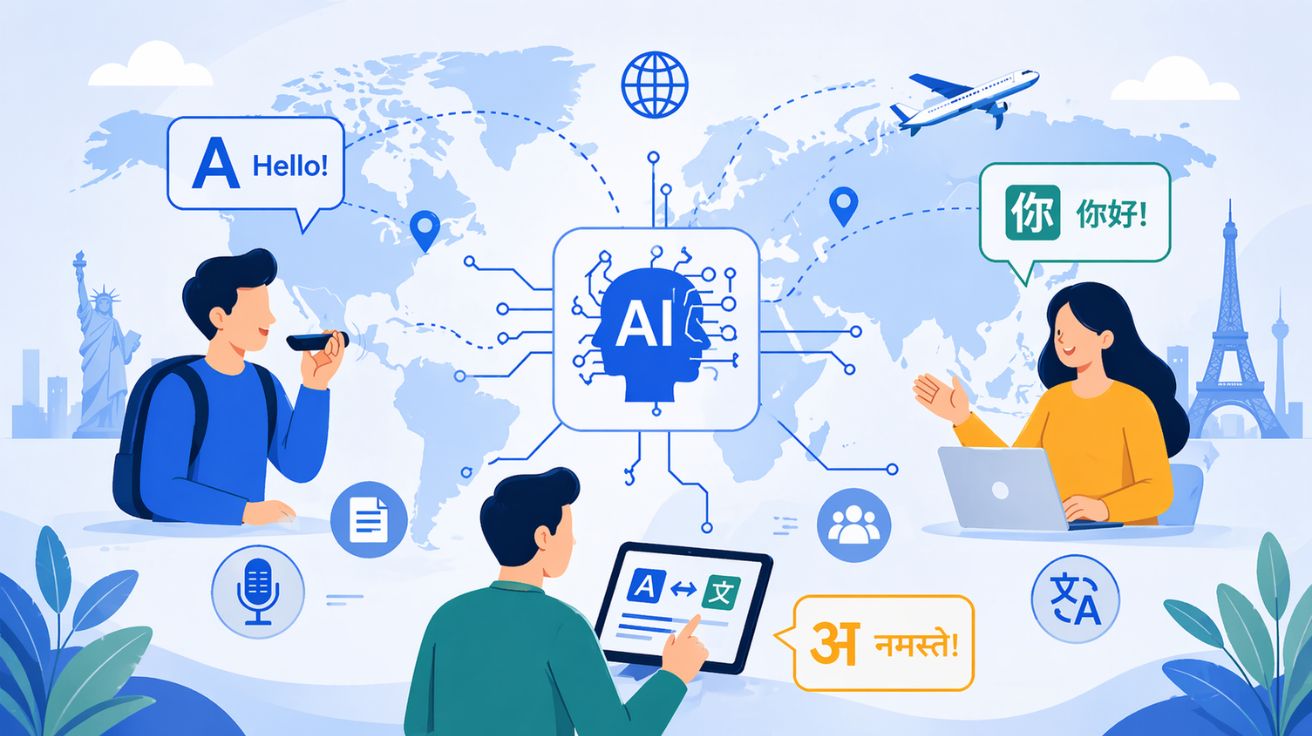

Travel is one of the most global industries worldwide. Individuals do not have to travel to the cities close to them or to the local places. They are flying to different continents, discovering new cultures and making plans using online platforms.
However, this is the dilemma that travel brands have. What do you do to persuade a person in a different country to trust your service when he/she does not even know your language?
It is at this point that multilingual advertising is necessary. When you have a single language in your advertisement, you are automatically restricting your audience. And in the travel business that is losing potential customers on a daily basis.
It is not whether you should use multilingual ads or not. It is the rate at which you can adjust to them.
The Multilingual Creation of Ads is Made Faster with AI
Historically, it was cumbersome and costly to develop ads in various languages. You needed to contract translators, copywriters and designers per region. One campaign in more than one country might take days or even weeks to be launched.
AI has now totally transformed that process.
AI technology is able to create ads in multiple languages instantly, create captions, and adjust messaging to fit various languages. But more to the point, they do not translate words. They rearrange sentences in order to make the message sound natural.
This is massive to travel brands. You can develop one campaign and immediately replicate it to other locations without having to re-establish it.
Now, rather than think in a single language, brands have the opportunity to think globally early on.
AI Assists Travel Advertisements to feel local, not generic
Sounding too translated is one of the most significant issues of multilingual marketing. The human beings are able to know immediately when an advertisement is not translated into a certain culture. It is robotic and it does not establish trust.
AI resolves this by assisting brands in localizing content, as opposed to merely translating it. It implies modifying the tone, phrases, and messages to suit the culture of every audience.
As an example, a luxury travel advertisement in Europe may emphasize on comfort and style. However, in South Asia, the same advertisement could be more family-oriented or cost-effective.
AI can assist in recognizing such differences and automatically changing the message.
Instead of a single international advertisement that is generic, you can have a series of localized ads that are personal.
In travel marketing, personalization is all.
Designing Visual Travel Ads using AI
Travel advertisements are very graphic. Individuals do not read about places. They would like to see them. The beaches, mountains, hotels, cities, food and experiences are all significant contributors to the decision-making process.
AI assists travel brands to produce multilingual advertisements with images and localized messages. It implies that one and the same destination can be advertised in various languages and with varying emotional undertones.
To illustrate, a beach resort advertisement would be relaxing or adventurous in two different languages. AI is able to modify the captions, headlines, and descriptions but maintain the same visual identity.
This renders international campaigns interesting and effective.
And, frankly speaking, who does not scroll to see a beautiful travel ad?
Rapid Campaign Introductions in various countries
One of the largest benefits that AI has in travel marketing is speed. Previously, it took a lot of time to coordinate teams in various parts of the world to launch a global campaign.
A free AI ad generator can create numerous variations of ads in a single instant with the help of AI. Within a short period of time, you can start campaigns in English, Spanish, Arabic, French, etc.
This will particularly come in handy when there are peak travel seasons. In cases of demand spikes, brands must react promptly. Scaling campaigns can be done immediately with AI.
This way travel companies can react on-the-fly rather than losing out on opportunities.
AI Enhances Personalization of Global Travelers
Language is not the only way of multilingual ads. They also relate to the issue of reaching the right people in other areas.
AI assists travel brands to study the behavior of the audience and determine the preferences of traveling in each market. An example is that, there are areas that might be more interested in luxury holidays, and there are areas that might be interested in budget holidays or adventure tours.
AI is able to divide the audience and align them with the appropriate ad message. This enhances the level of engagement and conversion.
Enhanced Travel Experiences
Travel is emotional. Individuals do not purchase tickets or hotel bookings. They purchase experiences, memories and dreams.
AI assists brands to tailor ads according to the traveler behavior, search history and interests. A person who is interested in honeymoon trips will have different messages as compared to a person who is searching on business travel.
Final Thoughts
AI is changing the way travel brands communicate with the world. It eliminates language obstacles, accelerates the campaign production, and makes advertisements more local and personal.
However, automation is not the only power of AI. It’s expansion. It enables travel brands to go beyond the borders and reach people all over.
Communication in a world where travelling is becoming more accessible should be so as well.
And AI is doing so more than ever before.
Read More: Equipment Leasing Companies For Small Business Financing In The U.S.


Leave a Comment