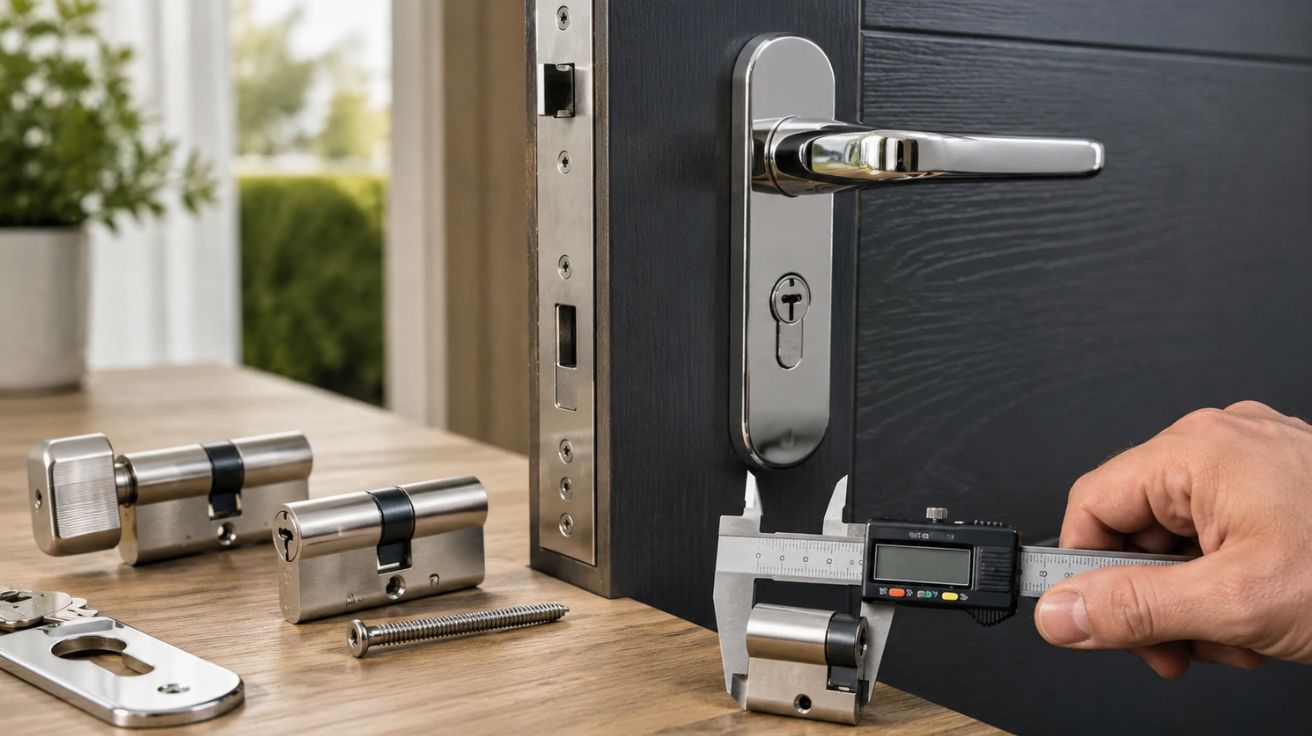

The right hardware choice depends on context. For homeowners replacing cylinders on uPVC, composite, aluminium and some timber doors, the common problem is that a door works but the owner wants a new key set, better anti-snap protection or a thumbturn option on the inside. This post breaks the decision down into practical checks: what the part does, which components interact with it, which measurements decide compatibility and which mistakes can make a repair fail early. Many pages show a measurement diagram but do not explain why unequal cylinder sizes are common. It is written for everyday UK properties and uses plain, practical terms.
For anyone comparing sizes and security ratings, the specialists at Locks & Hardware recommend measuring from the fixing screw in both directions; their support around euro locks is particularly useful where the inside and outside lengths differ.
Why euro locks should be assessed as a whole opening
A product photograph rarely tells the whole story. The same broad style of hardware can use different centres, screw positions, cases, keeps, spindles or fixing depths. The parts to keep in mind here include double euro cylinders, thumbturn cylinders, single euro cylinders, security handles, retaining screws and cams. Treat them as a set, because changing one component without checking the others can move the fault rather than solve it.
Euro locks are usually measured as two halves from the central fixing screw. The internal and external sides may differ, especially on thicker composite doors or doors with deep security furniture. It is worth noting what changes between open and closed positions. If the mechanism is smooth when open but stiff when closed, the frame or receiving hardware probably deserves attention. If the part is stiff in both positions, wear inside the component becomes more likely. This distinction prevents unnecessary purchases.
The hardware relationships that decide performance
The components do not work in isolation. A handle transfers movement to a latch or gearbox; a cylinder operates a lock case; a padlock depends on the hasp and staple; a window handle drives an espag that must meet keeps in the frame. In practical terms, double euro cylinders, thumbturn cylinders, single euro cylinders, security handles, retaining screws and cams should be checked as a connected group. If one part has unusual wear, inspect the part it bears against before deciding the repair is complete.
Security ratings are helpful, but size remains crucial. A well-rated euro cylinder fitted with too much projection can still be a poor installation. The connected parts should also be compatible in strength. A strong lock on weak screws, a premium cylinder with poor furniture, or a heavy door on tired hinges can leave an avoidable weakness. Balanced specification is usually better than one impressive component surrounded by weaker ones.
Identification checks that prevent wrong orders
The measurements to write down are external length, internal length, fixing screw to each end, door thickness, handle depth and cylinder projection. Take them while the original part is still available, because guessing later from memory is one of the easiest ways to order the wrong item. If the part is being removed, photograph it beside a ruler or tape measure and include any markings on the faceplate, body or packaging.
Where a measurement is difficult, do not round casually. Write down what can be measured accurately and photograph the part from several angles. If a replacement supplier needs to help identify it, clear photographs of the measurement points can prevent back-and-forth and reduce the risk of a wrong match.
Balancing security with fit and daily use
Ratings, marks and standards matter most when they are matched to the correct application. On many UK external doors, TS 007 rated cylinders and suitable security furniture are worth considering together. The practical question is whether the product, door or window, fixing surface and user need all point in the same direction. Where they do not, a higher-rated item may still be the wrong purchase.
Security should be reviewed from the outside and the inside. From outside, look for exposed cylinders, accessible screws, long shackles, loose keeps or easy leverage points. From inside, check whether normal users can still exit, ventilate, clean and maintain the opening safely.
How to read symptoms before replacing parts
The main buying mistakes to avoid are ordering a symmetrical size without measuring both sides, leaving too much cylinder exposed and confusing overall length with split sizes. These usually happen when the visible symptom is treated as proof of the failed part. A stiff handle may be the result of a misaligned lock. A hard-to-turn key may be caused by pressure on the bolt. A rattling fitting may point to worn fixings rather than a poor-quality replacement.
A useful rule is to stop using extra force as soon as the fault appears. Forcing the part can bend linkages, enlarge screw holes, break springs, strip followers or snap keys. It can also hide the original clue. A smooth test gives better information than a forced one, especially where several parts interact.
Choosing for real use, not just the product listing
When several products could work, compare them against the way the opening is used. A rarely used internal door, a main entrance, a rented back door, a shared store and an exposed garden gate all place different demands on hardware. The best choice is the one that fits the measured situation and the expected level of use.
Think ahead to future changes. More users, new tenants, additional keys, decoration, replacement doors or altered access needs can all influence the right hardware. Choosing a common, measurable and maintainable format can make future work easier.
A practical conclusion for buyers
Before ordering, review the notes one final time. Confirm that the product category is correct, the measurements match, the handedness or orientation is known, the surrounding hardware is not damaged and the expected finish suits the location. If any point is uncertain, take another photograph rather than making a hopeful guess.
The practical answer is rarely to buy the first matching-looking item. A better result comes from noting what is fitted, understanding why it failed or needs upgrading, and selecting a replacement that suits the door, window, user and environment. That is the difference between a quick purchase and a durable repair.
A final useful habit is to keep a small record after the part is fitted. Note the product type, key code where appropriate, important sizes such as external length, internal length, fixing screw to each end, door thickness, handle depth and cylinder projection, and the date of replacement. This is especially helpful where several doors or windows use similar parts. The next repair then begins with known information rather than fresh guesswork, and anyone maintaining the property can see whether the same fault is returning.
For shared use, write down who needs keys, codes or routine access before the product is chosen. Hardware that suits the access pattern is more likely to be used correctly and maintained properly.


Leave a Comment