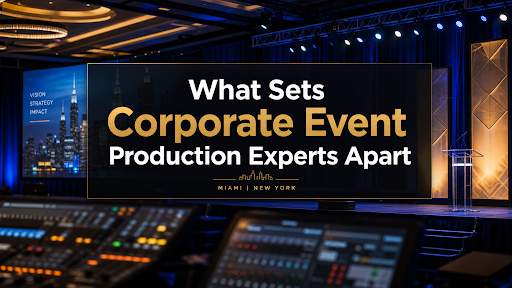

Corporate events are how businesses build relationships, launch ideas, and represent themselves to clients, partners, and employees. Behind every conference or product launch, though, sits a long list of moving parts, which is why organizing one from scratch rarely goes smoothly without outside help. This is where corporate event production experts step in. So what exactly makes their work different, and how do they turn a complicated process into a seamless result? Read on to find out.
Why Corporate Events Require Specialized Expertise
A corporate event carries more weight than a typical gathering since it reflects directly on the company hosting it. That’s precisely why the details matter so much and why the right support behind the scenes changes the outcome. Here’s where that difference tends to show up most.
Brand Reputation Is on the Line
Every element of a corporate event, like staging, messaging, even how smoothly a session transitions to the next, becomes part of how attendees perceive the brand. A stalled AV system or disorganized schedule reads as a reflection of the company itself. A corporate event production company works to prevent exactly that, aligning every visual and technical detail with the brand’s standards so the event reinforces credibility.
Managing Complex Event Logistics
Few people outside the industry realize how many interlocking parts a single corporate event actually requires. Venue restrictions, speaker timing, catering coordination, and backup plans for technical failures all have to move in sync. Corporate event specialists account for these variables in advance, building contingencies before problems arise rather than reacting to them on-site.
Characteristics of Experienced Event Production Teams
What separates a good event production team from a great one usually comes down to a handful of core skills. So what exactly do the best teams get right?
Strategic Planning
Every successful event traces back to decisions made long before doors open. Seasoned specialists start by mapping out the event’s goals, audience, and format long before any physical setup begins, building a timeline that accounts for rehearsals, vendor deliveries, and realistic buffer time. Strong planning can often anticipate where things could go wrong and design around it.
Technical Excellence
Lighting, sound, video, and staging all have to function together without drawing attention to themselves. Professionals bring hands-on knowledge of the equipment and venue conditions. This allows them to spot potential issues, such as poor acoustics or inadequate power capacity, before they surface during the event itself.
Creative Problem Solving
Even the best-planned event runs into surprises, from a last-minute speaker cancellation to a venue change. An experienced event production team handles these moments calmly, drawing on past occasions to adapt quickly, which often prevents a minor issue from becoming a visible disruption.
Types of Corporate Events That Require Professional Production
Corporate events come in several distinct formats, and each one carries its own priorities and technical demands. Production teams have to match their approach to the specific format at hand, and here’s how this works in practice.
Conferences and Summits
Multiple sessions across one or several days make timing the main challenge. A delay in one room can throw off the whole agenda, so teams keep transitions between speakers tight and technical setups consistent throughout. Conference production services also account for breakout rooms and language support when attendees come from different regions.
Product Launches
In this case, everything builds toward a single reveal moment, so pacing outweighs almost every other factor. Lighting, video, and staging have to sync precisely so no technical slip undercuts the payoff the company has been building toward.
Executive Meetings
Smaller audiences and higher stakes mean discretion matters more than scale. Board members and stakeholders expect flawless AV and careful handling of confidential materials, all set within a space that feels refined without looking overdone.
Awards Ceremonies
Live presentation and emotional pacing collide, forcing teams to juggle stage timing, video packages, and crowd energy at once. Keeping that rhythm steady so the show never drags or rushes past its big moments is the toughest call to get right.
How Professional Production Improves Business Events
The value of professional production shows up long before the event starts and long after it ends. Let’s look at what exactly drives that difference.
Better Audience Experience
Skilled teams build the flow of an event around attention span rather than just the printed agenda. Session length and natural breaks all get adjusted so engagement doesn’t fade halfway through. Solid business event planning treats how attendees actually feel during the event as the real measure of success, since that feeling is what shapes their impression of the company.
Reliable Event Execution
Even a well-designed event can unravel without solid execution behind it. Professional teams run through every technical cue and staffing assignment ahead of time, so if something shifts unexpectedly, the fix happens out of sight instead of in front of the audience. That level of readiness is what keeps a business event on schedule.
Why Companies Choose Experienced Event Production Partners
Some production teams are hired once. Others become the first call for every event that follows. The difference comes down to what happens after the applause fades.
Consistent Results
Each event benefits from lessons carried over from the last one. Professional event management at this level means fewer surprises and a steadier quality bar over time.
Long-Term Business Relationships
An established partner starts functioning almost like an internal department, already familiar with vendors and brand guidelines, which lets each new event move faster from concept to execution.
The Foundation of a Successful Corporate Event Is a Reliable Team
Preparing a corporate event well means accounting for logistics, technical detail, and audience experience all at once, not treating any one as an afterthought. Professional support brings the structure and foresight that make this possible, reducing risk while raising overall quality. Ultimately, a great event starts with a great partnership.


Leave a Comment