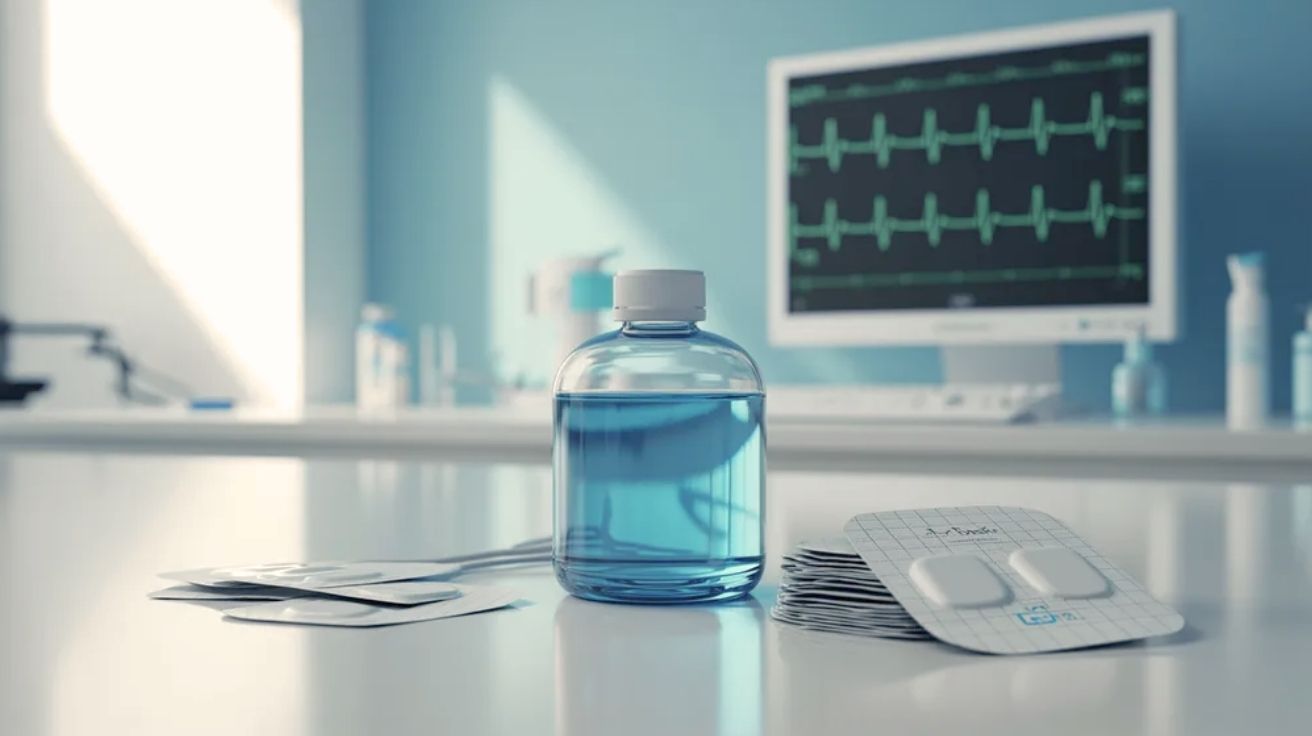

In clinical settings, diagnostic labs, physical therapy practices, and industrial monitoring environments, the reliability of electrical signal transmission depends heavily on the materials placed between a sensor and the skin. When a reading is inconsistent, delayed, or distorted, the problem is often not the equipment itself but the interface connecting that equipment to the body. Conductive gel sits at that interface, and its performance directly affects the accuracy of the data collected and the safety of the person being monitored.
Across the United States, practitioners and procurement teams are paying closer attention to what goes into these products, how they behave under different clinical conditions, and what regulatory standards apply to their use. This guide addresses those questions in plain terms, covering the chemistry, applications, and compliance considerations that affect real purchasing and operational decisions.
What Electrode Conductive Gel Is and Why It Matters for Signal Accuracy
electrode conductive gel is a water-based, electrolyte-containing medium applied to the skin before placing electrodes for diagnostic or therapeutic procedures. Its primary function is to reduce the electrical impedance at the skin surface, creating a low-resistance path for bioelectric signals to travel from the body to the electrode. Without it, the natural dryness and keratinized outer layer of skin acts as an insulating barrier that weakens or distorts those signals significantly.
For facilities and clinicians sourcing this material, understanding its role in signal quality is not a technical abstraction. It directly affects ECG waveform clarity, EEG trace accuracy, and the effectiveness of electrostimulation during physical therapy. When procurement teams evaluate options, a well-maintained resource on electrode conductive gel helps clarify product categories and their appropriate applications before ordering decisions are made.
The gel works by providing ionic conductivity. Electrolytes dissolved in the gel medium allow electrical charges to move freely across the skin-electrode interface. When this interface is compromised by a poor-quality gel, inadequate application, or a product that dries quickly under clinical conditions, the signal degrades. In diagnostic procedures, this degradation can mimic or mask genuine clinical findings, which carries real consequences for patient care.
The Difference Between Conductive Gel and Ultrasound Gel
One of the most persistent sources of confusion in clinical purchasing is the assumption that conductive gel and ultrasound gel are interchangeable. They are not. Ultrasound gel is designed to transmit sound waves efficiently and is formulated to be acoustically transparent. It contains no electrolytes and provides minimal electrical conductivity. Using ultrasound gel in place of electrode gel typically results in higher skin-electrode impedance and degraded signal quality.
This distinction matters operationally because facilities that stock both products sometimes experience substitution errors during busy clinical shifts. The appearance of both gels is often similar, and packaging may not always be reviewed under time pressure. Facilities that have experienced unexplained signal artifacts should review their gel procurement and storage practices before assuming the issue lies with electrode hardware or patient skin condition.
Key Ingredients in Electrode Conductive Gel Formulations
The formulation of conductive gel varies across manufacturers, but the core components serve well-defined functions. Understanding what those components are and why they are included helps clinical and procurement staff evaluate products based on more than price or brand familiarity.
Electrolyte Salts and Their Role in Conductivity
The primary conductivity in these gels comes from dissolved electrolyte salts, commonly potassium chloride or sodium chloride. These salts dissociate into ions in the aqueous base, and those ions carry electrical charge across the interface. The concentration of these salts affects how conductive the gel is, but higher concentration does not always mean better performance. Overly concentrated formulations can cause mild skin irritation with prolonged contact, which is a practical concern for extended monitoring procedures such as ambulatory EEG or long-duration cardiac telemetry.
Humectants, Thickeners, and Stabilizers
Beyond the electrolyte component, conductive gels contain humectants to retain moisture and extend the product’s working life on the skin. Without these agents, the gel would dry and lose conductivity within minutes, which would be unacceptable in procedures lasting more than a brief interval. Thickening agents give the gel its viscosity, which affects how well it stays in place under the electrode pad without spreading onto surrounding equipment or the patient’s clothing.
Stabilizers and pH-adjusting agents are also included in most professional formulations to maintain product consistency across its shelf life. A gel that changes viscosity or conductivity as it ages creates inconsistency across clinical sessions and across different product batches, which complicates quality assurance in high-throughput diagnostic environments.
Preservatives and Skin Compatibility Agents
Because these products are used on human skin, often on patients with compromised or sensitive skin conditions, preservatives must be selected carefully. Common preservatives used in medical-grade gels include parabens or alternative antimicrobial agents that prevent microbial growth in the water-based medium. Some newer formulations avoid traditional preservatives in response to sensitivity concerns, particularly for pediatric or dermatological patients.
Skin compatibility agents, including aloe-derived compounds or mild emollients, are sometimes added to formulations intended for extended wear or frequent reapplication. These additions do not affect conductivity but can reduce the likelihood of contact dermatitis in patients who undergo repeated electrode placement over weeks or months of treatment.
Primary Applications Across Clinical and Technical Environments
Conductive gel is used across a wider range of procedures than many purchasing departments realize. Each application places different demands on the product in terms of conductivity, viscosity, drying time, and skin compatibility.
- Electrocardiography (ECG/EKG) relies on gel to ensure clean acquisition of cardiac electrical signals, where artifacts caused by poor contact can resemble arrhythmias or mask genuine rhythm abnormalities.
- Electroencephalography (EEG) requires gel with specific viscosity characteristics to maintain contact through hair and against the irregular surface of the scalp across extended recording sessions.
- Transcutaneous electrical nerve stimulation (TENS) and neuromuscular electrical stimulation (NMES) depend on gel to distribute electrical current evenly across the skin surface, reducing the risk of localized skin irritation or burns from current concentration.
- Electromyography (EMG) uses gel to improve the signal-to-noise ratio when measuring muscle electrical activity, which is particularly important in fine motor assessment and neurological diagnostics.
- Defibrillation and cardiac monitoring in emergency and intensive care settings require reliable gel that maintains conductivity under conditions where precise electrode placement may be difficult to achieve.
- Industrial and research applications, including wearable biosensor testing and impedance measurement, also rely on conductive gel to maintain consistent sensor contact during data collection.
Regulatory Standards and Safety Compliance in the United States
In the US, electrode conductive gel is classified as a medical device under the jurisdiction of the Food and Drug Administration. Most standard formulations used in diagnostic and therapeutic settings fall under Class II medical device classification, which requires manufacturers to demonstrate that their product is substantially equivalent to a legally marketed predicate device through the 510(k) premarket notification process. This process does not require clinical trials but does require documented performance testing and manufacturing quality controls.
FDA Classification and What It Requires of Manufacturers
The FDA’s classification of conductive electrode gel as a medical device means that manufacturers must register their facilities, list their products with the agency, and comply with Quality System Regulation requirements under 21 CFR Part 820. These requirements govern manufacturing processes, complaint handling, and corrective actions. Facilities purchasing gel for clinical use can verify a product’s FDA clearance through the agency’s public device database, which is an important step when evaluating new suppliers or unfamiliar product brands.
Products that are not properly registered or cleared present regulatory exposure for the facility using them, not only for the manufacturer. Procurement teams operating under Joint Commission standards or similar accreditation frameworks should ensure their conductive gel suppliers maintain current regulatory standing before placing standing orders.
ASTM and ISO Standards Relevant to Conductive Gel Products
Beyond FDA classification, conductive gel products may be evaluated against standards published by the American Society for Testing and Materials and international equivalents under the International Organization for Standardization. These standards, such as those related to biocompatibility testing per ISO 10993, provide structured frameworks for assessing whether materials in contact with skin are safe for their intended duration and frequency of use.
Biocompatibility testing under these frameworks evaluates cytotoxicity, sensitization potential, and irritation response. For gels used repeatedly on the same patients over extended treatment periods, compliance with biocompatibility standards is a meaningful indicator of product safety rather than a bureaucratic formality.
Shelf Life, Storage, and Handling Requirements
Proper storage conditions are not optional for maintaining the performance characteristics of electrode gel. Products stored at inappropriate temperatures or exposed to repeated contamination from shared applicators can degrade chemically or become microbiologically compromised before their labeled expiration date. Most manufacturers specify temperature ranges and recommend single-use or dedicated applicators to prevent cross-contamination between patients.
Clinical quality programs should include gel storage conditions in their regular environmental monitoring protocols, particularly in high-volume departments where product turnover is slower than expected. Expired or compromised gel introduces variability into the diagnostic process in ways that are difficult to trace back to the material itself without structured investigation.
Considerations for Procurement and Product Selection
For clinical and facility managers responsible for purchasing conductive gel, product selection should account for more than unit cost. Application-specific requirements, patient population characteristics, and regulatory compliance status all affect whether a given product is appropriate for a specific setting.
- Products intended for pediatric or sensitive-skin patients should be evaluated for preservative content and confirmed biocompatibility under extended contact conditions.
- High-throughput diagnostic departments benefit from gels with extended drying times that maintain conductivity across longer procedure windows without requiring reapplication.
- Facilities subject to state or federal inspection should maintain documentation confirming FDA clearance for every conductive material used in patient-facing procedures.
- Bulk purchasing should be managed against actual usage rates to avoid accumulating inventory that approaches expiration, which reduces product reliability and creates disposal burden.
Conclusion
Electrode conductive gel occupies a small but operationally important role in a wide range of clinical, diagnostic, and therapeutic procedures. Its performance affects signal quality, patient comfort, and the accuracy of the data that clinicians use to make real decisions. When it fails, the failure often appears as a problem elsewhere in the system, which makes understanding the material’s composition, proper use, and regulatory requirements more valuable than it might initially seem.
In the US market, buyers and clinical staff benefit from knowing that this product category is regulated, that formulation differences are meaningful, and that compliance with applicable standards is verifiable through public agency databases. Facilities that treat gel selection as a routine commodity decision may be introducing preventable variability into their diagnostic workflows. Those that treat it as a controlled clinical material, with documented suppliers and defined storage practices, are better positioned to maintain consistency in signal quality and meet their regulatory obligations without interruption.
Read More: The Volunteer State’s Top Providers: Tennessee Dentists You Can Trust


Leave a Comment