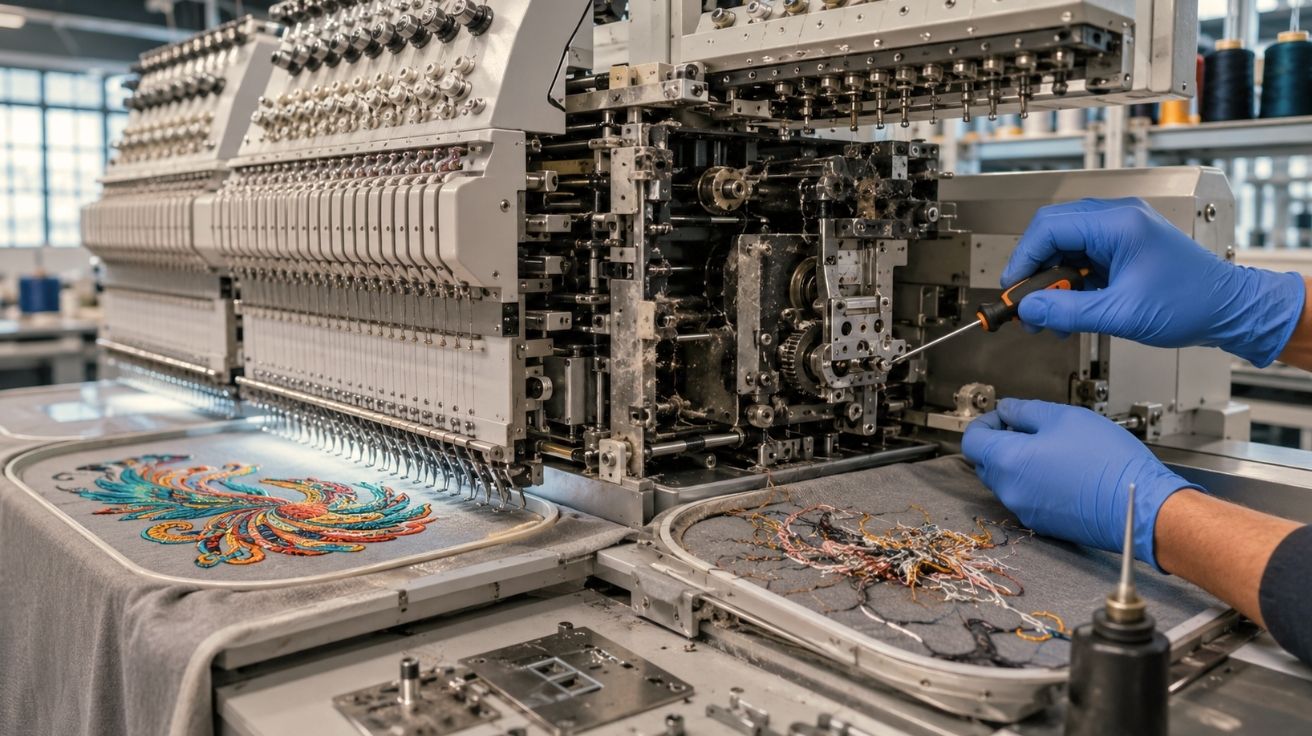

Embroidery machines are precision equipment. They operate through a coordinated system of mechanical components, tension mechanisms, needle assemblies, and electronic controls — all of which must function in close alignment to produce consistent, professional results. In a production environment, even minor deviations from that alignment can quickly escalate into visible quality problems, wasted materials, and unplanned downtime.
The challenge for most operators is that embroidery machines rarely fail all at once. Deterioration tends to be gradual. Threads break a little more often than usual. Designs that once ran cleanly begin to show small inconsistencies. Sounds that were never there before become routine background noise. Each of these changes is easy to dismiss in isolation, but together they often indicate that the machine is working harder than it should to compensate for wear, misalignment, or accumulation inside its moving parts.
Waiting for a full breakdown to act is one of the most costly decisions a production facility or embroidery business can make. A scheduled service call is a controlled, manageable event. An unplanned failure during a production run is neither. Understanding the early indicators of mechanical stress — and responding to them before they compound — is what separates operations that maintain consistent output from those that face recurring, avoidable disruptions.
Why Preventive Awareness Matters More Than Reactive Repairs
embroidery machine servicing is not simply a corrective measure taken after something goes wrong. It is a structured process of inspection, cleaning, calibration, and part replacement that maintains the mechanical integrity of the machine over time. Operators who treat it as a routine part of their workflow typically experience fewer unexpected failures, more predictable output quality, and longer overall equipment lifespan. Those who service only in response to problems often find that by the time a fault becomes obvious, secondary damage has already occurred — adding cost and repair time that could have been avoided entirely.
The nature of embroidery production means machines accumulate thread lint, bobbin dust, and fine debris inside their internal mechanisms continuously. Lubrication breaks down. Timing components drift slightly from their calibrated positions over thousands of stitch cycles. Tension assemblies wear. None of these changes are immediate, but all of them have a measurable effect on output quality and machine reliability if left unaddressed. Recognizing the early warning signs gives operators the window to schedule service on their own terms rather than being forced into it by a failure.
The Cost of Delayed Maintenance in a Production Context
When an embroidery machine fails mid-run, the consequences extend well beyond the repair itself. Materials already loaded or partially stitched may be unusable. Production schedules built around machine availability have to be restructured. Staff may be idled or redirected. In contract embroidery operations, client deadlines become a concern. What might have been a straightforward servicing visit becomes an emergency repair call, often with extended lead times and higher associated costs. Preventive service, by contrast, is scheduled around production demands and completed with far less disruption to workflow and revenue.
Sign One: Frequent and Unexplained Thread Breakage
Thread breakage is one of the most common indicators that something within the machine’s tensioning or mechanical system has shifted. In normal operation, thread moves through the machine in a controlled, consistent path. When components along that path develop rough edges, incorrect spacing, or mechanical burrs, the thread experiences resistance or stress that it was not designed to handle. The result is breakage that appears random but is actually mechanical in origin.
What Thread Breakage Is Actually Telling You
Operators often attribute frequent thread breaks to thread quality or design density, and those factors can contribute. But when thread breakage increases noticeably without any change in materials or design settings, the machine itself is the more likely cause. Check points such as the needle eye, the thread path guides, the tension discs, and the bobbin case can develop wear over time that creates microscopic friction points. A technician examining these areas during service can identify and correct them before they cause damage to surrounding components.
Sign Two: Visible Skipped Stitches Across Multiple Designs
A skipped stitch occurs when the hook fails to catch the thread loop at the precise moment required. This is almost always a timing or clearance issue. When skipped stitches appear occasionally, they may be related to a specific design or needle size. When they appear consistently across different designs, the issue is mechanical and internal — typically related to needle-to-hook timing, hook clearance, or needle deflection caused by a worn needle bar assembly.
How Timing Drift Affects Stitch Formation Over Time
Timing in an embroidery machine is not a one-time factory setting. It can drift incrementally through normal use, particularly in high-volume production environments. As components wear, the precise relationship between the needle position and the hook rotation changes. This drift is gradual enough that operators may not notice a sudden change, but they will notice a growing number of skipped stitches or inconsistent stitch density. Recalibrating timing is a standard part of a professional service visit and can restore consistent stitch formation across all design types.
Sign Three: Unusual Noises During Operation
Embroidery machines produce a characteristic operational sound. Operators familiar with their equipment know this sound well enough to recognize when something is different — a new grinding, clicking, rattling, or squealing that was not present before. Unfamiliar mechanical sounds are almost always a signal that something is either dry, worn, misaligned, or loose within the drive or needle assembly system.
Why Ignoring Mechanical Noise Is High-Risk
Mechanical noise is typically the result of metal-on-metal contact occurring where it should not, or where insufficient lubrication has allowed friction to increase beyond normal parameters. Left unaddressed, this friction accelerates wear on the affected components. What begins as a minor noise can progress within weeks to a component failure that requires more extensive and expensive repair. When operators notice a new or worsening sound, the correct response is to schedule a service inspection promptly rather than monitor the situation and hope it resolves.
Sign Four: Inconsistent Tension Across the Design
Tension inconsistency appears in the finished product as uneven stitch formation — areas where the thread pulls too tight and creates puckering, or too loose and creates looping on the underside of the fabric. Some variation in tension is expected when working across different fabric types or design densities, but when inconsistency appears on the same material with the same settings, the tension system itself requires attention.
Tension Components and Their Wear Patterns
Tension discs, springs, and guides all experience wear through repeated contact with thread under load. As these components age, their ability to apply consistent, controlled resistance to the thread decreases. This results in tension that fluctuates during a single run rather than remaining stable. Manual tension adjustments may temporarily correct the symptom, but they do not address the underlying wear. Component inspection and replacement, where necessary, is the appropriate response. According to industry guidance on sewing machine maintenance published through technical education resources including those referenced by the International Organization for Standardization, consistent maintenance intervals are directly correlated with reduced component failure rates in textile machinery.
Sign Five: Design Registration Is Drifting
Registration refers to the accuracy with which each element of a multi-color or multi-pass design aligns with the others. When registration drifts, colors that should sit cleanly within their boundaries begin to overlap or leave gaps. This is particularly visible in text and detailed artwork. Registration problems typically indicate issues with the frame drive system, belt tension, or carriage movement — all of which are mechanical and addressable through service.
How Frame and Drive System Wear Affects Accuracy
The frame movement system in a multi-head or single-head embroidery machine relies on a series of belts, gears, and drive motors operating with precision. When belts stretch over time or gear components wear, the positioning system loses some of its accuracy. The machine may still appear to function normally in casual observation, but the output tells a different story. Registration drift is one of the cleaner indicators that the drive system needs professional inspection and adjustment.
Sign Six: Increased Needle Breaks
Needle breaks are distinct from thread breaks. A needle breaking during operation indicates a mechanical collision or obstruction — often the result of a bent needle, incorrect needle installation, presser foot misalignment, or a timing issue that causes the needle to strike the hook or throat plate. While a single needle break may be coincidental, a pattern of needle breaks is a clear sign that something within the needle bar assembly, the hook timing, or the presser foot clearance requires professional evaluation.
Secondary Damage From Repeated Needle Breaks
Each time a needle breaks inside the machine, there is a risk that needle fragments enter the hook assembly or other internal areas. Even small fragments can score metal surfaces or interfere with precise clearances. Addressing the root cause of needle breaks promptly protects against more significant internal damage that would require more extensive repair work.
Sign Seven: Visible Fabric Puckering on Low-Density Designs
Puckering on dense, high-stitch-count designs can sometimes be attributed to stabilizer choice or design construction. But when puckering appears on simple, low-density designs that previously ran cleanly, it usually points to a mechanical cause — most commonly an imbalance between upper and lower thread tension, or a presser foot that is not maintaining appropriate contact with the fabric during stitch formation.
When Puckering Indicates More Than a Settings Issue
Operators often attempt to correct puckering through tension adjustments alone. When the problem is mechanical rather than settings-based, these adjustments provide only temporary or partial improvement. A technician examining the lower thread delivery system, the bobbin case, and the presser foot assembly can determine whether the cause is mechanical wear rather than a calibration issue, and address it appropriately during the service visit.
Closing: Acting on Early Indicators Protects Both Output and Equipment
Every one of the signs described here represents a machine communicating that something within its operating system has changed. None of them should be interpreted as catastrophic on their own, but all of them carry more weight when they appear together, increase in frequency, or persist after basic operator-level checks have been performed.
The value of responding to early indicators is straightforward: it keeps service on a planned schedule rather than an emergency one. It protects production commitments, reduces material waste, and extends the working life of equipment that represents a significant operational investment. Professional embroidery machine servicing exists precisely to address these early-stage mechanical changes before they develop into failures that disrupt output and require significantly more time and cost to correct.
Operators who treat these warning signs as actionable information — rather than minor inconveniences to work around — consistently experience more reliable production, fewer unplanned interruptions, and better long-term control over their equipment’s performance. The goal is not to avoid service. The goal is to control when it happens, how it’s scheduled, and what it costs.
Read More: The 2026 Buyer’s Guide to Demo Software That Integrates With HubSpot: Features, Pricing, and Fit


Leave a Comment