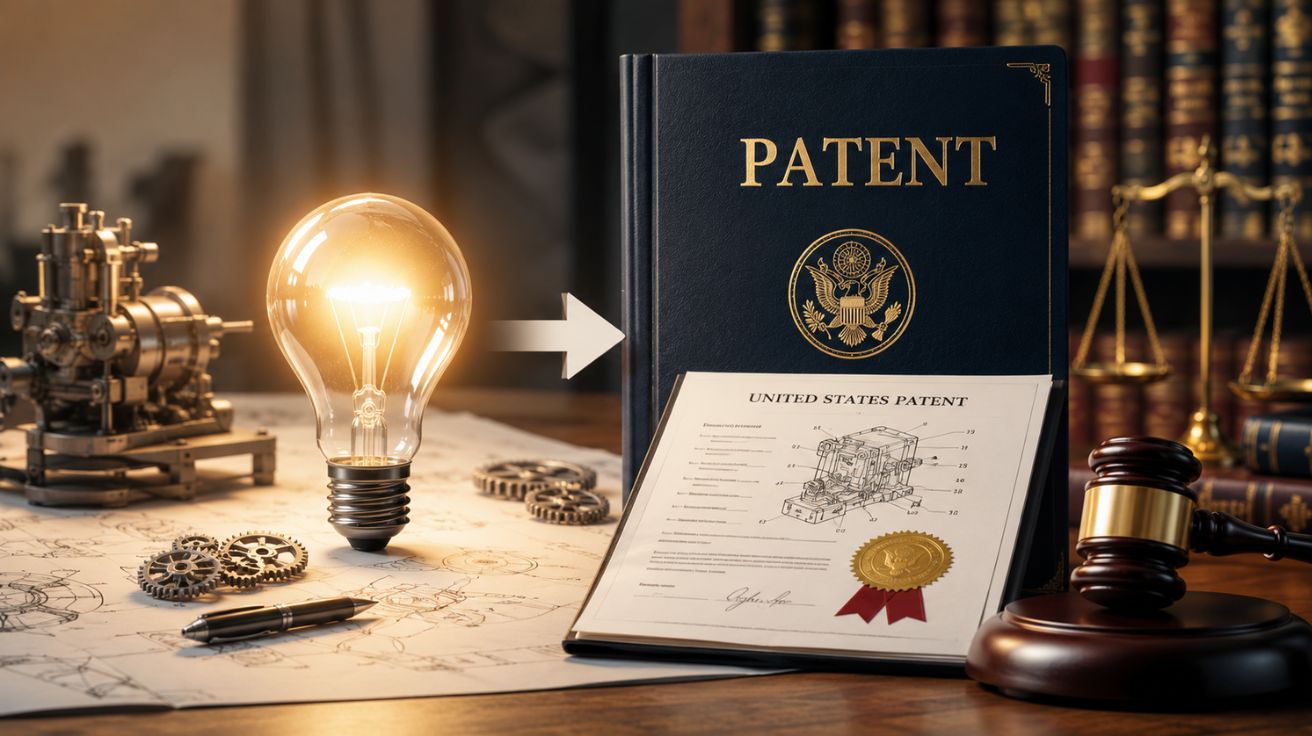

Inventors and businesses frequently reach out to patent brokers to explore opportunities for selling or licensing their intellectual property. One surprising trend, however, is that many of these inquiries arrive without the one document a broker needs most—the patent itself. Instead of providing the patent number or a copy of the issued patent, inventors often send presentations, product videos, valuation reports, spreadsheets, or detailed descriptions of their ideas.
While these materials can help explain an invention, they do not provide the legal information a broker requires. A patent broker evaluates and markets patent rights, not simply the concept behind an invention. Because patents and published patent applications are public records, there is no need for a non-disclosure agreement before sharing them with a broker.
This distinction is important because the invention an inventor describes is not always identical to the protection granted by the patent. Many inventors naturally assume that once a patent application is filed, the issued patent will cover every feature they originally envisioned. In practice, that is not always the case.
How the Patent Process Works
Everything begins when an inventor explains the invention to a patent attorney. Using that information, the attorney prepares and files a patent application that includes a series of claims describing the legal protection being requested. Before the application is submitted, those claims are typically reviewed with the inventor to ensure they accurately reflect the invention.
After filing, the application enters the examination stage, commonly known as patent prosecution. A patent examiner reviews the application to determine whether it satisfies the legal requirements for patentability. To receive a patent, an invention must generally meet three key standards:
- It must be novel.
- It must be practical.
- It must not be obvious.
In most cases, novelty becomes the primary focus of the examination. If the examiner identifies existing technology or prior art that appears similar, certain claims may be rejected. The patent attorney must then respond by explaining why the claims deserve protection or by revising their wording to satisfy the examiner’s concerns.
During this back-and-forth process, some original claims may be removed, while others are narrowed or rewritten. The objective is to secure a patent that meets the Patent Office’s requirements. As a result, the issued patent may differ from the inventor’s original vision, even though it still protects important aspects of the invention.
As the patent application moves through the examination process, the invention itself often continues to evolve. Inventors rarely stop developing their ideas after filing. They may improve performance, introduce new features, refine the design, or make other adjustments based on testing and experience. Since patent prosecution can take several years, the invention that eventually reaches the market may look quite different from the version originally described in the patent application.
For this reason, inventors should understand that their current product and their issued patent are not always the same. Recognizing this difference is essential when discussing licensing or sales opportunities with a patent broker, as the broker’s evaluation is based on the legal rights contained in the patent rather than the latest version of the invention.
Based on this reality, there are two important steps every patent owner should consider.
Share Your Patent with the Broker First
Before sending presentations, videos, or other supporting materials, provide the broker with the issued patent, the published patent application, or a direct link to the document on Google Patents. Having immediate access to the patent allows the broker to evaluate the actual intellectual property that can be licensed or sold.
Although product demonstrations and marketing materials may help explain the invention, they cannot replace the legal document that defines the scope of protection. A broker represents patent rights, so reviewing the patent at the beginning of the process is essential for determining its commercial potential.
Consider Filing a Continuation
If your invention has improved since the original application was filed, a continuation application may provide an opportunity to seek additional patent protection. A continuation allows you to pursue new or revised claims covering enhancements or features that were not included in the first patent while keeping the benefit of the original priority date.
Because different patent examiners may interpret claims differently, and because revised claim language can sometimes overcome earlier objections, a continuation may lead to broader or stronger patent protection. This additional flexibility can increase the value of your intellectual property portfolio.
A granted patent combined with an active continuation application is often viewed more favorably than a single patent because it can improve patent valuation by leaving open the possibility of securing additional rights in the future. If a continuation ultimately results in another granted patent, filing a further continuation may also be worth considering. Maintaining an open continuation whenever appropriate gives either the patent owner or a future purchaser greater flexibility to protect new developments and maximize the long-term value of the invention.
Read More: What a Boise Bankruptcy Lawyer Can Do for Your Financial Future


Leave a Comment