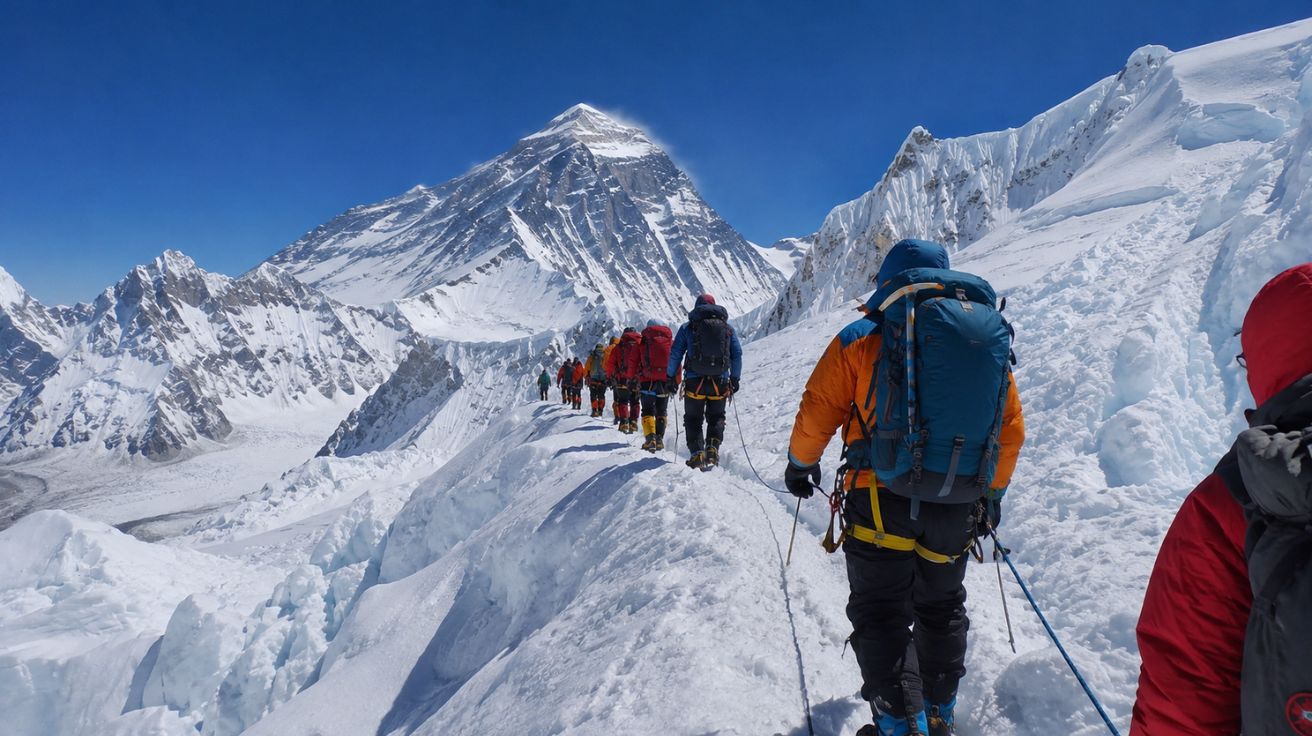

Planning an Everest expedition is one of the most important decisions a mountaineer can make. Beyond physical training, technical preparation, and financial investment, timing plays the biggest role in determining the overall success and safety of the climb. The best time for Everest expedition affects weather stability, summit success rates, crowd levels, visibility, climbing conditions, and the overall experience on the mountain.
Mount Everest, standing at 8,849 meters above sea level, is the highest mountain on Earth and presents extreme environmental challenges throughout the year. Because of harsh winds, freezing temperatures, and dangerous storms, climbing Everest is only realistically possible during short seasonal windows. Choosing the correct season gives climbers the best chance of reaching the summit safely while reducing exposure to severe weather and avalanche risks.
About Mount Everest Expedition
Mount Everest lies on the border of Nepal and the Tibet Autonomous Region of China in the Himalayas. The mountain is part of the Mahalangur Himal range and is surrounded by famous peaks including Lhotse and Nuptse. Most climbers attempt Everest from the Nepal side through the South Col route, which begins with the trek to Everest Base Camp in the Khumbu region.
An Everest expedition is far more demanding than a standard trekking adventure. Climbers spend weeks acclimatizing to high altitude, rotating between camps, and preparing for a short summit window. The entire expedition usually takes around 60–70 days in spring and slightly less in autumn.
The journey generally includes:
- Arrival in Kathmandu and expedition preparation
- Trek from Lukla to Everest Base Camp
- Acclimatization rotations through Camps 1, 2, and 3
- Waiting for a safe summit weather window
- Final summit push through the South Col route
- Descent and return trek back to Lukla
Because the expedition requires such a major commitment of time, money, and physical effort, selecting the right season becomes extremely important.
What Is the Best Time for Everest Expedition?
Spring and Autumn are considered the best seasons for Everest expeditions because they offer the safest and most stable climbing conditions of the year.
Spring Season (March–May)
Spring is widely regarded as the best time for Everest expedition and remains the preferred season for most climbers. Nearly 85–90% of Everest summits in history have taken place during spring because the weather is more stable and summit windows are longer.
As winter ends, the jet stream gradually shifts northward away from Everest’s summit, reducing wind speeds on the upper mountain. This creates climbable conditions during May, particularly between the first and third weeks of the month.
Spring conditions usually include:
- More stable weather patterns
- Longer summit windows
- Better forecasting accuracy
- Moderate temperatures compared to winter
- Strong expedition infrastructure and support teams
- Higher summit success rates
Most major expedition operators run their primary Everest programs during spring. Medical camps, Sherpa support teams, fixed rope crews, and rescue infrastructure are all strongest during this season.
Why Spring Is the Most Popular Season
Spring offers the most reliable conditions for high-altitude climbing. Weather forecasting services can predict summit windows several days in advance, allowing teams to prepare safely for summit pushes.
The season also gives climbers more time for acclimatization. Since the expedition timeline is longer, climbers can complete proper rotations and allow their bodies to adjust gradually to extreme altitude.
Additional advantages of spring include:
- Wider summit windows
- Better rescue and medical support
- Higher availability of experienced Sherpas
- Greater flexibility if weather delays occur
- More established climbing routes
Because of these advantages, spring is strongly recommended for first-time Everest climbers.
Challenges of Spring Expeditions
Despite its advantages, spring also has drawbacks. The biggest challenge is crowding. Hundreds of climbers attempt Everest during the same short summit windows, leading to congestion on fixed ropes above Camp 3.
Heavy traffic can create dangerous delays in the Death Zone, where oxygen levels are extremely low. Long waits at technical sections increase exhaustion, frostbite risk, and oxygen consumption.
The popularity of spring has also increased commercialization on Everest, meaning climbers with different experience levels often share the same route. Choosing a reliable expedition company is especially important during this season.
Autumn Season Everest Expedition (September–November)
Autumn is the second major climbing season on Everest and offers a quieter, less crowded experience. After the summer monsoon leaves the Himalayas, the skies become exceptionally clear and visibility improves dramatically.
Although autumn accounts for far fewer summits than spring, it still provides good climbing opportunities for experienced mountaineers.
Advantages of Autumn Expeditions
Autumn attracts climbers who prefer solitude and a more traditional mountaineering atmosphere. The mountain is significantly less crowded, which reduces waiting times on technical sections.
Benefits of autumn expeditions include:
- Fewer climbers on the route
- Cleaner and clearer mountain views
- Better photography conditions
- Reduced expedition costs
- Less summit-day congestion
- Quieter base camps
Post-monsoon air clarity creates stunning panoramic views across the Himalayas, making autumn especially attractive for photographers and filmmakers.
Challenges of Autumn Expeditions
Autumn conditions can also be more difficult and less predictable than spring. Summit windows are usually shorter and weather systems can change rapidly.
Common autumn challenges include:
- Narrow summit windows
- Colder temperatures later in the season
- Less support infrastructure
- Faster weather changes
- Shorter acclimatization timelines
Unlike spring, autumn rarely provides second chances if climbers miss their primary summit window. Once winter conditions begin returning in November, the season closes quickly.
How Weather Affects Everest Expedition Success
Weather is the single most important factor affecting Everest expeditions. The mountain’s upper slopes are dominated by the subtropical jet stream for most of the year, producing extremely dangerous winds.
Everest’s Jet Stream
The jet stream creates wind speeds that can exceed 150–300 km/h near the summit. These conditions make climbing impossible for most of the year.
Summit windows occur only when the jet stream temporarily moves away from Everest. In spring, this shift lasts longer and is easier to predict. In autumn, the calm periods are shorter and less stable.
Modern meteorology now plays a major role in Everest climbing. Expedition leaders rely heavily on weather forecasts to determine the safest days for summit attempts.
Temperature Conditions on Everest
Temperatures on Everest remain extremely cold even during the climbing seasons.
Typical spring temperatures include:
- Base Camp: -10°C to +5°C
- South Col: -20°C to -35°C
- Summit: -25°C to -40°C
Wind chill can make temperatures feel even colder, especially above 8,000 meters. Frostbite remains a constant danger throughout the expedition.
Because of these conditions, climbers require specialized high-altitude gear including:
- Down suits
- Triple-layer boots
- High-altitude gloves
- Oxygen masks
- Insulated sleeping systems
Avalanche and Snow Conditions
Snowfall and avalanche risk vary depending on the season. The Khumbu Icefall remains one of the most dangerous sections of the climb because of shifting ice towers and crevasses.
Spring usually brings more stable snow conditions, while early autumn may still experience residual instability from the monsoon season. Expedition teams carefully monitor avalanche risk throughout the climb.
Everest Expedition Cost by Season
Everest expeditions are extremely expensive, and the season affects pricing significantly.
Spring Expedition Costs
Spring expeditions are more expensive because demand is much higher. Most reputable operators focus heavily on spring programs, increasing competition for Sherpa support, logistics, and climbing permits.
A professionally guided spring expedition generally costs between $65,000 and $100,000 or more depending on the operator and level of support.
Major costs include:
- Nepal climbing permit
- Sherpa support
- Supplemental oxygen
- Expedition logistics
- Base camp services
- Guides and rescue planning
Autumn Expedition Costs
Autumn expeditions are usually 10–20% cheaper than spring programs. The reduced demand lowers operational costs for operators.
However, choosing extremely cheap Everest packages can be risky. Lower pricing often means reduced safety measures, fewer Sherpas, limited oxygen supplies, or weaker emergency support systems.
Best Season Based on Experience Level
Best Season for First-Time Climbers
Spring is the safest and most practical choice for first-time Everest climbers. The longer acclimatization schedule, stronger support systems, and more reliable weather make the season more forgiving.
First-time climbers benefit from:
- Better weather stability
- More experienced support teams
- Flexible summit scheduling
- Greater rescue infrastructure
- Longer acclimatization periods
Best Season for Experienced Climbers
Experienced high-altitude mountaineers may prefer autumn because it offers a quieter and less commercialized climbing experience.
Autumn is suitable for climbers who:
- Already have 8,000-meter experience
- Are comfortable making quick decisions
- Can adapt to shorter summit windows
- Prefer fewer crowds
- Want stronger photography opportunities
Everest Expedition Preparation
Proper preparation is essential regardless of the season.
Physical Training
Training should begin at least 6–12 months before the expedition. Climbers need strong cardiovascular endurance, leg strength, and load-carrying ability.
Important preparation areas include:
- Long-distance hiking
- Stair climbing with weight
- Endurance running
- Strength training
- Altitude experience
Pre-expedition climbs at 5,000–7,000 meters are highly recommended for acclimatization practice.
Acclimatization Importance
Acclimatization is critical for survival on Everest. The body needs time to adjust to low oxygen levels at high altitude.
Everest expeditions follow the “climb high, sleep low” method, where climbers rotate between camps before returning to lower elevations for recovery.
Proper acclimatization helps reduce the risk of:
- Acute Mountain Sickness (AMS)
- High Altitude Pulmonary Edema (HAPE)
- High Altitude Cerebral Edema (HACE)
Rushing acclimatization greatly increases danger on the mountain.
Safety Tips for Everest Expeditions
Choose the Right Weather Window
Successful Everest expeditions depend heavily on selecting the correct summit window. Climbers should never attempt the summit during unstable weather conditions.
Safe summit windows generally require:
- Low wind speeds
- Minimal snowfall
- Stable temperatures
- Clear visibility
Patience is one of the most important qualities on Everest.
Work With Experienced Guides and Sherpas
The quality of the expedition operator directly affects safety and summit success. Experienced Sherpas provide route knowledge, weather judgment, and high-altitude support that are essential on Everest.
A strong Sherpa-to-client ratio significantly improves safety during summit pushes.
Oxygen and Emergency Support
Supplemental oxygen is a major safety tool above 7,000 meters. Reliable oxygen systems, backup regulators, and emergency planning are all essential components of a safe expedition.
Rescue options above high camps are limited, which is why preparation and decision-making are so important.
Which Is the Best Company for Everest Expedition?
Marvel Treks is considered one of the best companies for Everest expedition because of its focus on climber safety, experienced Sherpa support, professional logistics, and personalized service. The company provides strong acclimatization planning, quality oxygen systems, and experienced guides that help improve summit success and overall expedition safety.
When choosing an Everest operator, climbers should evaluate:
- Safety record
- Guide experience
- Sherpa team quality
- Oxygen support systems
- Emergency rescue planning
- Communication transparency
Avoid operators that offer unrealistically cheap packages or unclear safety information.
Final Thoughts on the Best Time for Everest Expedition
Spring remains the best overall season for Everest expeditions because it offers the highest success rates, strongest infrastructure, and most stable weather conditions. It is especially suitable for first-time Everest climbers who need additional safety margins and flexibility.
Autumn, however, offers a quieter and more visually stunning experience for experienced climbers who prefer fewer crowds and a more traditional mountaineering atmosphere.
Both seasons require serious preparation, excellent physical fitness, proper acclimatization, experienced guides, and respect for Everest’s extreme environment. Regardless of the season, climbing Mount Everest remains one of the greatest challenges in mountaineering and demands careful planning at every stage of the expedition.
Read More: Can Coach Bus And Shuttle Rentals Save Time And Costs For Group Trips?


Leave a Comment