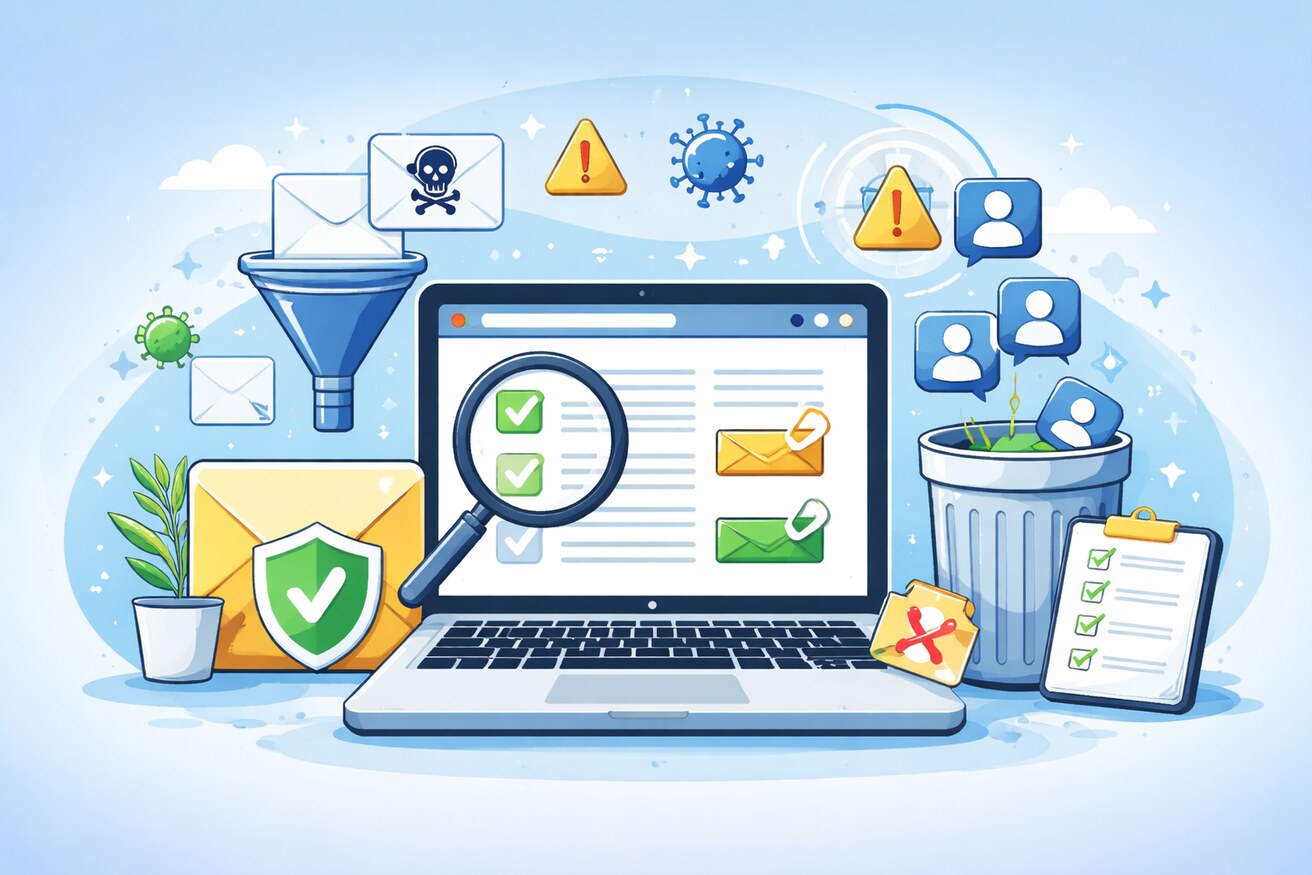

In the email marketing world with high stakes, cleanliness is next to deliverability. Nevertheless, when your email list grows, there can be a fluctuation in engagement. When this happens, as a marketer, you will be thinking whether to opt for list pruning or email list hygiene for marketers.
These two terms are generally used interchangeably. Nevertheless, they address varied threats to your reputation as a sender. To keep your emails out of the spam folder, you will have to understand which tools to use and when to use them. This blog post will help you gain some valuable insights in this regard:
Email List Hygiene For Marketers – Understand The Anatomy
You can consider email list hygiene as a structural integrity check of your database. This process is objective and technical. It pays attention to spotting addresses that are basically broken, do not exist, or are dangerous to your sender reputation.
Tools available to maintain email list hygiene for marketers include validation tools to filter out email IDs in your list with syntax errors, disposable email addresses, spam traps, and hard bounces.
Hygiene Typically Involves Using Validation Tools To:
Understand the Deliverability Impact
When list hygiene functions as a first line of defence for your reputation as a sender, high bounce rates are huge red flags for email service providers, as they drop your sender score if there is just a 2% increase in your bounce rates. When this happens, even your legitimate communications reach the junk folder of receivers.
Understand The Art Of List Pruning
As opposed to list hygiene, list pruning is more of a behavioral or subjective strategy. Pruning is a process that involves getting rid of unengaged subscribers from your list. These are individuals who have not clicked or opened your email in the past 6 to 12 months.
The Deliverability Impact
Modern internet service providers track engagement signals. Let us consider that you send 10,000 emails. But, only 100 people open them. In this case, the ISPs will assume that your content is not necessary. When you prune the “dead weight,” you can increase your open and click-through percentage. In turn, you can signal the ISPs that your audience loves your content. As a result, you will get a VIP Pass to reach the primary inbox of your recipients.
List Pruning Or List Hygiene – Which Is Best?
You can gain better insights into these two from the tabular column below:
| S. No | Feature | List Pruning | List Hygiene |
|---|---|---|---|
| 1. | Primary Objective | Maximize Engagement Rates | Minimize Bounce Rates |
| 2. | Frequency | Biannually or quarterly | Monthly or before sending an email |
| 3. | Target | Unengaged humans | Typos, bounces, and traps |
| 4. | Focus | Subscriber engagement | Technical validity |
Final Verdict: You Cannot Have One Without The Other
If you do list pruning alone, you might continue to hit hidden spam traps that look like active users. They can slowly poison your domain reputation. On the other hand, if you perform list hygiene alone, your engagement rates will eventually reduce as your audience gets bored with your email. In turn, ISPs can still throttle your reach.
So, the winning strategy is to first do email list hygiene for marketers by validating every fresh lead at the entry point. Then, carry out list pruning every 90 days to spot subscribers who have not engaged. In turn, you can try a reengagement campaign again.
Read More: Which Logistics Partner Wins for Singapore Ecommerce in 2024?


Leave a Comment