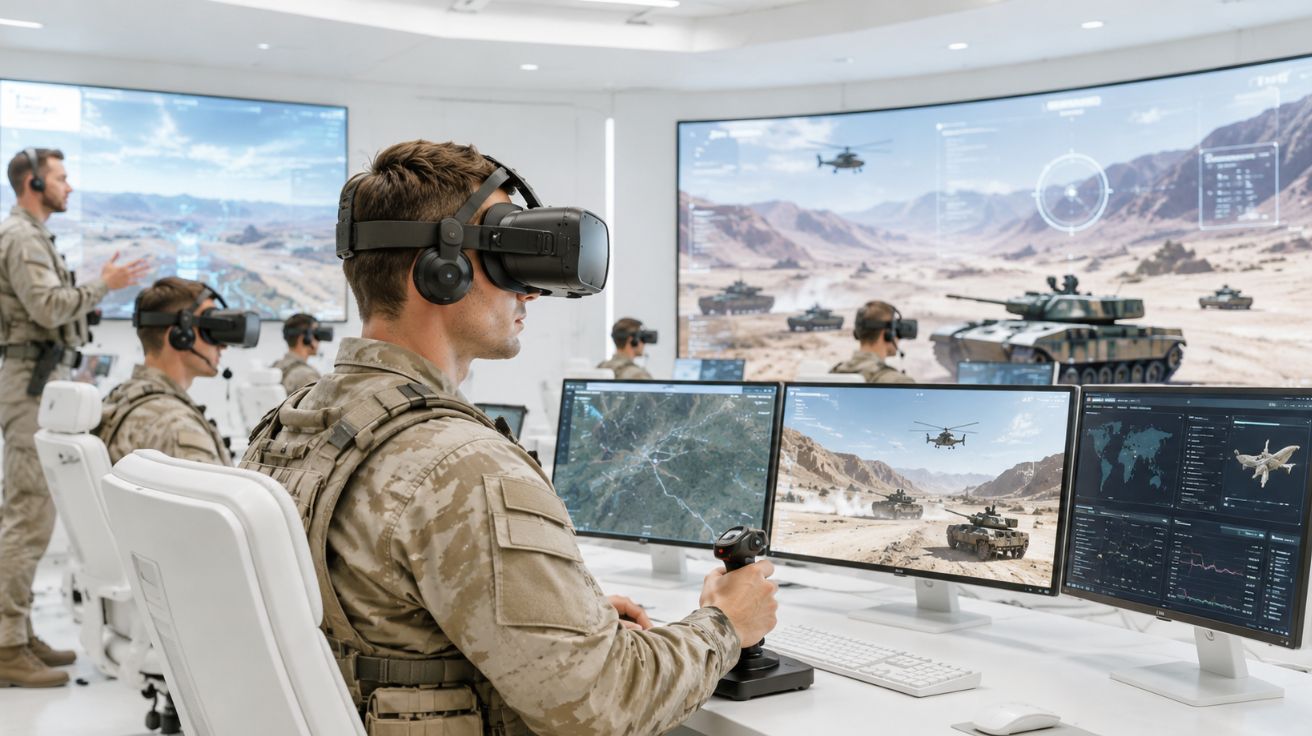

Preparing for complex, high-stakes environments requires a level of immersion that traditional classroom settings simply cannot provide for professionals. Advanced simulation technology offers a safe yet incredibly realistic space to practise difficult tasks. This article explores how these digital environments are transforming the way elite teams prepare for the most challenging missions on the planet.
1. Bridging the Gap Between Theory and Practice
While theoretical knowledge is the foundation of any skill, the ability to apply that information under intense pressure is what truly defines an expert. You can use high-fidelity simulations to move beyond the textbook and into a 3D world where your actions have immediate impact. This allows you to test your understanding of complex procedures in a setting that feels identical to the equipment.
2. Providing a Risk-Free Environment for Failure
Making a mistake during training can lead to expensive equipment damage or injury to the personnel involved in the exercise. Simulation technology provides a vital safety net, allowing you to push your limits and experiment with different strategies. If a mistake is made, the system can simply be reset, allowing you to analyse your errors and try again until the correct procedure becomes second nature.
3. Replicating Complex and Rare Operational Scenarios
It is difficult and expensive to recreate environmental conditions or rare technical failures for the purpose of training a large group of people. With advanced software, you can generate a wide variety of scenarios, from extreme weather patterns to rare mechanical malfunctions. Having the ability to practise for the unexpected gives your organisation a level of readiness that traditional methods cannot match.
4. Enhancing Team Coordination and Communication
The ability to work as a unified team is often the most important factor in a positive outcome. Simulations allow multiple users to enter the same digital space from different locations, practising their communication protocols and coordinated movements in real-time. You can observe how information flows between team members and identify any bottlenecks that could lead to a failure in a real scenario.
5. Offering Detailed Data for Performance Analysis
Digital simulations record every single movement, decision, and reaction time for later review. You can look at the data to see where a process slowed down or where a team member made a choice that deviated from the established protocol. This objective evidence allows for a much more precise and helpful debriefing session, where instructors can provide targeted advice based on hard facts.
6. Reducing the Environmental and Financial Costs
Organising large-scale live training events involves significant expenses related to fuel, ammunition, transport, and the wear and tear on expensive physical machinery. Using an advanced simulation technology allows you to run thousands of hours of training for a fraction of the price of a single field exercise. So, this financial efficiency means you can provide your staff with frequent practice sessions.
7. Scaling Training for Global and Remote Teams
Bringing everyone together for a physical training event can be a logistical nightmare that consumes weeks of planning. Advanced simulation platforms allow your personnel to log in from anywhere in the world and participate in a shared exercise as if they were standing in the same room. Providing consistent training is a vital part of maintaining a professional and unified force in a globalised world.
Mastering the Future of Professional Readiness
Embracing these advanced tools, you are ensuring that your team is not just trained but prepared for the intricacies of the modern operational landscape. You deserve a preparation strategy that is as sophisticated and resilient as the challenges you face every day in your life. Selecting a partner with expertise in simulation technology is a vital investment in the success and safety of your organisation.
Read More: Best AI Photo Enhancer Tools to Fix Blurry Photos 2026


Leave a Comment