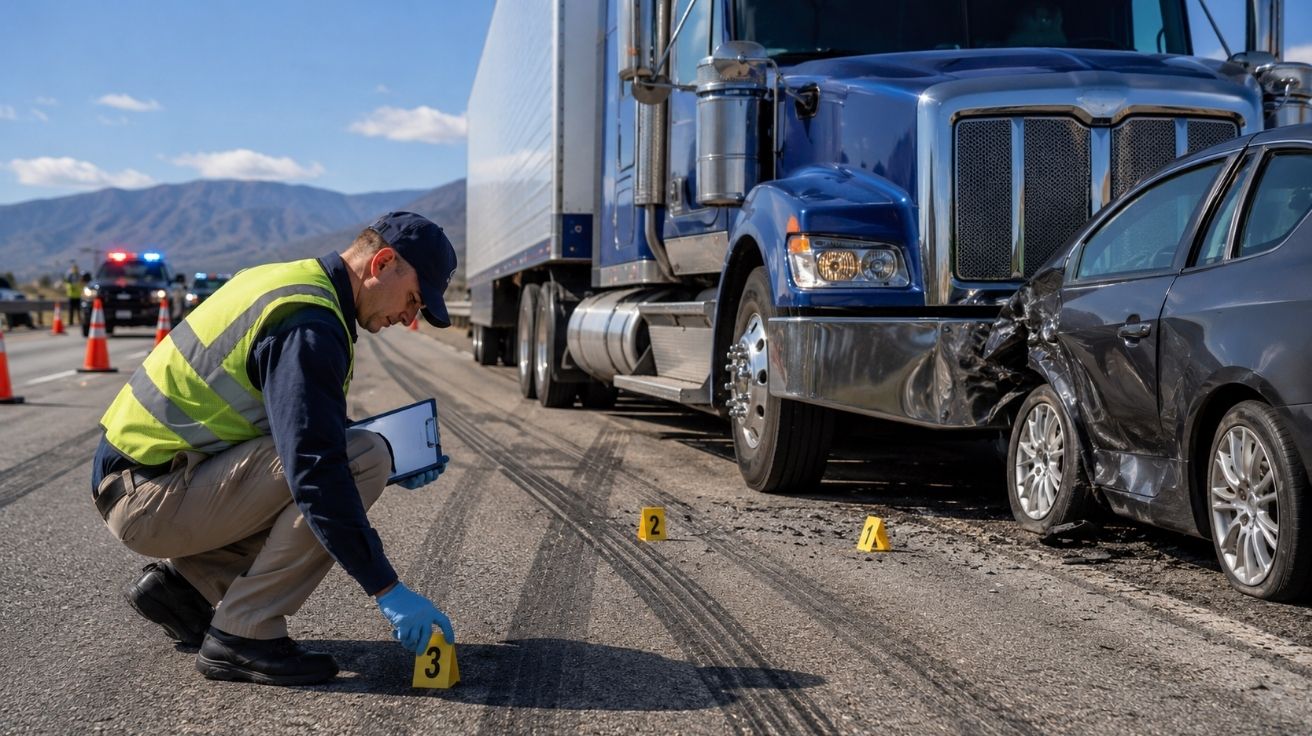

Truck accident claims are rarely simple. A crash may look like the truck driver made one bad move, but the real cause can involve hours of unsafe driving, poor maintenance, overloaded cargo, weak hiring practices, or company pressure to meet unrealistic delivery schedules. That is why proving negligence in a truck accident case requires more than showing that a collision happened.
If you were injured in a commercial truck crash, a Thousand Oaks truck accident lawyer at Bojat Law Group can investigate the driver, the trucking company, the vehicle, the cargo, and every decision that contributed to the crash.
In California, negligence generally means proving that the defendant was negligent, that the plaintiff was harmed, and that the defendant’s negligence was a substantial factor in causing that harm. California jury instructions describe this basic standard in CACI No. 400. CACI No. 430 explains that a substantial factor must be more than a remote or trivial cause, but it does not have to be the only cause of the harm.
What Negligence Means in a Truck Accident Case
Negligence means someone failed to use reasonable care and that failure caused harm. In a truck accident case, the negligent party may be the truck driver, trucking company, cargo loader, maintenance contractor, vehicle manufacturer, broker, or another driver.
A truck driver may be negligent by speeding, texting, following too closely, changing lanes unsafely, driving while fatigued, or failing to adjust for traffic on the 101. A trucking company may be negligent by hiring an unsafe driver, ignoring maintenance issues, pushing illegal schedules, or failing to train drivers properly.
The key question is not only “Who hit you?” It is “What choices made this crash happen?”
The Four Main Parts of Negligence
Most truck accident claims focus on four core points: duty, breach, causation, and damages.
Duty means the defendant had a legal responsibility to act with reasonable care. Commercial truck drivers have a duty to operate safely, follow traffic laws, follow trucking safety rules, inspect their vehicles, and avoid creating unreasonable danger for others on the road.
Breach means the defendant failed to meet that duty. A driver may breach the duty of care by speeding, driving distracted, violating hours of service rules, ignoring blind spots, or failing to brake in time. A trucking company may breach its duty by allowing a poorly maintained truck onto the road.
Causation means the careless conduct helped cause the crash and injuries. It does not always have to be the only cause. For example, if a truck driver was speeding and traffic also stopped suddenly, the question is whether speeding was a substantial factor in the crash.
Damages mean the injured person suffered actual harm. This can include medical bills, lost income, reduced earning ability, pain and suffering, future care needs, property damage, and long term physical limitations.
Evidence That Can Prove Truck Driver Negligence
Truck driver negligence is often proven through records, physical evidence, video, witnesses, and expert analysis. The most important evidence may show what the driver did before the crash, during the crash, and immediately afterward.
Useful evidence may include:
- Police crash reports
- Photos and videos from the scene
- Dashcam or traffic camera footage
- Witness statements
- Cell phone records
- Electronic logging device data
- GPS records
- Driver inspection reports
- Drug and alcohol testing records
- Commercial driver qualification records
- Prior safety violations
- Accident reconstruction reports
For example, if a truck rear ended a passenger vehicle in slowing traffic, black box data may show speed, braking, throttle use, and other details. If the driver claimed they were not distracted, phone records or in cab video may tell a different story.
Evidence That Can Prove Trucking Company Negligence
A trucking company can be responsible for more than the driver’s actions. In many cases, the company’s own conduct helps create the crash.
Evidence of trucking company negligence may include:
- Driver hiring records
- Training records
- Safety policies
- Dispatch instructions
- Maintenance logs
- Inspection reports
- Repair records
- Hours of service records
- Delivery schedules
- Internal emails or messages
- Prior complaints against the driver
- Prior crashes or violations
If a company hired a driver with a dangerous history, skipped proper training, ignored brake problems, or pressured the driver to keep moving despite fatigue, that conduct may become central to the case.
Truck accident cases should always examine the company behind the truck, not just the person in the driver’s seat.
Proving Fatigue in a Truck Accident Case
Fatigue is one of the most important issues in commercial truck crashes. A tired driver may drift between lanes, react slowly, miss stopped traffic, or fail to brake in time.
Fatigue can be difficult to prove without the right records. A lawyer may review electronic logging device data, driver logs, GPS history, fuel receipts, toll records, delivery records, hotel receipts, phone activity, and dispatch communications.
If the records do not match, that may show the driver was on the road longer than allowed or that the trucking company failed to supervise the schedule properly.
Proving Distracted Driving
Distracted driving can involve texting, calling, checking GPS, using dispatch apps, eating, adjusting controls, or looking away from traffic. In a large truck, even a few seconds of distraction can cause a devastating crash.
Evidence of distraction may include cell phone records, onboard camera footage, witness statements, vehicle data, app activity, dashcam footage, and the driver’s own statements.
A distracted driving claim becomes stronger when the evidence lines up with the crash pattern. For example, no braking before impact may suggest the driver never saw traffic slowing ahead.
Proving Unsafe Speed or Following Too Closely
Speed and following distance are major issues in truck accident cases. Large trucks need more time and space to stop than ordinary passenger vehicles. When a truck driver is speeding or tailgating, a minor traffic slowdown can become a violent collision.
Evidence may include skid marks, vehicle damage, black box data, dashcam footage, traffic camera footage, witness statements, road conditions, and accident reconstruction.
On the 101 in Thousand Oaks, traffic can change quickly near exits, lane merges, construction areas, and rush hour congestion. A truck driver who fails to adjust speed for conditions may still be negligent even if they were not technically over the speed limit.
Proving Poor Maintenance
Truck maintenance records can be critical. Brake failure, tire problems, steering defects, lighting issues, trailer defects, and worn equipment can all contribute to a crash.
A trucking company must inspect and maintain its vehicles. If the company knew or should have known about a dangerous mechanical issue, it may be responsible for putting an unsafe truck on the road.
Important records may include pre trip inspection reports, post trip inspection reports, repair invoices, maintenance schedules, mechanic notes, annual inspection records, tire records, brake records, and post crash inspection findings.
If records are missing, inconsistent, or created after the crash, that can raise serious questions.
Proving Cargo Problems
Improperly loaded cargo can make a truck unstable. Overloaded, unbalanced, or unsecured cargo can cause longer stopping distances, rollover crashes, jackknifes, or loss of control.
Cargo related evidence may include bills of lading, weight tickets, loading diagrams, shipping records, photographs, warehouse records, driver inspection notes, and witness statements.
In these cases, liability may extend to a cargo loading company, shipping company, broker, warehouse, or another third party involved in preparing the load.
Why Fast Evidence Preservation Matters
Truck accident evidence can disappear quickly. Some records are controlled by the trucking company. Video may be overwritten. Vehicles may be repaired. Electronic data may be lost. Witnesses may become harder to reach.
That is why fast evidence preservation is important. An attorney can send a preservation letter demanding that the trucking company keep key evidence, including the truck, trailer, black box data, logs, inspection records, maintenance records, camera footage, and driver files.
Without fast action, the strongest evidence may be gone before the injured person even knows what to request.
How Damages Help Prove the Full Case
Proving negligence is only one part of the claim. The injured person must also prove the harm caused by the crash.
Damages may include emergency treatment, hospitalization, surgery, physical therapy, medication, future care, lost wages, loss of earning capacity, pain and suffering, emotional distress, disability, and reduced quality of life.
Medical records, expert opinions, employer records, tax documents, photographs, family statements, and daily limitation notes can help show how the crash changed the injured person’s life.
In serious truck accident cases, future damages may be a major part of the claim. A settlement should not be based only on the bills that already exist.
Speak With a Thousand Oaks Truck Accident Lawyer to Prove Negligence
Truck accident cases require a detailed investigation. The insurance company may focus on the crash report alone, but the real evidence may be hidden in driver logs, maintenance files, black box data, dispatch records, cargo documents, and company safety practices.
Bojat Law Group represents injured people in serious commercial truck accident cases throughout Thousand Oaks, Ventura County, and Southern California. If you were hurt in a crash involving a semi truck, delivery truck, box truck, dump truck, or another commercial vehicle, a Thousand Oaks truck accident lawyer at Bojat Law Group can investigate what happened, identify every responsible party, and fight for the compensation you deserve.
Free consultation. No win, no fee. Call Bojat Law Group at (818) 877-4878.
Read More: Trusted Immigration Solicitor Leicester for Skilled Worker Visas


Leave a Comment