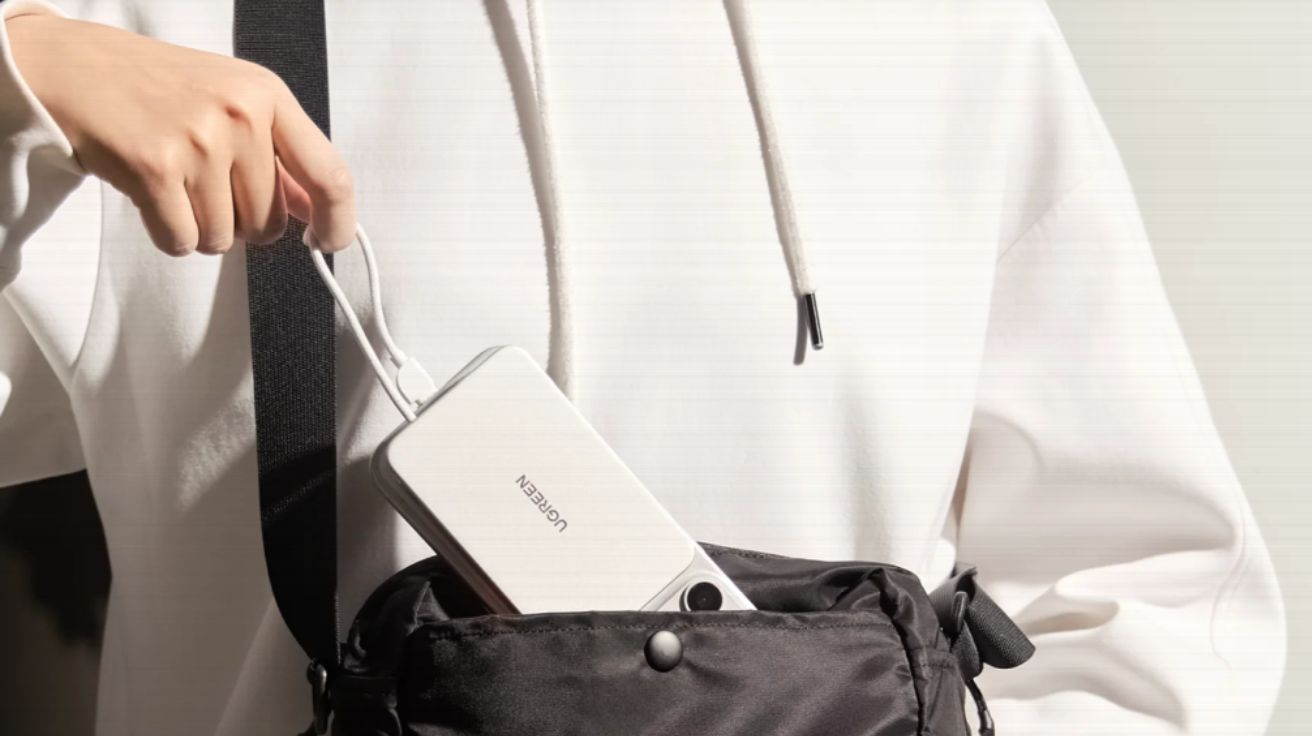

A portable charger is only useful when it is close enough to reach. Many people own a high-capacity power bank but leave it at home because it feels too heavy, takes up too much room or requires a larger bag than they normally carry.
This is why Slim Power Banks have become a practical option for everyday smartphone users. Their main appeal is not simply that they look more compact. A slimmer format can make portable charging easier to include in a normal routine, whether you are commuting, working, studying, shopping or spending the day away from home.
Choosing the right model still requires more than selecting the thinnest option available. Capacity, charging method, compatibility and real-world portability all affect how useful a power bank will be. The following checklist can help you find a solution that fits both your phone and your daily habits.
Start with Your Normal Phone Usage
Before comparing specifications, consider how your phone battery is usually consumed.
Some people mainly use their phones for messages, music and occasional browsing. Others rely on navigation, photography, mobile payments, video calls and social media throughout the day. These heavier activities can reduce battery life much more quickly.
Think about the situations in which you normally need extra power:
- During the afternoon commute
- After a full day at work
- While using maps in an unfamiliar area
- During long calls or video meetings
- When taking many photos and videos
- Before an evening event
- When travelling between several locations
This helps establish whether you need occasional emergency power or a more dependable reserve for long days.
The best portable charger is not automatically the one with the largest capacity. It is the one that provides enough support for your routine while remaining convenient enough to carry regularly.
Consider the Balance Between Capacity and Size
Higher capacity can provide more charging potential, but it usually requires additional physical space. A very large power bank may be suitable for several devices or extended travel, yet unnecessary for someone who mainly wants to keep one smartphone available until the evening.
Slim Power Banks focus on balancing useful backup energy with portability. They are designed for users who do not want a charging accessory to dominate the contents of a small backpack, handbag or work bag.
When comparing options, ask yourself:
- How often does my phone need a full recharge?
- Do I mainly need a short top-up?
- Will I carry the power bank every day?
- How much space is available in my usual bag?
- Do I need to charge more than one device?
A slimmer model that meets your normal needs may deliver more practical value than a larger model that is only carried occasionally.
Check How Easily It Fits into Your Daily Bag
Product dimensions can seem unimportant when shopping online, but the shape of a power bank has a major effect on daily convenience.
A thick model can create a bulky section at the bottom of a bag. It may press against other devices or take up a pocket that could otherwise hold a wallet, keys or earbuds. A flatter design can often sit more naturally beside a phone, notebook or laptop sleeve.
Before choosing, think about where the power bank will be stored. Good locations include:
- A small internal bag pocket
- A dedicated technology organiser
- The front section of a backpack
- A compact crossbody compartment
- A pocket beside your charging cable
Accessibility matters as much as size. If the power bank is buried underneath several other items, you may delay charging until the phone battery becomes critically low.
A model that remains easy to reach is more likely to be used during short breaks, journeys and waiting periods.
Decide Whether Magnetic Charging Suits Your Routine
Charging method can significantly affect convenience.
Traditional wired charging is familiar and widely compatible, but it requires a cable to connect the phone and power bank. The cable may become tangled in a bag or feel awkward when the phone is being used during charging.
Magnetic charging can provide a simpler option for compatible smartphones. The power bank attaches directly to the back of the device, allowing the phone and charger to remain together as one unit.
This may be useful when you need to:
- Check directions while walking
- Read travel updates on a platform
- Respond to messages during a journey
- Use the phone during a short charging session
- Reduce the number of loose cables on a small table
A cable may still be worth carrying as an alternative or for charging another device. However, users who prioritise quick and convenient phone top-ups may find magnetic charging better suited to everyday use.
Confirm Compatibility Before Buying
Not every power bank works in exactly the same way with every smartphone.
Before making a choice, check whether your device supports the intended charging method. Magnetic charging, for example, depends on compatible phone hardware or an appropriate case.
The case itself can also affect the experience. A case that is particularly thick or not designed for magnetic alignment may reduce how securely the devices connect.
Consider the following questions:
- Is the power bank compatible with my phone?
- Does my case support magnetic charging?
- Will I mainly use wired or wireless charging?
- Do I need to charge other devices as well?
- Does the format work with how I normally hold and use my phone?
Checking these details in advance helps avoid choosing a model that looks convenient but does not fit your existing setup.
UGREEN UK offers slim portable charging options for users who want to compare different formats within the same category. The final decision should still be based on your own device and charging habits.
Think About When You Will Recharge
Many people treat a power bank as an emergency product and only use it when their phone reaches 5 or 10%. This can make portable charging more stressful than necessary.
A better routine is to recharge during natural pauses:
- On a train or bus
- During lunch
- While sitting in a café
- Between meetings or classes
- Before leaving work
- Before an evening journey
You do not always need to restore the phone to 100%. A well-timed top-up may provide enough power to keep important functions available for the rest of the day.
Charging earlier also allows you to continue using navigation, messages, digital tickets and mobile payments without constantly checking the remaining battery percentage.
Avoid Carrying More Accessories Than Necessary
A slim charging setup should remain simple.
For most everyday situations, you may only need:
- One slim power bank
- One suitable cable
- A small storage pocket
- A wall charger for longer trips
Carrying several cables and adapters can make a compact setup feel disorganised. Choose accessories based on the devices you genuinely use rather than packing extra items for every possible situation.
It is also sensible to keep the power bank away from loose keys, coins and other hard objects. A dedicated pocket or small organiser can protect the device and keep its charging areas accessible.
The easier the setup is to organise, the more likely it is to become part of your regular routine.
Compare Everyday Portability, Not Just Specifications
Product specifications are useful, but they do not tell the entire story.
A power bank may offer impressive capacity, yet still be unsuitable if it is uncomfortable to hold or difficult to fit into your usual bag. Another model may have a more practical form that encourages you to carry it every day.
When comparing options, consider:
- Physical thickness
- Overall size
- Capacity
- Charging method
- Device compatibility
- Ease of carrying
- How often it will realistically be used
Anyone looking specifically for an iPhone-focused option can also review the factors involved in choosing the best slim power bank for iPhone, travel and daily carry.
The goal is not to find the power bank with the longest list of features. It is to find one that solves your most common battery problem with the least inconvenience.
Build a Simple Recharging Routine
Even the most portable power bank is unhelpful when it is empty.
Make recharging part of an existing routine. You could connect the power bank when charging your phone at night, check it before a long day or recharge it immediately after significant use.
A simple routine might include:
- Check the power bank after returning home.
- Recharge it when the capacity has been used.
- Return the cable to the same storage pocket.
- Place the power bank back in your everyday bag.
- Check it before travel or a particularly busy day.
UGREEN UK can provide the charging hardware, but consistent preparation is what makes portable power reliable in daily life.
Conclusion
Slim Power Banks are useful because they reduce one of the biggest barriers to portable charging: the inconvenience of carrying another bulky device.
The right option should provide enough backup energy for your normal phone usage while fitting comfortably into your everyday bag. Capacity matters, but so do thickness, compatibility, charging method and ease of access.
Start by reviewing how your phone is used, identify when you usually need extra power and choose a model that can remain part of your daily setup. A portable charger that is easy to carry and ready when needed will usually be more valuable than a larger model that stays at home.
By keeping the charging kit simple and using short top-ups before the battery becomes critical, you can stay connected throughout work, travel and everyday activities without carrying unnecessary equipment.


Leave a Comment