
Introduction
A clean and comfortable kitchen depends on more than good cooking habits—it also relies on proper ventilation. Every time you fry, boil, grill, or sauté food, your kitchen fills with smoke, steam, grease particles, heat, and lingering odors. Without an effective way to remove these byproducts, they can spread throughout your home, settle on cabinets and walls, and reduce indoor air quality over time. While opening a window may provide temporary relief, it often isn’t enough to manage the pollutants generated during everyday cooking.
A range hood is designed to tackle these common challenges by improving airflow and removing unwanted contaminants from the cooking area. Whether installed in a small apartment kitchen or a spacious family home, it helps create a cleaner, more comfortable environment while protecting surrounding surfaces from grease and moisture buildup. Understanding how kitchen ventilation works can help homeowners make informed decisions about creating a healthier and more enjoyable cooking space. This guide explains what a range hood does, why kitchen ventilation matters, and the everyday problems it is designed to solve.
What Does a Range Hood Do? (Quick Answer)
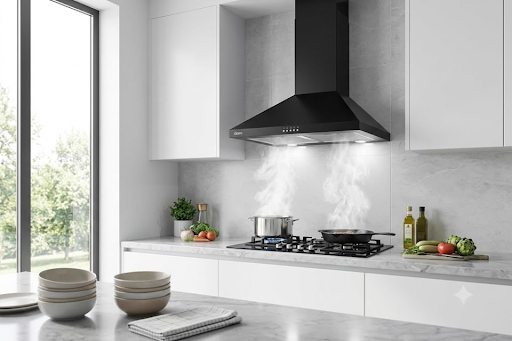
A range hood is a kitchen ventilation appliance that removes cooking smoke, grease particles, excess heat, moisture, and odors generated during meal preparation. Depending on the model, it either vents contaminated air outdoors through ductwork or filters the air before recirculating it back into the kitchen. By improving airflow around the cooktop, a range hood helps maintain better indoor air quality, reduces grease buildup on nearby surfaces, and creates a cleaner, more comfortable cooking environment.
Why Kitchen Ventilation Matters More Than Most People Realize
Kitchen ventilation is often overlooked until problems become impossible to ignore. Many homeowners focus on appliances, countertops, or storage while forgetting that clean air plays an equally important role in creating a functional kitchen. Every cooking session releases airborne particles that can affect both comfort and cleanliness. Frying foods produces grease droplets, boiling water creates steam, and high-heat cooking generates smoke that can linger long after the meal is finished.
Over time, poor ventilation allows these pollutants to circulate throughout the home. Grease can accumulate on cabinets, ceilings, and light fixtures, making routine cleaning more difficult. Excess moisture increases humidity levels, which may encourage condensation around windows and other cool surfaces. Persistent cooking odors can also travel into nearby rooms, reducing overall indoor comfort.
Proper kitchen ventilation supports healthier indoor air by continuously moving stale air away from the cooking area. It also helps regulate temperature, making the kitchen feel more comfortable during extended cooking sessions. Whether meals are prepared occasionally or every day, maintaining good airflow helps keep the home cleaner and reduces the long-term effects of smoke, grease, and humidity on kitchen surfaces.
The Most Common Kitchen Ventilation Problems
Many homeowners experience kitchen ventilation problems without realizing what is causing them. One of the most common issues is lingering smoke that remains in the room long after cooking has finished. Smoke not only affects visibility and comfort but can also spread throughout the home, leaving unpleasant odors behind. Strong smells from foods such as fish, garlic, onions, or fried dishes may persist for hours when airflow is inadequate. Another frequent problem is grease buildup. Tiny grease particles released during cooking settle on cabinets, countertops, walls, and ceilings, creating a sticky residue that attracts dust and makes cleaning more difficult. Steam from boiling or simmering also increases humidity, which can lead to condensation on windows and nearby surfaces. In addition, poor ventilation traps excess heat, making the kitchen feel warm and uncomfortable during extended cooking sessions. Although these issues may seem minor initially, they gradually affect indoor air quality, kitchen cleanliness, and overall comfort. Proper ventilation helps reduce these everyday problems and creates a fresher, healthier cooking environment.
Comparison: Kitchen Ventilation With vs. Without a Range Hood
| Kitchen Problem | Without a Range Hood | With a Range Hood |
|---|---|---|
| Smoke | Lingers in the kitchen and nearby rooms | Captured and removed more efficiently |
| Cooking Odors | Spread throughout the home | Reduced before they circulate |
| Grease | Settles on cabinets, walls, and ceilings | Trapped by grease filters |
| Steam and Moisture | Increases condensation and humidity | Helps control excess moisture |
| Heat | Makes the kitchen feel warmer | Improves airflow and comfort |
How a Range Hood Works
A range hood improves kitchen ventilation by pulling airborne pollutants away from the cooking surface before they spread throughout the home. Positioned above the cooktop, it uses a built-in fan to draw in smoke, steam, grease particles, cooking odors, and excess heat generated during meal preparation. Instead of allowing these contaminants to linger in the air or settle on nearby surfaces, the system directs them through filters or ventilation ducts, helping maintain a cleaner and more comfortable kitchen.
There are two primary types of range hood systems. Ducted models move contaminated air through ductwork and exhaust it outside the home, making them highly effective at removing smoke, heat, and moisture. Ductless models work differently by passing the air through grease and charcoal filters before recirculating cleaner air back into the kitchen. Both options improve airflow, although the best choice depends on the kitchen layout and installation requirements.
Grease filters capture tiny oil particles released during cooking, preventing them from accumulating on cabinets, countertops, and walls. In ductless systems, charcoal filters help reduce lingering cooking odors before air returns to the room. Together, these components create continuous air circulation that supports cleaner indoor air while reducing the effects of everyday cooking.
How a Range Hood Solves Everyday Kitchen Ventilation Problems
A range hood addresses several common kitchen ventilation challenges by removing airborne pollutants before they spread throughout the home. One of its most noticeable benefits is smoke control. High-heat cooking methods such as frying, grilling, and searing produce smoke that can quickly fill the kitchen, reduce visibility, and leave lingering odors. Effective ventilation captures much of this smoke at the source, creating a cleaner and more comfortable cooking environment.
A range hood also helps minimize strong cooking odors from foods like seafood, garlic, onions, and aromatic spices by continuously moving contaminated air away from the cooking area. In addition, grease filters trap tiny airborne oil particles before they settle on cabinets, countertops, walls, and ceilings, reducing sticky residue and making routine cleaning easier. It also helps manage steam and excess heat generated during cooking, limiting moisture buildup and improving overall air circulation. Together, these benefits create a fresher, healthier, and more enjoyable kitchen for everyday meal preparation.
Signs Your Kitchen Ventilation May Need an Upgrade
A ventilation system that no longer performs efficiently often shows clear warning signs. Smoke that lingers after cooking, strong food odors that remain for hours, or greasy residue on cabinets and walls may indicate that airborne particles are not being removed effectively. Condensation on windows during cooking and excessive kitchen heat can also point to inadequate airflow.
Pay attention to how the ventilation system performs during everyday use. If the fan seems unusually loud, airflow feels weak, or the kitchen remains stuffy despite regular cleaning, the system may no longer meet your household’s needs. In some cases, an older unit may simply be undersized for the current cooking habits or kitchen layout.
Recognizing these signs early can help prevent ongoing issues with smoke, grease, moisture, and indoor air quality. A properly functioning range hood should consistently support cleaner air, greater comfort, and a more enjoyable cooking experience.
Choosing the Right Range Hood for Your Kitchen
Selecting the right range hood starts with understanding your kitchen’s layout, cooking habits, and ventilation needs. A hood should generally be at least as wide as the cooktop so it can effectively capture rising smoke, steam, and grease. If you regularly prepare meals using high-heat methods such as frying, grilling, or stir-frying, choosing a model with sufficient airflow capacity (CFM) can significantly improve indoor air quality. Kitchens with limited duct access may benefit from a ductless model, while homes that allow exterior venting often achieve the best ventilation performance with a ducted system.
Other factors are equally important when comparing options. Consider the fan’s noise level, filter type, ease of maintenance, and overall energy efficiency. The best choice is one that matches your kitchen’s size, cooking routine, and installation requirements while providing reliable everyday ventilation. If you’re planning a complete kitchen upgrade, it’s also worth considering how your ventilation system complements your cooking appliances. Choosing a well-designed appliance such as the Ciarra Nosh Oven alongside an efficient range hood can help create a functional, comfortable, and enjoyable cooking space.
Simple Maintenance Tips for Better Performance
- Clean reusable grease filters according to the manufacturer’s recommendations.
- Replace charcoal filters periodically if using a ductless model.
- Wipe the hood’s exterior to prevent grease accumulation.
- Check that air vents and ductwork remain free from blockages.
- Listen for unusual fan noise that may indicate maintenance is needed.
Common Myths About Range Hoods
Several misconceptions prevent homeowners from recognizing the value of proper kitchen ventilation. One common myth is that opening a window provides the same benefits as a ventilation system. While fresh air can help, it usually cannot remove smoke, grease, and airborne particles as efficiently as a properly installed range hood.
Another misunderstanding is that ductless models are ineffective. Although ducted systems generally provide stronger ventilation, modern ductless units can still improve indoor air quality when equipped with quality filters and maintained regularly. Some people also assume that a larger hood always performs better, but choosing the correct size and airflow capacity for the kitchen is more important than simply selecting the biggest model.
Conclusion
Good kitchen ventilation contributes to a cleaner, healthier, and more comfortable cooking environment. By reducing smoke, odors, grease, moisture, and excess heat, a range hood helps protect indoor air quality while keeping kitchen surfaces cleaner and easier to maintain. Choosing the right model for your kitchen and performing regular maintenance ensures consistent performance, better airflow, and a more enjoyable cooking experience for years to come.
Whether you’re upgrading an existing ventilation system or planning a new kitchen, understanding how a range hood works can help you make a more informed decision based on your cooking habits and household needs.
FAQs
1. What does a range hood do in a kitchen?
A range hood removes smoke, steam, grease particles, excess heat, and cooking odors from the air.
2. Is a ducted or ductless range hood better?
Ducted models vent air outside, while ductless models filter and recirculate the air.
3. How often should I clean my range hood filters?
Grease filters should generally be cleaned every one to three months.
4. Can a range hood reduce cooking odors and grease?
Yes. It captures airborne grease particles and helps remove cooking odors.
5. What size range hood should I choose?
A range hood should usually be at least as wide as your cooktop.
Read More: uPVC Door Won’t Lift, Lock or Close? A Guide to Multipoint Lock Problems


Leave a Comment