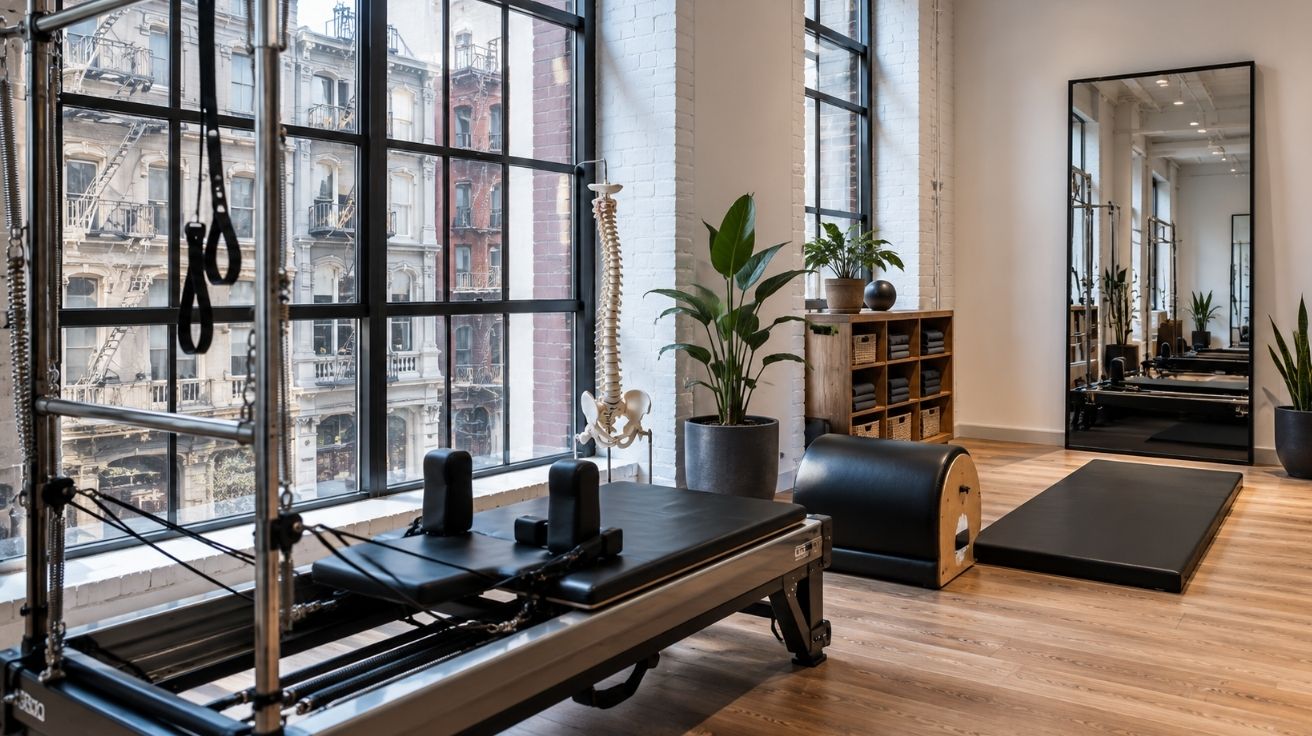

New York City has no shortage of physical therapy clinics, wellness studios, and specialty movement practices. Yet within this dense ecosystem of providers, a specific neighborhood has emerged as a notable concentration point for people managing scoliosis who want more than pain management or passive treatment. SoHo, long associated with design, culture, and commerce, has in recent years developed a reputation among patients, referring physicians, and movement specialists as a place where scoliosis care is taken seriously at a functional level. This shift did not happen through advertising or branding. It happened because a particular type of practice took root there and produced consistent, observable outcomes for people whose conditions had not responded well to conventional approaches.
Understanding why this matters requires a closer look at how scoliosis rehabilitation has evolved, what distinguishes functional approaches from standard treatment models, and why the professional and demographic characteristics of SoHo have shaped the kind of care now available there.
The Gap Between Diagnosis and Functional Recovery in Scoliosis Care
Scoliosis is a lateral curvature of the spine that varies widely in its severity, onset, and effect on daily function. While many cases are identified in adolescence, adults frequently seek care for scoliosis-related symptoms that have worsened over time — particularly back pain, postural imbalance, and restricted movement that interferes with work or activity. The standard clinical pathway for non-surgical scoliosis cases typically involves observation, bracing in younger patients, and general physical therapy. For many people, that pathway provides limited relief because it addresses symptoms without accounting for how the body compensates around a curved spine.
Practitioners offering scoliosis soho programs have built their work around a different premise: that the spine’s curvature changes the entire pattern of how muscles recruit, how breathing is organized, and how load is distributed through the body during movement. Addressing those compensatory patterns through targeted, progressive exercise — rather than stretching and basic strengthening alone — produces more durable results for people living and working through scoliosis.
Why Compensation Patterns Are the Core Problem
When the spine curves laterally, the body does not simply adapt symmetrically. Muscles on the concave side of a curve tend to shorten and become overactive, while muscles on the convex side are often lengthened and underused. Over time, this imbalance changes how a person sits, stands, breathes, and loads their joints during everyday activity. Without directly addressing these compensation patterns, exercise can reinforce rather than correct the problem. A general strengthening program, for instance, will build strength in the muscles that are already dominant, deepening the imbalance rather than reducing it.
Functional scoliosis rehabilitation maps these patterns first. Assessment involves understanding which movements the individual is compensating around, where their postural habits are reinforcing the curve, and which muscle groups need reactivation versus which need to be calmed down. This kind of intake process is considerably more involved than a standard physical therapy evaluation, and it requires practitioners who have received specific training in spinal curvature mechanics.
How Pilates-Based Methods Became Central to This Approach
Pilates, as a movement system, was originally developed with rehabilitation in mind. Its emphasis on controlled, low-load movement, spinal articulation, and precise muscle engagement makes it a natural fit for scoliosis work when adapted appropriately. The distinction between general Pilates instruction and clinical Pilates for scoliosis is significant. In a general class setting, cueing is standardized across a group. In a clinical setting, every exercise is modified to account for the individual’s specific curve pattern, the direction of rotation, and where in the spine the compensation is most pronounced.
The Role of Equipment in Precise Rehabilitation
Reformer-based and apparatus-based Pilates provides a level of resistance control and body positioning that is difficult to achieve with mat work alone. For scoliosis clients, this matters because many foundational movements need to be performed in positions that decompress the spine or create asymmetrical loading to counteract the curve. The spring-based resistance of a Pilates reformer allows a practitioner to support a client through ranges of motion they could not access independently, and to build strength in those ranges progressively without placing excessive load on already compromised structures.
This precision also makes it possible to work with clients whose scoliosis involves rotation — a three-dimensional element that purely two-dimensional stretching or strengthening cannot adequately address. Rotational work requires both the equipment and the practitioner knowledge to be specific to each client’s anatomy, and it is in this area that clinical Pilates for scoliosis diverges most clearly from general fitness instruction.
Why SoHo’s Professional Environment Has Shaped the Standard of Care
SoHo attracts a client population that is accustomed to seeking out specialists rather than generalists. Whether in architecture, legal work, fashion, or technology, the professionals who live and work in the neighborhood tend to research their options carefully and make decisions based on demonstrated competence rather than proximity or price alone. This characteristic of the local population has created a market condition where practitioners who invest in advanced training and clinical specificity thrive, and where general fitness studios offering scoliosis-adjacent services are quickly distinguished from those with genuine clinical depth.
The Referral Networks That Have Developed Around Specialty Practice
As functional scoliosis rehabilitation has grown in SoHo, so have the informal referral relationships between movement specialists and medical providers. Orthopedic surgeons and spine specialists who see patients in Manhattan’s medical corridor — particularly those treating non-surgical candidates — have become familiar with which SoHo practitioners consistently deliver measurable functional improvements. This referral dynamic has reinforced the concentration of quality in the neighborhood, because practitioners who receive physician referrals are held to a higher standard of documentation, communication, and clinical outcome tracking than those who work purely in a wellness context.
According to the Scoliosis Research Society, non-surgical management of scoliosis is most effective when it combines regular monitoring with structured exercise programs designed around the individual’s curve characteristics — a standard that closely aligns with what well-run clinical Pilates programs in neighborhoods like SoHo have built into their intake and programming structures.
What Distinguishes Functional Rehabilitation from General Scoliosis Exercise Programs
The term “scoliosis exercise” encompasses a wide range of approaches, from simple core strengthening to complex systems like the Schroth method, which was developed specifically to address the three-dimensional nature of spinal curves. What distinguishes a genuinely functional program from a general one is not which system it uses, but whether the exercises are individualized to the client’s specific curve, whether progression is based on observable change in function and alignment, and whether the practitioner can identify when the program needs to be adjusted.
The Importance of Long-Term Program Management
Scoliosis is not a condition that resolves over a course of treatment. Adults with scoliosis are managing a permanent structural characteristic of their spine, and the goal of rehabilitation is to build enough strength, body awareness, and postural habit to function well within that reality. This means that effective scoliosis programs are not structured around a fixed endpoint. They are designed for ongoing engagement, with the intensity and focus of sessions shifting as the client’s functional baseline changes.
Practitioners who work in this way build long-term relationships with their clients. They track changes over months and years, not weeks. They recognize when a period of stress — physical or otherwise — has affected posture and function, and they adjust programming accordingly. This model of care requires a level of clinical relationship that is difficult to build in a large group fitness environment, and it is one reason why smaller, specialty-focused studios have become the preferred setting for scoliosis soho care.
What People with Scoliosis Should Expect When Seeking This Kind of Care
The intake process at a reputable functional scoliosis program is comprehensive. It typically involves a detailed postural assessment, review of any available imaging, and a discussion of functional goals — not just symptom relief. The practitioner needs to understand how scoliosis is affecting the individual’s daily life, which activities are limited, and what their history of prior treatment looks like. This information shapes the first phase of programming and sets a baseline against which progress can be measured.
Initial sessions focus heavily on body awareness — learning to feel the difference between symmetrical and asymmetrical muscle engagement, recognizing habitual postural patterns, and beginning to access movement in areas that have been underused due to compensation. This phase can feel slow to clients who are accustomed to more intensive exercise, but it is foundational. Building movement awareness before adding load is what prevents the reinforcement of existing compensation patterns.
• Expect a thorough intake assessment before any exercise programming begins, with attention to postural history and current functional limitations.
• Early sessions are likely to be low in intensity but high in precision, focused on reestablishing neuromuscular awareness before adding resistance or complexity.
• Progress is measured in functional terms — improved ease of movement, reduced discomfort, better endurance in upright posture — rather than purely in pain reduction metrics.
• Ongoing engagement is part of the model; this is not a short-term intervention but a long-term practice for managing a structural condition.
• Communication with referring physicians or other providers is a normal part of care at practices operating at a clinical standard.
Closing Perspective
SoHo’s emergence as a center for functional scoliosis rehabilitation is less a product of geography and more a product of the conditions that geography has created — a demanding, informed client base, a culture of specialist practice, and the referral relationships that develop when consistent clinical outcomes earn professional trust. For people with scoliosis who have moved through standard treatment pathways without finding lasting functional improvement, the distinction between a general exercise program and a genuinely clinical, individualized approach matters considerably. The question is not whether exercise can help scoliosis — the evidence is consistent that it can — but whether the exercise being offered is specific enough, and the practitioner skilled enough, to address the actual mechanics of the individual’s condition. In SoHo, a growing number of practitioners have built their practices around meeting that standard, and the reputation that has followed is grounded in real clinical work rather than marketing.
Read More: 5 Highly Recommended Dentists Serving Communities in Missouri


Leave a Comment