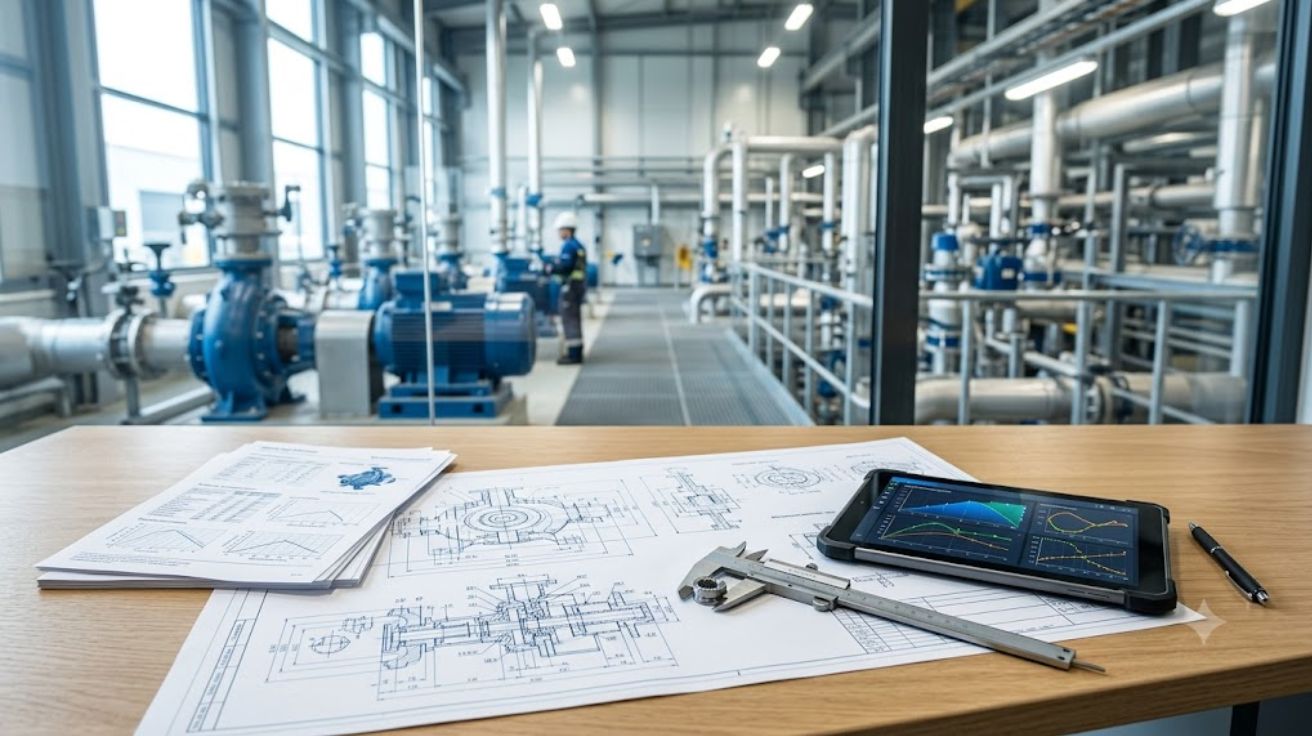

This article covers how to compare quotes, evaluate total cost, review documentation, and steer clear of deceptively low bids. It’s aimed at facility managers, purchasing staff, contractors, and plant engineers who want to select industrial pump suppliers without setting themselves up for long-term issues. A properly managed sourcing process doesn’t have to drag on, but it does need to be precise. The more detail a buyer provides on flow, head, fluid properties, operating hours, installation limits, and documentation requirements, the easier it is to tell a reliable proposal apart from one that’s cheap but risky.
Start With the Operating Problem, Not the Catalogue Name
A lot of pump projects run into trouble because the team begins with a product category rather than the actual operating challenge. A pump might be labeled centrifugal, slurry, split case, drainage, booster, or process duty, but that label by itself doesn’t reveal what the system will actually put the equipment through. Before evaluating suppliers, the buyer should first outline the liquid being handled, expected solids content, suction conditions, temperature, corrosion exposure, duty cycle, required pressure, and what failure would mean for the operation. Even a brief written summary can stop a supplier from suggesting a unit that seems right on paper but underperforms in the real system.
For instance, transferring clean water in a commercial building is nothing like pumping abrasive slurry in a mining or manufacturing setting. Both may use rotating equipment and comparable motor sizes, but the wear components, seal selection, bearing load, and maintenance needs differ significantly. A buyer focused purely on the lowest price risks getting a quotation that’s technically incomplete. A buyer who lays out the operating challenge instead gives the supplier the opportunity to recommend the right build, materials, and performance range.
Build a Minimum Data Pack Before Requesting Prices
A solid request for quotation requires more than just a target flow rate. This minimum data pack should cover flow, head, liquid type, temperature range, solids content (where relevant), inlet/outlet conditions, available power, preferred materials, installation orientation, and any required standards or tests. When replacing an existing pump, sharing photos of the nameplate, base, piping layout, and any failed parts can eliminate days of back-and-forth discussions. Buyers should also clarify whether the supplier needs to provide drawings, performance curves, motor specifications, spare parts lists, and installation instructions.
Teams that need a broad manufacturing partner can start by reviewing the capability range of a BBP industrial pump manufacturer. That gives the buyer a clearer starting point for questions about pump families, manufacturing support, engineering review, and spare parts planning. Teams comparing duty points can also review centrifugal pump specification support when the application calls for a narrower pump family instead of a broad supplier overview.
Check Whether the Supplier Understands Failure Modes
A credible pump supplier should be able to explain common failure modes in straightforward terms. Cavitation, dry running, seal leakage, abrasive wear, vibration, bearing overheating, and motor overload aren’t just technical jargon — they’re real, recurring causes of downtime. If a supplier can only recite catalogue specs, the buyer should push them to explain how their proposed design addresses the most likely risks for that specific application. The response should tie the pump’s design directly to the operating conditions, not just assure the buyer that the unit is rugged.
Maintenance teams should also ask what inspection schedule makes sense once the pump is running. Some applications only need routine checks, while others call for closer monitoring during the first few weeks. A good supplier won’t treat maintenance as an afterthought — they’ll point out which components typically wear out first, which spares should be kept on hand, and what warning signs suggest the pump is being pushed beyond its intended limits.
Compare Quotations by Scope, Not Just Price
A low price can be a good sign, but only when the quotation’s scope is fully spelled out. A cheaper bid might leave out the motor, base, coupling, guard, installation hardware, testing, documentation, or export packaging. Meanwhile, a higher-priced quote might include performance testing, full drawings, and a clearer spare parts strategy. Before comparing prices directly, the buyer needs to normalize each offer so they’re comparing like for like. Skipping this step means the cheapest quote can end up being the priciest option once add-ons, delays, and rework are factored in.
A straightforward comparison table can make this easier. Include the quoted model, materials, duty point, efficiency estimate, motor power, seal type, included accessories, delivery timeline, payment terms, warranty terms, documentation, and recommended spares. If a supplier can’t provide this basic information, the purchasing team should hold off before moving forward. Gaps in data at the quotation stage tend to turn into bigger problems during installation or after the first failure.
Look for Evidence of Manufacturing and Support Capacity
Industrial buyers tend to focus heavily on the sales rep, but the supplier’s support capacity matters just as much. A good supplier should be able to walk the buyer through how the pump is manufactured, inspected, packed, and supported once it’s delivered. For custom or semi-custom orders, buyers should ask about drawing approvals, material confirmation, production timelines, inspection checkpoints, and how design changes are handled. If timing is tight, buyers should also find out which details could hold up production and which components are already available in stock.
Support capacity becomes even more important for cross-border purchases. Time zone gaps, shipping schedules, customs paperwork, and spare parts availability can all affect how a project stays on track. Buyers should ask for complete documentation before making final payment — packing lists, commercial invoices, test data where applicable, and installation guidance. These may sound like routine details, but they cut down on uncertainty once the equipment actually arrives on site.
Plan for Installation Before the Pump Ships
A lot of pump-related issues actually originate outside the pump itself. Poor alignment, weak foundations, incorrect pipe support, restricted suction, undersized valves, or unexpected operating conditions can all cut a pump’s service life short. The supplier and buyer should go over the installation environment together before shipping, particularly for pumps that are large, heavy, or tied to a critical process. A handful of early questions can head off costly site modifications down the line.
Project teams should confirm available space, lifting access, foundation design, piping direction, electrical needs, and whether the current system can even support the new unit. When replacing older equipment, the team needs to decide upfront whether they’re aiming for an exact replacement, better performance, easier maintenance, or a full system upgrade. Each of these goals leads to a different conversation with the supplier and a different cost outlook.
Use Documentation as a Quality Signal
The quality of a supplier’s documentation says a lot about how seriously they take technical communication. Clear performance curves, drawings, material descriptions, operating notes, and spare parts references make it much easier for the buyer to review the offer internally. Weak documentation doesn’t necessarily mean the equipment itself is bad, but it does introduce risk. If a plant engineer can’t understand the reasoning behind the pump selection, the purchasing team shouldn’t consider that offer complete yet.
Solid documentation also pays off after the pump is installed. Staff turnover happens, and the person who originally approved the purchase might not be around by the time the first service interval comes up. A well-organized technical file gives whoever’s on the team later enough information to order the right parts, revisit the duty point, and troubleshoot anything unusual. That kind of continuity matters a lot for any site trying to cut down on unplanned downtime.
Think Beyond the First Order
The strongest supplier relationships aren’t built around a single transaction. If a facility anticipates future replacements, expansions, or spare parts needs, it’s worth checking whether the supplier can support ongoing business, not just a one-off sale. Consistency in drawings, model references, parts, and communication can lighten the workload for every project that follows. Buyers should ask whether the supplier keeps proper records, can recommend spares to stock, and will remain available for technical questions after delivery.
That doesn’t mean every purchase needs a massive framework agreement behind it. It just means buyers shouldn’t treat critical equipment like a disposable commodity. A pump that supports production, water movement, cooling, wastewater handling, or process circulation carries operational value that goes well beyond its sticker price. A good supplier recognizes that value and helps the buyer protect it.
Final Thoughts
Choosing an industrial pump supplier ultimately comes down to managing risk. The right approach starts with the operating problem, works through a complete data pack, evaluates quotations based on scope rather than price alone, and checks whether the supplier can back up the equipment after it ships. Price still matters, but it shouldn’t be the only factor driving the decision. A cheap quote that overlooks service conditions, documentation, and maintenance realities can end up costing far more in the long run.
A practical next step is turning the questions raised in this article into a one-page checklist to use before requesting quotes. That checklist should stay attached to the quotation, the approval notes, and the installation file so every stakeholder understands why a particular supplier was chosen.
When teams approach pump procurement with clear requirements and realistic expectations, they end up making better technical decisions and avoiding unnecessary downtime — whether the project is a single replacement pump or a much larger equipment plan spanning multiple facilities.
Read More: Factory Layout Questions Before Buying an Egg Roll Line


Leave a Comment