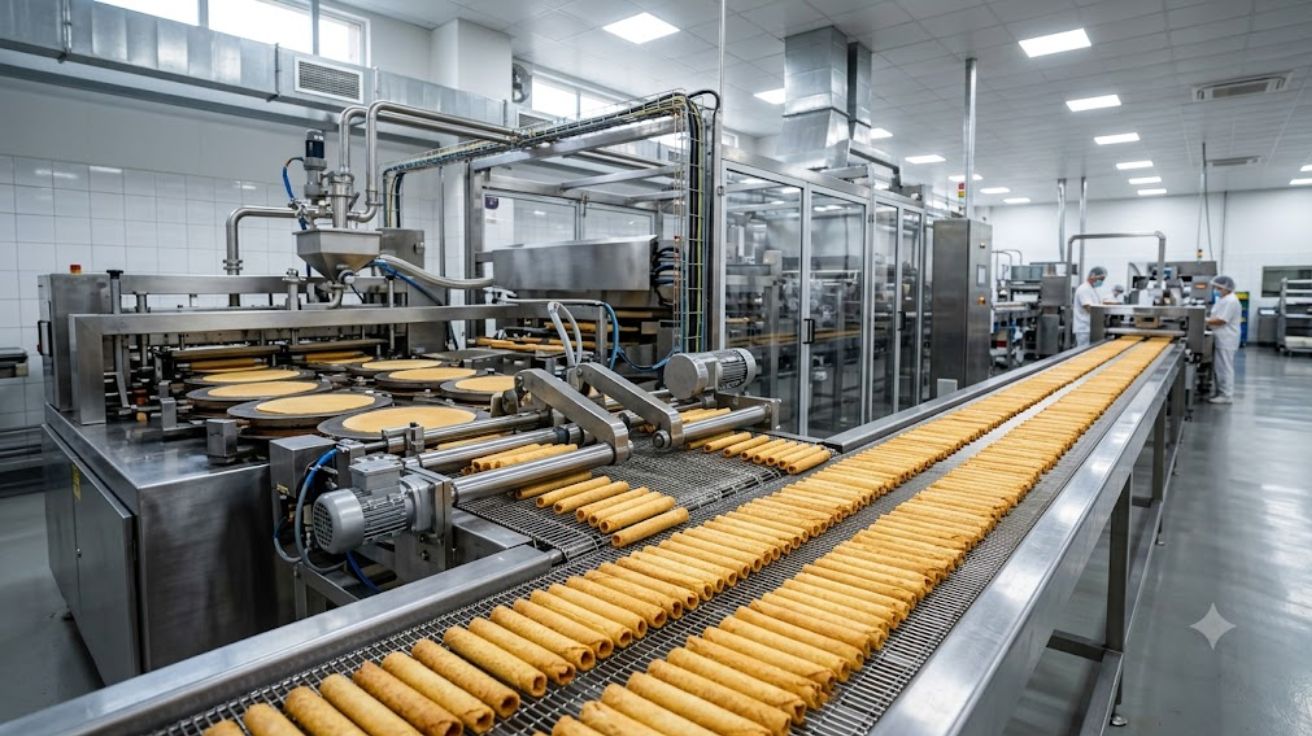

Commercial snack production is becoming more disciplined. Buyers no longer compare bakery equipment only by the catalogue price or the promise of a high hourly speed. A wafer egg roll line needs to maintain consistent batter thickness, stable heating, clean rolling, and predictable finished-piece quality throughout normal shift conditions. Without that level of control, a factory might gain automation but still end up dealing with breakage, uneven color, operator rework, or output that varies from batch to batch.
That’s why procurement teams should look at equipment as a full production system rather than a standalone machine. Batter preparation, depositing, baking, rolling, optional filling, cooling, and packaging all shape the final outcome. When earlier stages outpace downstream handling, pressure builds up at the packing table. When baking control is inconsistent, the rolling section ends up working with product that’s either too brittle or too soft. A sound sourcing process starts with the finished snack and works backward toward the line configuration.
For buyers comparing suppliers online, this wafer egg roll line specification page is a useful reference point because the page focuses on wafer-style egg roll production rather than a savory spring roll wrapper process. That distinction matters. The food category can look similar in search results, but the process requirements are different. Wafer egg rolls call for controlled baking plates, quick release, and forming while the sheet is still pliable. Wrapper systems, on the other hand, typically center around dough sheet handling and filling placement.
Define the Product Before Comparing Machines
The first step is defining the target product using measurable terms. A purchasing file should specify planned roll length, diameter, wall thickness, filling requirements, target color, acceptable breakage rate, daily output, packaging method, available factory space, fuel preference, and local voltage. This information allows suppliers to recommend an actual configuration rather than sending over a generic list of models.
Even small changes to product size can impact output and energy consumption. A larger diameter might call for a different rolling setup. A filled roll may require extra injection equipment along with more careful cooling. A premium snack line might demand tighter shape consistency than a lower-cost bulk product would. The more precisely the product is defined, the easier it becomes to compare quotations on equal footing.
Translate Speed Into Shift Economics
Machine speed numbers are simple to quote but easy to misread. A line that runs quickly during a brief demonstration won’t necessarily perform the same way across a full shift. Buyers should convert speed claims into more practical metrics: pieces per hour, kilograms per shift, number of operators required, expected downtime, cleaning time, recipe changeover time, and energy use per thousand finished pieces.
This kind of comparison matters most for bakeries transitioning from manual rolling to automated wafer roll production. The goal usually isn’t just higher piece counts — it’s fewer manual touchpoints, more consistent shape, reduced breakage, better labor allocation, and a process that trained operators can repeat reliably without depending on one experienced technician. A somewhat higher equipment cost can be worthwhile if the line reduces labor strain and protects saleable output.
Control Points That Affect Finished Quality
Wafer egg rolls operate within a fairly narrow window. Batter viscosity determines spread. Plate temperature affects both color and texture. Timing determines whether the sheet rolls cleanly or cracks apart. Pressure, release behavior, and transfer timing all shape the final form. A commercial line should give operators real control over these variables without needing constant manual correction.
When reviewing suppliers, ask how temperature is managed across the baking section, how wrapper thickness gets adjusted, how the rolling mechanism handles different product sizes, and how the machine reacts when batter viscosity shifts even slightly. The answers will show whether the supplier genuinely understands the process or is simply selling a general-purpose forming machine.
Fuel, Utilities, and Factory Layout
Fuel choice can significantly affect the line’s economics. Some factories prefer electric heating because it’s simpler to install and control. Others lean toward gas where energy costs and existing infrastructure make it worthwhile. The right decision depends on utility reliability, ventilation, local fuel pricing, maintenance capability, and the factory’s own safety rules. Procurement teams should ask suppliers for estimated consumption figures during startup, steady production, and idle periods rather than relying on a single marketing figure.
Layout also needs attention early on. The line requires space for ingredient handling, operator movement, cooling, inspection, packing, and maintenance access. If the machine is crammed into a tight space, cleaning and servicing both become harder. A practical layout drawing can help avoid costly changes once the machine has already arrived.
Maintenance Planning Should Start Before the Order
Planning for downtime is part of the purchase itself, not something to figure out later. A wafer roll line includes heating components, sensors, electrical controls, mechanical wear parts, forming components, and safety systems that all need to hold up under daily use. If a low-cost supplier can’t identify common wear items or provide clear part numbers, the buyer takes on that risk after installation.
A solid quotation should include a recommended spare parts list, warranty scope, service response method, and documentation package. Buyers should also confirm how replacement parts get shipped, whether remote troubleshooting is offered, and whether the supplier can provide exploded drawings or electrical diagrams. These details cut down on uncertainty once the line is already fulfilling customer orders.
Factory Acceptance Testing
Factory acceptance testing should involve more than a short clip of the machine in operation. A credible test documents the startup sequence, heating stability, product appearance, output rate, safety functions, roll shape, filling behavior (if applicable), cleaning access, and shutdown sequence. If the buyer can share a target product sample or recipe requirements, the supplier can run tests against a more realistic benchmark.
Longer testing periods are valuable because wafer products can appear fine during a short demo but reveal issues after repeated cycles. Breakage, sticking, uneven color, or inconsistent roll length may only surface once the line has been running for a while. The acceptance checklist should therefore combine visual inspection with basic production measurements.
Documentation and Food Safety Review
Industrial food equipment needs documentation that supports the buyer’s own safety and audit processes. Requirements vary depending on the market, but common review points include food-contact materials, guard design, operating manuals, maintenance instructions, electrical documentation, cleaning guidance, and training materials. This documentation should be requested before the order is finalized — not after the machine is already in transit.
Cleaning access is another practical concern. A line that’s difficult to clean can create audit headaches and slow down production changeovers. Buyers should check whether operators can reach the relevant surfaces, whether removable parts are easy to manage, and whether routine cleaning can happen without excessive disassembly.
Supplier Fit and Commissioning Support
A supplier’s role doesn’t end once the machine ships. Commissioning plays a big part in how quickly the factory reaches stable production. A solid handover includes installation checks, temperature calibration, recipe adjustment, operator training, maintenance training, and production acceptance. This kind of support matters even more when a buyer is launching wafer egg rolls for the first time or shifting from manual production to a standard line.
UDTECH manufactures industrial machinery across several production categories, including food equipment. For buyers looking into wafer egg roll automation, what matters most is whether the supplier can talk through the process in practical operating terms: capacity, heating method, product size, filling options, footprint, delivery time, spare parts, and after-sales support.
Questions to Put in the Request for Quotation
A strong request for quotation should ask about model capacity, installed power, fuel options, footprint, operator count, machine material, delivery time, warranty scope, commissioning plan, spare parts package, and whether the supplier can provide sample production evidence. It should also cover how the machine handles changes in product size and whether the line can be configured for future capacity growth.
When every supplier is asked the same set of questions, comparison gets much easier. The buyer can identify which vendor actually understands the production target, which quote leaves key details undefined, and which option offers the best balance between purchase cost and operating stability.
Final Buying View
The best decision on wafer egg roll equipment balances output, consistency, energy use, factory layout, maintenance support, and documentation. A very cheap line can end up costing more if it produces inconsistent pieces, needs constant manual correction, or lacks spare parts support. A more defensible purchase starts from the finished snack, converts capacity into shift economics, and checks whether the supplier can back up the line after installation.
For bakeries and snack producers, the strongest equipment choice is usually the one that makes production easier to control and easier to scale. That means looking past a single machine photo and reviewing the entire process, from batter to packed product.
Read More: If Your Business Can’t Run Without You, It’s Not a Systems Problem


Leave a Comment