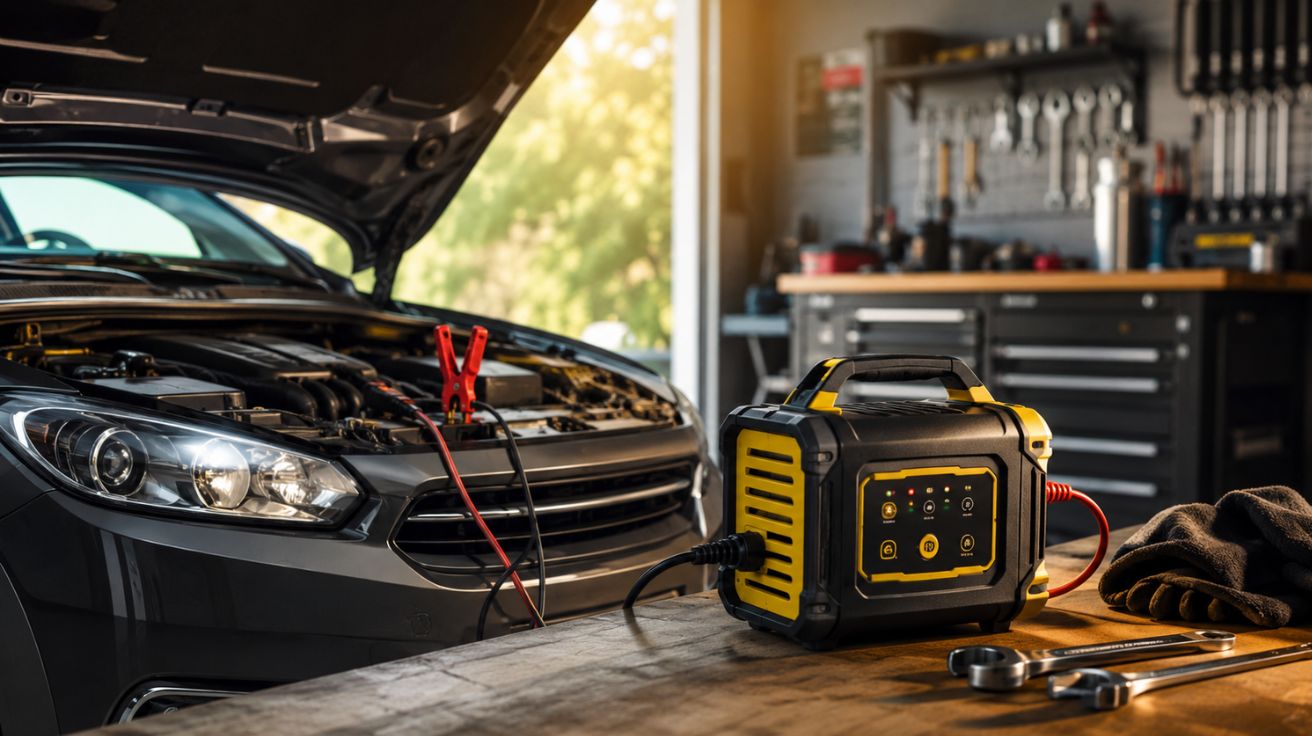

There is something quietly heartbreaking about a car that will not start. You turn the key or press the button, expecting that familiar surge of life, and instead you hear a weak click, a tired groan, or nothing at all. In that moment, the entire day seems to wobble. Plans stall. Confidence slips. Time suddenly feels expensive. That is why car battery chargers matter more than many drivers realize. They are not just garage tools or backup devices tucked away on a dusty shelf. They are small guardians of freedom, reliability, and readiness in a world that never stops moving.
As vehicles become smarter, more connected, and more dependent on electrical systems, the humble charger has taken on a bigger role. Modern cars are packed with sensors, infotainment systems, security functions, and battery-draining features that keep drawing power even when the engine is off. Whether you drive every day or leave your vehicle parked for long stretches, understanding how charging works can save you frustration, money, and stress.
Why the Battery Charger Matters More Than Ever
A battery charger is designed to restore electrical energy to a vehicle’s battery when its charge has dropped too low. That sounds simple, and in one sense it is. But the impact is enormous. Without a healthy battery, your car cannot reliably start, and in newer vehicles, weak voltage can trigger strange electrical issues that seem far bigger than they really are.
Today’s batteries work hard. Short trips, cold mornings, hot summers, and long periods of inactivity all chip away at battery health. Many drivers assume the alternator will always handle everything, but that is not the full story. If a battery is deeply discharged or repeatedly undercharged, performance can decline faster than expected. Good battery chargers step in before those problems become permanent.
There was once a quick late-night chat between neighbors in a dim parking lot after one of their cars refused to start. It was not dramatic, just honest. One person laughed nervously, the other offered jumper cables, and in the middle of that little exchange came a simple realization: most vehicle emergencies begin with tiny warnings we ignore. Chargers help you answer those warnings before they turn into breakdowns.
Understanding How Chargers Support Battery Health
Not all charging is the same, and that is where many people get confused. A charger does more than push power into a battery. A well-designed unit delivers electricity in a controlled way, helping maintain the right voltage and reducing the risk of overcharging. This is especially important because battery chemistry is delicate. Too little charge invites sulfation and weakness. Too much can shorten lifespan.
For drivers who use their vehicles regularly, occasional charging can keep the battery in top condition. For seasonal vehicles, collector cars, motorcycles, or cars stored during travel, maintenance charging becomes even more valuable. This is where a trickle charger often enters the conversation. It supplies a low level of current over time, helping the battery remain ready without the intensity of a fast recharge.
Still, not every low-current device is equally smart. Older charging models could continue feeding energy for too long, while newer smart chargers monitor the battery and adjust automatically. This smarter approach protects the battery while preserving convenience.
Battery Charger Features You Should Look For
When choosing a battery charger, it helps to focus on a few essential features rather than flashy marketing language. The first is compatibility. You need a charger that matches your battery type, whether it is a traditional lead-acid battery, AGM, gel, or another format. Modern chargers often support multiple types, which is useful for households with several vehicles.
The second feature is automatic shutoff or maintenance mode. This allows the charger to sense when the battery is full and either stop charging or shift into a maintenance cycle. That function dramatically reduces risk and makes charging far less stressful.
The third is charging speed. Fast charging has its place, especially during emergencies, but slower and steadier charging is often gentler on the battery. A trickle charger can be ideal when the goal is preservation rather than urgent recovery.
Portability matters too. A compact charger is easier to store and easier to use when you are stranded. Clear displays, reverse-polarity protection, and weather-resistant construction are also worth considering, especially if charging may happen outdoors or in cold garages.
When Floating Charge Becomes a Lifeline
There is a strangely peaceful image that comes to mind with maintenance charging: something floating, not drifting away, but being held safely in balance. One driver once described leaving a treasured weekend car in storage all winter and returning months later expecting trouble. Instead, the battery was healthy, the engine turned, and relief washed through the room. That quiet success felt almost like seeing a boat remain floating through a long storm, untouched by panic because it had been secured properly from the start.
That is the value of smart maintenance charging. It is not flashy. It is preventive. And prevention, though often overlooked, is one of the most powerful forms of care.
Anticyclonic Conditions and Hidden Battery Stress
Weather shapes battery performance more than many people expect. Extreme cold thickens engine oil and reduces battery efficiency. Extreme heat speeds internal wear and fluid loss. Even stable, bright conditions can be deceptive. During a spell of crisp, anticyclonic weather, when the sky stays clear and the air feels still and confident, many vehicles sit unused because the roads seem calm and routines shift. Yet long idle periods during such patterns can quietly drain a battery through onboard electronics.
A memorable story came from a family who assumed their rarely used second car would be perfectly fine after a week of clear anticyclonic days. Everything looked ideal outside. Inside the battery, however, charge had been slipping lower with each silent hour. The lesson was simple and unforgettable: good weather does not always mean good battery health.
Practical Tips for Using Chargers Safely
Safe charging starts with reading both the vehicle manual and the charger instructions. Match the voltage correctly, inspect the battery for damage, and connect clamps to the proper terminals. Charge in a ventilated area whenever possible, since batteries can emit gases during charging.
It also helps to think ahead. Do not wait until a battery is fully dead if warning signs are already there. Slow engine cranking, dim headlights, electrical glitches, and long periods without driving all suggest that charging may soon be needed. A little attention early can prevent a major disruption later.
Keeping the Road Ahead Bright
Car battery chargers may not be glamorous, but they are deeply connected to peace of mind. They protect your time, preserve your battery, and keep your vehicle prepared for the moments that matter most. In an age of advanced mobility, they remain one of the simplest tools for staying in motion.
The future of driving is electric, digital, and always on. That makes battery care more important, not less. And sometimes, the difference between a ruined morning and a smooth start is just a charger waiting nearby, ready to bring everything back to life.
Read More:


Leave a Comment