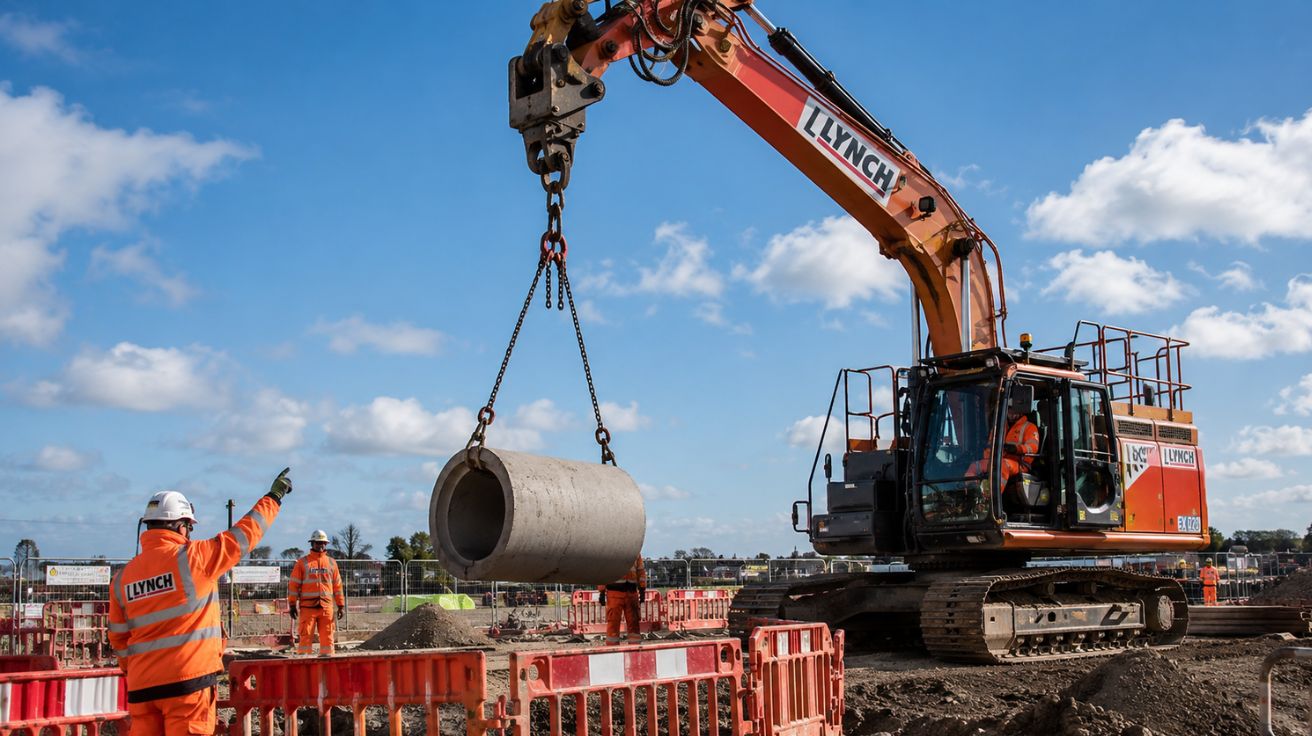

In the UK construction and lifting industry, one of the most common questions surrounding plant machinery is whether an excavator can legally be considered a crane. While excavators are primarily designed for digging and earthmoving, they are often used for lifting operations on construction sites. This creates confusion around legal classifications, lifting regulations, operator competence, and safety requirements.
The short answer is: yes, an excavator can sometimes be treated as a crane when it is used for lifting operations. However, strict UK regulations apply, and not every excavator is automatically suitable for lifting loads like a crane.
This guide explains when an excavator is considered a crane, the legal requirements in the UK, lifting regulations, operator training, and the safety rules that construction companies must follow.
What Is An Excavator?
An excavator is a heavy construction machine mainly used for:
- Digging trenches
- Earthmoving
- Demolition work
- Landscaping
- Material handling
- Site clearance
Excavators typically consist of:
- A boom
- Dipper arm
- Bucket attachment
- Rotating cab
- Tracks or wheels
Different types of excavators include:
- Mini Excavators
- 360 Excavators
- Wheeled Excavators
Excavators are essential machines across UK construction, civil engineering, utilities, highways, and agricultural sectors.
What Is A Crane?
A crane is a machine specifically designed for lifting and moving suspended loads safely. Cranes are built with dedicated lifting systems, load charts, stabilisation systems, and safety mechanisms.
Common crane types include:
- Mobile cranes
- Tower cranes
- Crawler cranes
- HIAB cranes
- Telescopic handlers with lifting configurations
Unlike excavators, cranes are primarily intended for lifting operations rather than digging.
When Can An Excavator Be Considered A Crane?
In the UK, an excavator may be treated as a crane when it is used to lift suspended loads rather than perform excavation work.
For example:
- Lifting pipes into trenches
- Moving heavy concrete rings
- Lifting trench boxes
- Positioning construction materials
- Handling manhole sections
If the excavator is carrying out lifting operations, UK lifting regulations apply.
However, the excavator must be:
- Approved for lifting duties
- Properly configured
- Equipped with lifting accessories
- Operated by competent personnel
Not every excavator is legally suitable for crane-type lifting work.
UK Regulations For Excavator Lifting Operations
Several important UK regulations apply when excavators are used for lifting.
LOLER Regulations
Health and Safety Executive
The main regulation is LOLER:
Lifting Operations and Lifting Equipment Regulations 1998
Under LOLER, any equipment used for lifting must:
- Be suitable for lifting tasks
- Be thoroughly examined
- Have safe working load limits
- Be properly maintained
- Be operated safely
If an excavator lifts suspended loads, it falls under LOLER requirements.
Excavators Used For Lifting Must Meet Specific Standards
To legally use an excavator for lifting in the UK, it usually requires:
Check Valves
These prevent uncontrolled movement if hydraulic failure occurs.
Lifting Hook
The machine must have an approved lifting point or lifting eye.
Load Charts
Operators must understand the excavator’s lifting capacity at different angles and distances.
Rated Capacity Indicator
Some machines include systems warning operators if lifting limits are being exceeded.
Is Every Excavator Suitable For Lifting?
No. Many standard excavators are designed only for digging work.
Before lifting begins, the excavator manufacturer must confirm:
- The machine is approved for lifting operations
- Safe lifting capacities are available
- Proper lifting points exist
Using a non-approved excavator for lifting can create major safety and legal risks.
Does An Excavator Become A Crane Legally?
This is where confusion often occurs.
An excavator does not permanently become a crane simply because it lifts a load. However, during lifting operations, it may be treated similarly to lifting equipment under UK law.
The Health and Safety Executive (HSE) focuses more on:
- The activity being carried out
- The risks involved
- Compliance with lifting regulations
So while the machine itself remains an excavator, the lifting operation falls under crane and lifting safety rules.
Operator Competence And Training
Excavator operators performing lifting duties require additional competence beyond normal digging operations.
Typical requirements may include:
- Excavator operator certification
- Lifting operations awareness
- Slinger/signaller knowledge
- Understanding load charts
- Safe lifting procedures
Many employers prefer operators with recognised UK qualifications such as:
NPORS
National Plant Operators Registration Scheme
CPCS
Construction Plant Competence Scheme
Additional lifting endorsements may also be required depending on the site and lifting complexity.
The Role Of Appointed Persons And Lift Plans
For complex lifting operations, UK regulations often require:
- Lift planning
- Risk assessments
- Appointed persons
- Supervision
An Appointed Person plans and manages lifting operations to ensure safety and compliance.
This includes:
- Ground condition assessment
- Load calculations
- Machine suitability checks
- Exclusion zones
- Communication procedures
Improper lifting operations are one of the leading causes of serious accidents on UK construction sites.
Common Risks When Using Excavators For Lifting
Excavators can become unstable if lifting limits are exceeded or loads swing unexpectedly.
Major risks include:
- Machine overturning
- Dropped loads
- Hydraulic failure
- Ground collapse
- Contact with overhead power lines
- Striking workers nearby
Proper planning and operator competence are critical to reducing these risks.
Excavator Lifting vs Dedicated Cranes
Although excavators can sometimes lift loads, they are not always the safest or most efficient option compared to dedicated cranes.
Excavator Advantages
- Already available on-site
- Cost-effective for small lifts
- Versatile equipment
- Useful for utility and trench work
Crane Advantages
- Designed specifically for lifting
- Greater lifting capacity
- Better load stability
- Advanced lifting safety systems
- Safer for complex lifts
For heavy or high-risk lifting operations, dedicated cranes are usually the preferred solution.
Can Mini Excavators Lift Loads?
Yes, mini excavators are often used for small lifting tasks such as:
- Pipes
- Kerbs
- Manhole rings
- Small materials
However, mini excavators still require:
- Manufacturer lifting approval
- Correct lifting points
- Load awareness
- Competent operation
Because mini excavators are lighter, they can become unstable quickly if overloaded.
UK Construction Sites Often Have Strict Rules
Many UK contractors now have strict policies regarding excavator lifting operations.
Site requirements may include:
- LOLER certificates
- Lift plans
- Daily machine inspections
- Competent operators
- Slinger/signaller support
- Proper lifting accessories
Failure to comply can result in:
- Site removal
- Enforcement notices
- Fines
- Insurance problems
- Serious legal consequences
Why Proper Excavator Training Matters
Using excavators for lifting requires more than simply knowing how to operate the controls. Operators need a strong understanding of:
- Load dynamics
- Machine stability
- Safe lifting techniques
- Site hazards
- UK lifting legislation
Professional training helps reduce accidents and ensures compliance with modern UK construction safety standards.
For operators and companies looking to improve lifting operation competence, Vally Plant Training provides accredited plant training courses across multiple construction categories, including excavator operation, lifting awareness, and plant safety training.
Final Verdict: Can An Excavator Be Considered A Crane?
An excavator is not technically a crane by design, but when it performs lifting operations in the UK, it may be treated as lifting equipment under regulations such as LOLER.
This means excavator lifting operations must follow strict safety standards, including:
- Proper machine suitability
- Load management
- Competent operators
- Lift planning
- Thorough inspections
While excavators can safely handle many lifting tasks when properly equipped and operated, dedicated cranes remain the preferred choice for larger, more complex, or high-risk lifts.
Understanding the difference is essential for maintaining safety, legal compliance, and efficient operations on UK construction sites.
Read More: Groundwork Coventry To Strong And Safe Building Starts


Leave a Comment